Airlines Shift to Early Tagging Models to Secure Flight Deck Talent
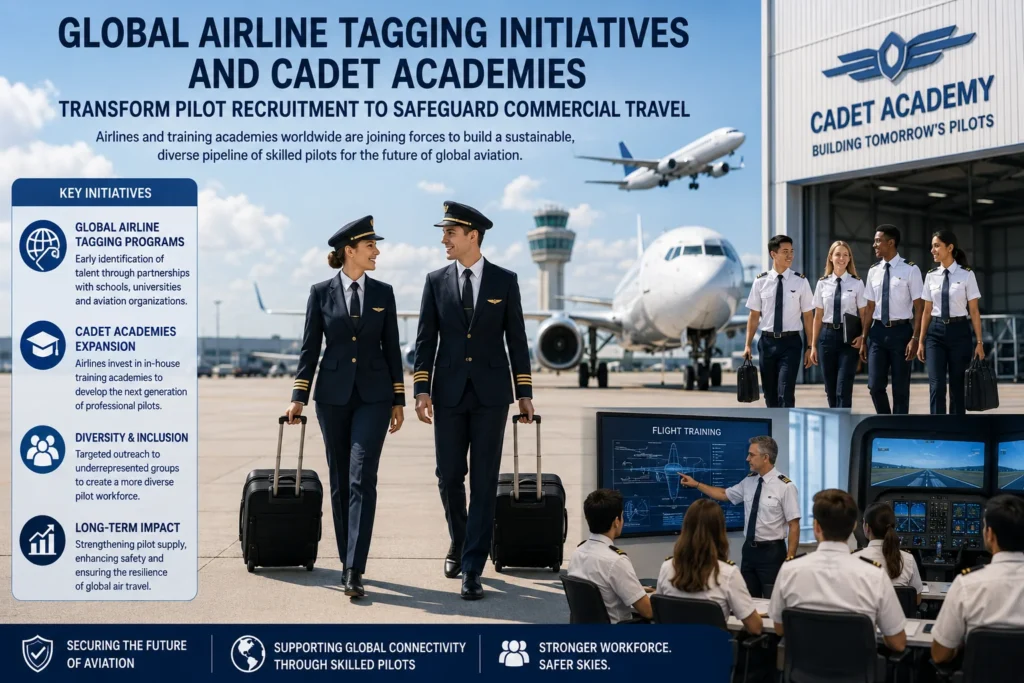
Commercial aviation is undergoing a structural shift in how flight crews are recruited and trained. Major international passenger carriers are expanding early airline tagging initiatives, sponsored flight academies, and structured cadet pathways to secure future cockpit talent well in advance of flight operations. By establishing formal partnerships with certified flight training organizations rather than relying solely on independent licensed commercial pilots entering the job market, airlines are creating predictable staffing pipelines designed to support fleet expansion and protect schedule reliability.
Under traditional pilot recruitment structures, prospective aviators independently funded their flight training, earned a Commercial Pilot License, and subsequently submitted applications to commercial carriers. The emerging early-pipeline model replaces this fragmented approach with a structured pathway: candidates undergo airline assessment and selection prior to or during early flight training, receive tailored instruction aligned with specific carrier operational standards, and follow a direct, conditional route toward commercial flight decks.
This strategic pivot directly addresses severe operational pressures across the global aviation ecosystem. Rapid aircraft deliveries, expanding international travel networks, and mandatory senior pilot retirements have elevated crew planning to a primary operational priority. Early selection enables carriers to maintain strict quality control over safety protocols, standardized flight procedures, and crew culture from day one of training.
Major Global Carriers Invest Millions in Fully Funded Training Pathways
To remove financial barriers and broaden access to flight careers, legacy network carriers and low-cost operators are committing significant capital to cadet funding structures. By offering fully funded or subsidized training programs, airlines are diversifying their talent pools while ensuring that flight academies train candidates specifically on modern fleet types, including Airbus A320 and Boeing 737 aircraft families.
European low-cost carrier Wizz Air operates a comprehensive pilot development ecosystem through its dedicated pilot academy and flight school partnerships. The program enables candidates with zero prior flying experience to complete an ab-initio curriculum tailored to the carrier’s operational procedures. Additionally, Wizz Air provides internal career transition pathways allowing qualified cabin crew members to train for first officer positions.
In the United Kingdom, flag carrier British Airways addresses training accessibility through its Speedbird Pilot Academy. The carrier allocated an £18 million investment to fully fund flight training for up to 160 selected cadets, removing individual financial requirements and guaranteeing a first officer role upon successful course completion and license issuance.
Similarly, easyJet and Ryanair maintain large-scale cadet pipelines through dedicated flight training initiatives. The Generation easyJet program trains cadets specifically for short-haul European operations across an all-Airbus fleet, while Ryanair’s Future Flyer Academy collaborates with accredited flight schools across Europe to supply first officers for its expanding route network.
Industry Overview of Leading Airline Cadet Programs
Airlines across Europe, the Middle East, Asia, and North America are establishing dedicated flight academies to align workforce supply with fleet expansion.
Wizz Air: Operates the Wizz Air Pilot Academy alongside flight school partnerships, offering early flight tagging and cabin crew career progression.
British Airways: Funds up to 160 places per cohort via its £18 million Speedbird Pilot Academy investment, offering fully funded flight training.
easyJet: Utilizes the Generation easyJet pathway to deliver Airbus-specific fleet instruction through partner academies.
Ryanair: Partners with accredited European flight schools via the Future Flyer Academy to maintain first officer supply for short-haul routes.
Lufthansa Group: Manages the European Flight Academy to maintain standardized ab-initio cadet development across its European network.
Emirates: Trains candidates through the Emirates Flight Training Academy in Dubai to supply flight deck personnel for wide-body operations.
Singapore Airlines: Conducts its Ab-Initio Cadet Pilot Programme to select and mentor aviators prior to commercial experience.
Air India & IndiGo: Maintain large-scale cadet pilot programs in partnership with domestic and international flight academies to support massive fleet expansions in Asia.
Strategic Impact on Tourism, Aviation Stability, and Operations
The widespread adoption of early pilot tagging delivers far-reaching benefits for global tourism and international air transport. Sustainable flight deck staffing directly reduces the risk of crew-related flight cancellations, schedule reductions, and airport congestion during peak holiday travel seasons. For tourism-dependent economies, reliable airline operations ensure consistent passenger throughput, protecting hotel occupancy rates, regional commerce, and international visitor arrival targets.
Despite these operational benefits, airlines and flight training providers must navigate specific execution challenges. High global demand for certified flight instructors and modern trainer aircraft can create bottlenecks during basic flight training phases. Furthermore, carriers offering fully funded cadet places absorb substantial financial commitments that require long-term retention strategies.
To mitigate these operational risks, civil aviation authorities and airline leadership continue to enhance oversight of third-party flight schools, ensuring that rigorous flight safety standards are strictly maintained. As global air travel demand continues its upward trajectory, early pilot tagging and airline cadet academies represent a permanent structural evolution in aviation workforce planning, safeguarding both fleet expansion and the global travel economy.
For more travel news like this, keep reading Global Travel Wire