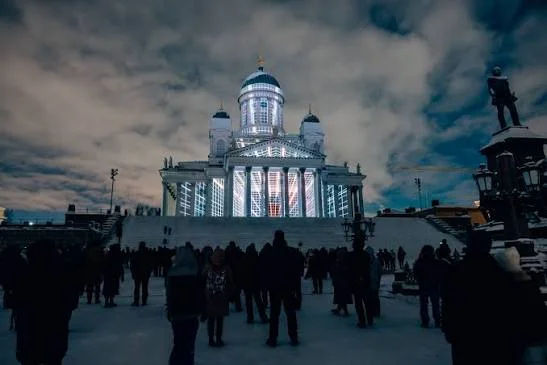
Lux Helsinki will run from 30 December 2026 to 6 January 2027, adding two days and spanning New Year for the first time. The eight-day light festival leads a January calendar that includes Madrid’s Three Kings parade, Christmas markets in Prague and canal-side installations in Amsterdam.
Helsinki’s previous edition ran from 6 to 11 January 2026 and drew a reported audience of 450,000. The longer programme starts and finishes earlier this winter, shifting the best dates for a festival trip into the New Year holiday. Helsinki’s Christmas Market, meanwhile, runs from 27 November to 22 December. Travellers who want to see both will need to account for the gap between the market and the light festival.
Brussels, Berlin and Copenhagen Finish on 3 January
Brussels marks 25 years of Winter Wonders with a programme running from 27 November to 3 January. Markets, art and light displays fill central streets and squares, with Béarn, the Pyrenees and the Basque Country featured in the anniversary edition.
Berlin’s Berliner Weihnachtszeit at the Rotes Rathaus also ends on 3 January. Entry is free, with separate charges for skating and equipment hire. Copenhagen’s Christmas in Tivoli finishes the same day. Its light displays continue through the closing date, while Father Christmas visits end on 23 December. Families arriving after New Year should check the dates of individual activities before choosing tickets.
Luxembourg’s Winterlights festival also closes on 3 January, but street and square illuminations stay on until 10 January. That extra week gives visitors time to see the city lit up after the market programme ends. Free domestic buses, trams and second-class trains make it easier to explore beyond the centre during a short stay.
Madrid, Prague and Vienna Keep Festivities Going Until 6 January
Madrid’s Three Kings parade is scheduled for 5 January, and the city’s festive lights continue until 6 January. The parade gives visitors a specific evening around which to build a city break. The lighting hours still need confirmation, so those interested in seeing the displays can check timings closer to their visit.
In Prague, the Christmas markets at Old Town Square, Wenceslas Square and Mariánské Square run until 6 January. Several neighbourhood markets finish in December. A January visitor choosing accommodation around market access can focus on the squares that will still have stalls.
Vienna’s Rathausplatz Christmas Market closes on 26 December. The Schönbrunn Palace and Riesenradplatz markets continue until 6 January. Skating follows its own schedule. Ice Dream at the Christmas Market ends on 6 January, with a closure on New Year’s Eve. The larger Wiener Eistraum opens on 22 January and runs until 7 March, giving late-January travellers another reason to visit.
Madeira and Amsterdam Extend the Winter Calendar
Zagreb’s Advent programme continues to 7 January, giving travellers another mainland city break option after the first weekend of the year. Madeira’s Christmas and New Year festivities run until 10 January, extending the choice to an island stay. Both destinations have individual venue or activity schedules within their wider programmes.
Amsterdam’s Light Festival runs until 17 January. Visitors can see installations around the canals from land or water, giving them a choice between walking and a boat trip. Its dates make Amsterdam an option for travellers who want a winter arts break after most of the listed markets have closed.
School Dates and Travel Costs Shape January Breaks
School calendars help determine who can make use of the longer festive season. France’s three school zones return to classes on 4 January. Madrid’s regional public school calendar extends Christmas holidays through 6 January and lists 7 and 8 January as days without classes. Those dates leave different windows for families planning the same trip.
January already brings substantial business to European accommodation providers. Eurostat recorded 143.5 million nights in EU tourist accommodation in January 2026, up 3.2% from a year earlier. That total includes trips for many purposes, so the effect of individual winter events remains unclear.
For travellers, the most practical comparison starts with the date of the main attraction. A low fare arriving after a market closes may leave little value for someone travelling specifically for the stalls. An illuminated city or a later skating programme may suit visitors with less flexibility. Comparing flights, hotel nights, local transport and activity charges for the same dates gives a clearer picture of what each January break offers.
For more travel news like this, keep reading Global Travel Wire