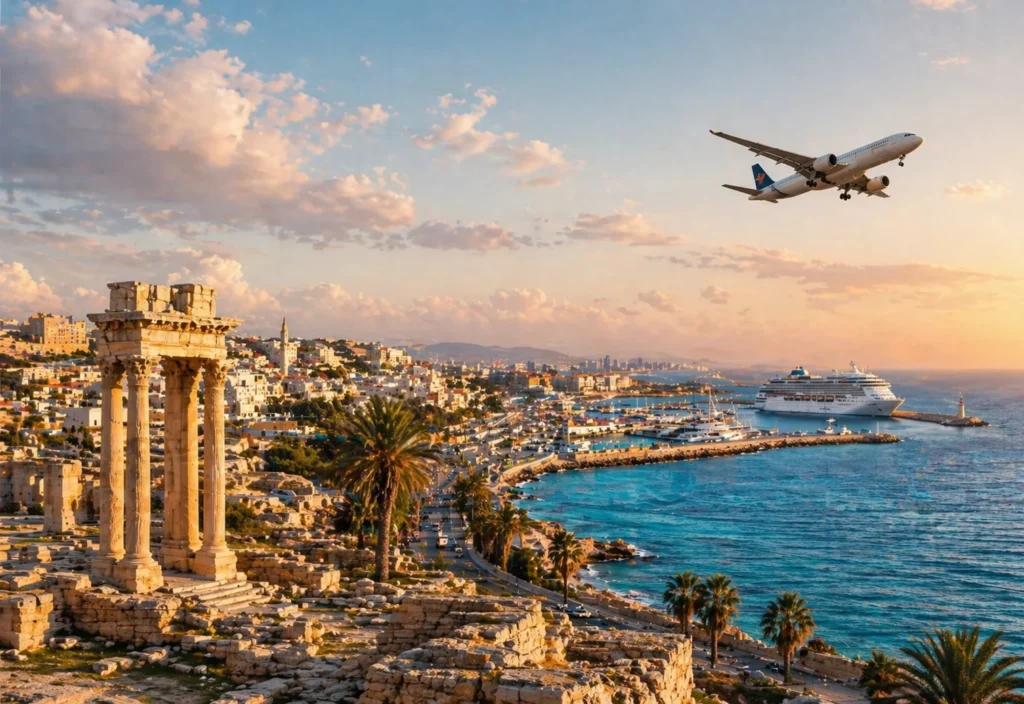
Libya has announced its first unified national budget in more than ten years, marking a major political and economic milestone that could reshape tourism, aviation, and trade across the Mediterranean region. The agreement, backed by a wide group of international partners including France, the United Kingdom, the United States, Qatar, Egypt, Germany, the United Arab Emirates, Italy, Saudi Arabia, and Türkiye, is being seen as a strong signal of renewed stability and future growth.
For the tourism sector, the development carries special importance. Improved governance and coordinated public spending can help restore airports, reopen travel links, modernize tourism infrastructure, and rebuild traveler confidence in one of North Africa’s most strategically located destinations.
Why the Unified Budget Matters for Tourism
A unified national budget means Libya’s institutions can plan and fund projects through one coordinated framework rather than divided systems. This is expected to improve investment decisions, public services, transport planning, and infrastructure development.
For tourism, these changes are essential. Visitors rely on functioning airports, secure roads, hospitality services, clear regulations, and reliable transport networks. A more stable fiscal structure can help Libya rebuild these foundations and gradually welcome more international travelers.
Tourism officials across the Mediterranean are also watching closely, as Libya’s recovery can strengthen regional travel routes and diversify visitor experiences across North Africa.
Airport Upgrades Could Reconnect Libya to the World
One of the most immediate opportunities lies in aviation. Airports in Tripoli, Benghazi, and other Libyan cities have long faced operational challenges due to years of political division and inconsistent investment.
With a national budget in place, coordinated spending on airport modernization, safety systems, staffing, and passenger services becomes more achievable. This can create the conditions needed for airlines to expand or restore services.
Improved airline connectivity would benefit both inbound tourism and outbound travel, making Libya easier to reach for leisure visitors, business travelers, and diaspora communities.
Travel experts note that direct air access is often the first step in reviving destination demand.
Mediterranean Cruise Sector Watches Closely
Libya’s long Mediterranean coastline gives it major cruise tourism potential. Ports near historic cities and coastal attractions could eventually become part of regional cruise itineraries if security and infrastructure continue to improve.
Cruise tourism has become a powerful driver of visitor spending across Southern Europe and North Africa. If Libyan ports return to international route planning, neighboring destinations in Italy, Malta, Greece, and Tunisia could also benefit through expanded multi-country itineraries.
The possibility of new cruise stops adds fresh excitement for Mediterranean tourism planners seeking new experiences for global travelers.
A Rich Destination with Untapped Tourism Potential
Libya is home to desert landscapes, Roman archaeological sites, ancient trade routes, and Mediterranean beaches. The country has long been recognized for its cultural and natural tourism assets, though these opportunities have remained largely underdeveloped in recent years.
With stronger public finances and international backing, Libya could gradually invest in:
- Heritage site preservation
- Coastal tourism development
- Eco-tourism experiences
- Hotel and hospitality growth
- Cultural festivals and events
- Domestic tourism campaigns
Such investments can help position Libya as an emerging destination for adventurous and culturally curious travelers.
Regional Benefits Beyond Libya
The impact of Libya’s economic progress may extend far beyond its borders. Greater stability in North Africa often improves traveler perception of the wider region, benefiting neighboring destinations that depend heavily on international tourism.
Countries such as Egypt, Tunisia, Italy, and Türkiye may see stronger travel confidence if the Mediterranean becomes associated with improved security and broader connectivity.
Regional airlines may also gain from more efficient route planning, reduced disruption risk, and new opportunities for partnerships across North Africa and Europe.
Energy Stability Can Support Travel Growth
Libya holds some of Africa’s largest oil reserves, making energy production an important part of the country’s economy. Stable energy output can have indirect benefits for tourism by supporting national revenue, infrastructure funding, and transport systems.
A stronger economy often leads to better roads, upgraded airports, improved utilities, and more private investment in hotels and visitor services.
For the wider region, steadier energy markets can also help airlines and transport providers manage operating costs more effectively.
International Support Builds Confidence
The broad backing from major international partners adds weight to Libya’s recovery prospects. Diplomatic support can encourage investment, technical cooperation, and confidence among airlines, tour operators, and hospitality brands considering future opportunities.
Tourism businesses typically look for signs of long-term stability before entering or re-entering a market. The unified budget provides an important message that Libya is moving toward greater coordination and economic planning.
That confidence can be just as valuable as financial investment in the early stages of tourism recovery.
What Travelers Can Expect Next
Tourism revival will not happen overnight. Infrastructure projects, airline decisions, training programs, and destination marketing all take time. However, the direction of travel is increasingly positive.
In the coming years, key developments to watch may include:
- Airport renovation projects
- New regional flight routes
- Hotel and resort announcements
- Cruise sector interest
- Cultural tourism programs
- Easier travel procedures for visitors
As these steps progress, Libya could re-emerge as one of the Mediterranean’s most intriguing travel stories.
A Turning Point for North African Tourism
Libya’s first unified budget in a decade represents more than a financial agreement. It is a foundation for rebuilding confidence, reconnecting transport networks, and unlocking tourism potential that has been dormant for years.
For travelers, airlines, cruise operators, and tourism investors, the message is clear: Libya is beginning a new chapter. While challenges remain, this milestone offers a credible path toward recovery and renewed relevance in the global travel market.
If momentum continues, Libya tourism could become one of the most closely watched growth opportunities in the Mediterranean over the next decade.