Costa Rica’s primary air travel gateway is preparing for a significant milestone in regional tourism infrastructure. Juan Santamaría International Airport, located in Alajuela near the capital city of San José, will soon host Central America’s first hotel directly connected to an air terminal. The project marks a groundbreaking development for both the country and the broader region, establishing a new standard for passenger convenience and transit hospitality.
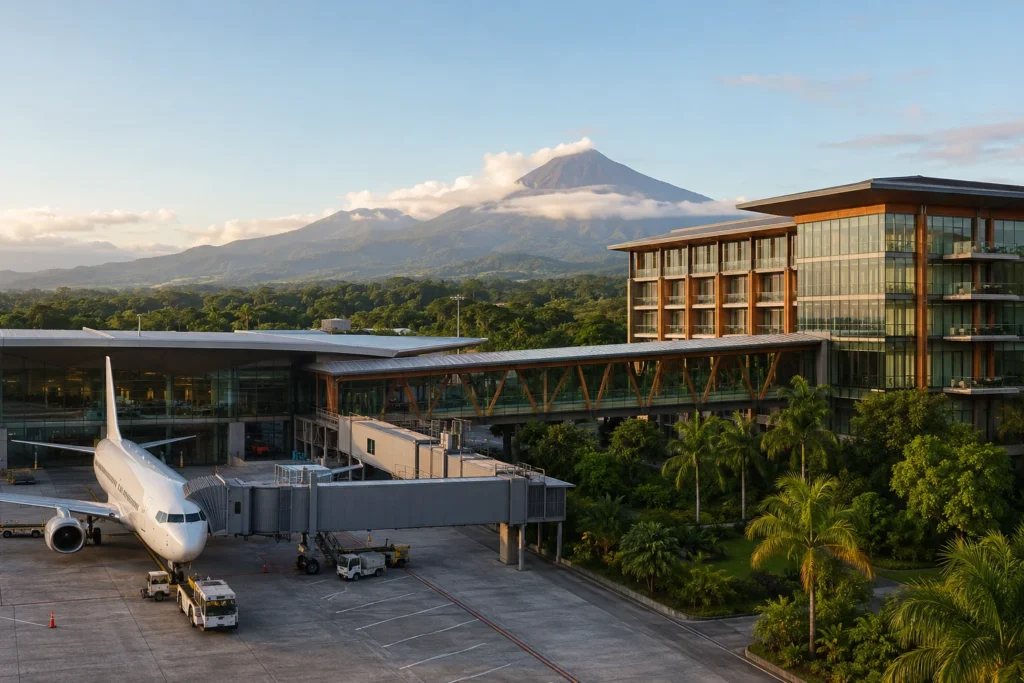
Construction is moving forward on the Moxy by Marriott at Juan Santamaría International Airport, a twenty-million-dollar development project designed to integrate seamlessly with the existing departure terminal. Upon completion, overnight guests will be able to walk directly between their rooms and the airport departure hall via a fully enclosed, covered pedestrian bridge, shielding travelers from weather conditions and eliminating the need for shuttle buses or taxi transfers.
The project is currently slated to open its doors to international visitors and air crews in mid-2027. Spanning approximately 6,500 square meters directly opposite the main terminal facilities, the 173-room property is being delivered by Expandd Development, managed by AZ Hospitality Group, and designed by Saballos Arquitectos. Operations will be handled by Remington Hospitality under Marriott’s vibrant Moxy brand.
Seamless Passenger Integration and Direct Terminal Access
The defining highlight of this new hospitality project is its deep physical and operational integration with the airport ecosystem. Beyond physical proximity, the property will offer specialized traveler services inside the lobby itself. Guests will have access to official airport service kiosks allowing them to complete flight check-in procedures, receive boarding passes, and print luggage tags directly inside the hotel premises prior to departure.
Once checked in, travelers can simply carry their luggage across the climate-controlled skybridge directly into the security screening and departure zones. This streamlined layout is engineered to eliminate traditional friction points associated with air travel, drastically cutting down transit stress for passengers navigating tight flight schedules.
This integrated design is specifically tailored to address several common travel scenarios. It offers a practical solution for passengers facing early morning flight departures, late-night international arrivals, lengthy layovers, or unexpected flight disruptions. Additionally, the hotel provides a highly convenient base for international flight crews operating under strict rest schedules between long-haul flights.
Modern Lifestyle Design and Dynamic Social Spaces
In contrast to traditional, functional airport accommodations, the property adopts a contemporary lifestyle framework targeted at modern travelers seeking vibrant, flexible environments. The architectural concept prioritizes open, communal zones rather than rigid traditional layouts.
Reflecting the distinctive operational ethos of the Marriott Moxy brand, the conventional front desk is replaced by a central social bar where arriving guests complete check-in procedures while receiving a welcoming refreshment. The ground floor layout emphasizes fluidity and connection, blending business and leisure amenities into an energetic gathering hub.
Key features planned within the public areas include expansive lounge environments, dedicated coworking spaces, a quiet library corner, interactive recreational game areas, and versatile meeting rooms for business travelers. Health and wellness facilities include a state-of-the-art fitness center, alongside diverse food and beverage options consisting of a quick grab-and-go station for time-sensitive travelers and a full-service restaurant operating twenty-four hours a day.
Strengthening Costa Rica’s Global Tourism Gateway
The development forms an integral part of a long-term strategic vision established by airport management company Aeris, a subsidiary of Grupo CCR, which manages Juan Santamaría International Airport under a public concession model. Official terminal statistics underline the growing demand for world-class gateway infrastructure. In 2025, Juan Santamaría International Airport recorded 6.71 million passenger movements, representing a 3.2 percent increase compared to the previous year.
Currently, thirty commercial airlines operate scheduled flights through the San José gateway, connecting Costa Rica directly to 55 international destinations across North America, Latin America, and Europe. As global air connectivity expands and visitor arrivals continue to rise, expanding infrastructure inside and around the terminal is essential to maintaining high service quality.
According to airport authority leadership, introducing direct terminal accommodation represents far more than an added lodging option. The initiative aligns with broader national tourism goals to position Costa Rica as a world-class, highly competitive destination for international leisure visitors, eco-tourists, and corporate travelers. By transforming the country’s primary airport into a complete multi-service travel hub, Costa Rica ensures that its initial point of contact for international arrivals reflects modern standards of comfort, accessibility, and efficiency.
When the Moxy by Marriott opens in mid-2027, it will mark a transformational shift in how visitors enter and exit the country, establishing a benchmark for airport hospitality throughout Central America.
For more travel news like this, keep reading Global Travel Wire