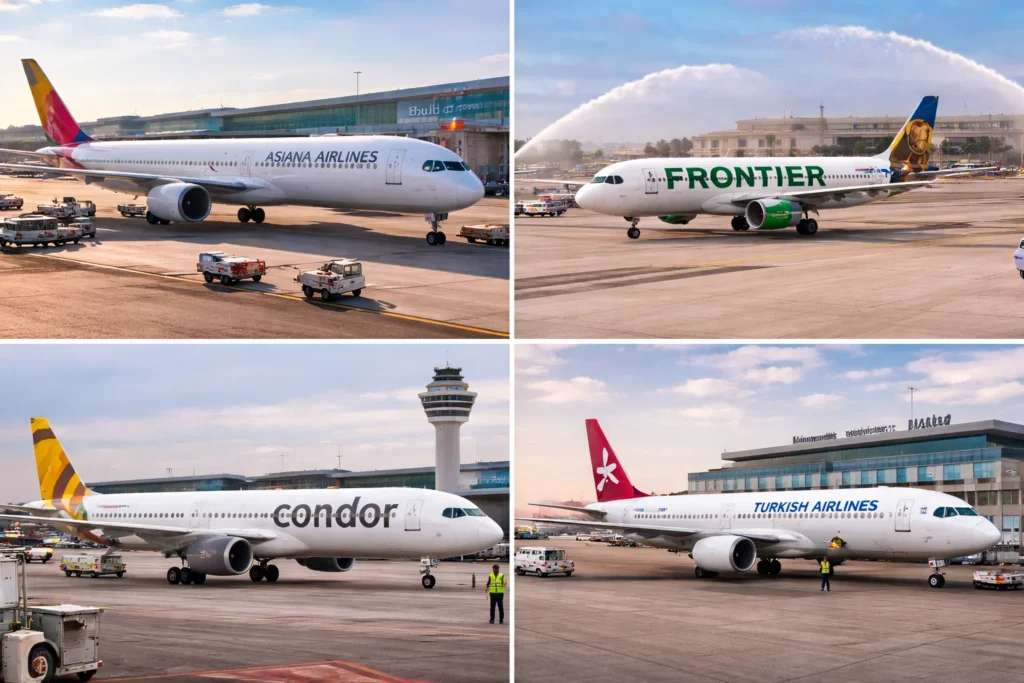
Airlines around the world are accelerating the expansion of new nonstop flights, reinforcing global tourism connectivity and opening fresh travel opportunities across continents. Recent route launches and resumptions, supported by airport authorities and national tourism strategies, highlight a growing commitment to improving direct access between key international destinations.
According to aviation and transport authorities, the introduction of new routes plays a crucial role in strengthening tourism infrastructure. Direct flights reduce travel time, improve convenience, and encourage travellers to explore new destinations. This is particularly important for long-haul and emerging markets, where connectivity can significantly influence visitor numbers.
In Europe, the expansion of air links between Asia and major cities continues to support tourism growth. The addition of new services connecting Seoul with destinations such as Budapest and Milan reflects strong travel demand between Asia and Europe. Official tourism data indicates that these city pairs have seen increasing passenger volumes, driven by both leisure travel and business activity. The availability of multiple airlines on these routes further enhances competition and provides travellers with more options.
Tourism authorities in Hungary and Italy have highlighted that improved air connectivity contributes to increased visitor arrivals and economic growth. Direct long-haul flights make it easier for international tourists to access cultural landmarks, historical attractions, and regional experiences. These developments align with broader European strategies aimed at promoting cross-border tourism and strengthening global travel links.
In North America, airlines are expanding domestic networks to support both tourism and regional mobility. Several new routes connecting major cities and leisure destinations have been introduced, reflecting changing travel patterns and growing demand for point-to-point services. Transport agencies note that such routes help distribute passenger traffic more evenly across airports, reducing congestion and improving overall efficiency.
The introduction of new connections between cities such as Orlando, Salt Lake City, and Raleigh/Durham demonstrates the importance of linking popular tourist destinations with emerging travel markets. These routes are expected to support domestic tourism by making it easier for travellers to access diverse attractions, from coastal resorts to mountain landscapes.
In the United Kingdom, the launch of new airline services connecting Frankfurt and London marks a significant addition to one of Europe’s busiest travel corridors. Airport authorities have emphasised that increased frequency on this route enhances flexibility for both business and leisure travellers. The availability of multiple daily flights also supports same-day travel, which is particularly appealing for short city breaks and business trips.
Northern Europe is also witnessing renewed connectivity, with new routes linking Helsinki and Florence. Tourism boards in Finland and Italy have welcomed this development, noting that it reconnects markets that had previously lacked direct service. Improved access to Florence, a city renowned for its cultural heritage, is expected to attract more international visitors and support local tourism industries.
In Eastern Europe, expanding air networks are strengthening regional integration. The introduction of new services connecting Istanbul with additional Romanian cities reflects ongoing efforts to enhance connectivity within the region. Aviation authorities highlight that such routes provide passengers with access to extensive global networks via major hub airports, facilitating international travel.
The Middle East continues to play a central role in global aviation, with airlines leveraging their strategic hubs to connect travellers across continents. New and expanded routes in the region support tourism growth by offering seamless connections between Europe, Asia, and Africa. Government-backed aviation strategies emphasise the importance of maintaining strong international links to sustain tourism and economic development.
Island destinations are also benefiting from new route launches. The introduction of direct flights between Luxembourg and Porto Santo in the Madeira Islands demonstrates the potential of niche markets to attract travellers. Tourism authorities in Portugal have highlighted that improved accessibility can stimulate demand and encourage visitors to explore lesser-known destinations.
These developments are supported by broader trends in the aviation industry, where airlines are focusing on network expansion and route diversification. Transport ministries and aviation regulators note that the introduction of new nonstop flights is a key driver of tourism growth, enabling destinations to reach wider audiences and attract new visitor segments.
The impact of these routes extends beyond tourism, contributing to economic development and cultural exchange. Increased connectivity facilitates business travel, trade, and international collaboration, while also promoting cultural understanding through tourism. Governments recognise these benefits and continue to support aviation infrastructure development as part of national growth strategies.
Sustainability remains an important consideration in the expansion of air travel. Aviation authorities are encouraging the use of modern, fuel-efficient aircraft and optimised flight operations to reduce environmental impact. These measures align with global commitments to sustainable tourism and responsible travel practices.
For travellers, the expansion of new nonstop flights offers greater flexibility and convenience. Direct connections reduce the need for layovers, shorten travel times, and enhance the overall journey experience. This is particularly valuable for long-haul travellers and those seeking seamless travel options.
Tourism boards emphasise that improved connectivity can inspire travellers to explore new destinations and extend their stays. With easier access to a wider range of locations, tourists are more likely to plan multi-destination trips, contributing to increased tourism revenue across regions.
As airlines continue to introduce new routes, the global aviation landscape is becoming more interconnected than ever. The expansion of nonstop services reflects a positive outlook for the travel industry, with growing demand driving innovation and investment.
With new nonstop flights shaping the future of global travel, destinations worldwide are set to benefit from enhanced accessibility and increased visitor numbers. Travellers can look forward to more direct connections, diverse travel options, and a more seamless journey as the aviation sector continues to evolve.
For more travel news like this, keep reading Global Travel Wire