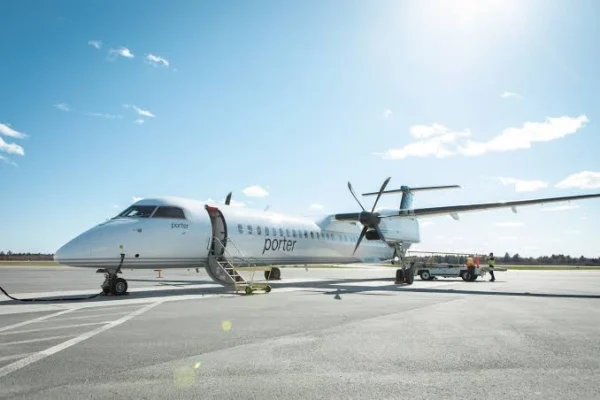
Porter Airlines is suspending its nonstop service between Ottawa and Greater Sudbury after passenger demand failed to reach levels required to sustain the regional connection.
The final flight is scheduled for September 7, 2026, ending Northern Ontario’s direct air link with Canada’s capital slightly more than four months after the service began. Porter will redirect the aircraft capacity towards markets demonstrating stronger passenger demand and better long-term performance across its expanding North American network.
The decision represents a major change for Sudbury travellers who used Ottawa as both a final destination and a connecting point for other Porter services. After the suspension, passengers travelling between the two cities will need to consider connecting flights, road transportation or other available travel options.
Porter introduced the daily Ottawa–Sudbury service on May 1, 2026, as part of a broader restructuring of its regional Ontario network. The route replaced the airline’s previous connection between Sudbury and Toronto Billy Bishop Airport.
Daily Route Was Designed to Expand Connectivity
The Ottawa–Sudbury service operated seven times weekly and was intended to connect Greater Sudbury with Porter’s growing hub in the national capital.
Through Ottawa International Airport, passengers could access onward services to destinations across Canada, the United States and other parts of Porter’s network. The route was expected to serve government travel, business trips, tourism, family visits and passengers connecting beyond Ottawa.
However, the market did not develop as expected. Lower passenger volumes and changing travel patterns weakened the route’s commercial performance, prompting Porter to remove it from its schedule.
The suspension illustrates the continuing challenges facing regional aviation in Canada, particularly on shorter routes where airlines must balance community connectivity with operating costs and consistent passenger demand.
Although the service was announced as an important new link, its short operating period demonstrates how quickly carriers can adjust capacity when route performance falls below expectations.
Changing Travel Habits Pressure Regional Routes
Regional flights connecting cities within driving distance face growing competition from private vehicles, buses and other ground transportation.
Ottawa and Sudbury are separated by a journey that some passengers may choose to complete by road, particularly when travelling in groups or carrying additional luggage. Airport check-in requirements, security procedures and fixed flight schedules can also influence travellers considering whether to fly or drive.
Business travel patterns have changed significantly as organisations continue using virtual meetings to replace some short-distance corporate journeys. Fewer in-person meetings can reduce demand on regional routes that previously relied on frequent government and business passengers.
Airlines are also evaluating routes more closely as they seek to maximise aircraft utilisation. Capacity is increasingly directed towards destinations with stronger booking levels, higher load factors and greater opportunities for connecting traffic.
Sudbury Loses Porter Airlines Service
The end of the Ottawa route means Porter will no longer operate scheduled flights from Greater Sudbury Airport.
Porter had served the Sudbury market for more than 15 years, making the withdrawal an important development for the city’s aviation sector and regional travel options.
However, Greater Sudbury Airport will continue to receive commercial air services from other operators. Air Canada, WestJet, Bearskin Airlines and Propair provide connections supporting residents, tourists, businesses and communities across Northern Ontario.
These airlines maintain access to domestic hubs and smaller regional destinations, although passengers seeking to reach Ottawa may need to connect through another airport.
The loss of a direct route can increase journey times and travel costs while reducing flexibility for visitors and local residents. It may also affect tourism businesses that depend on convenient transportation from major urban markets.
Greater Sudbury remains a four-season tourism destination offering outdoor recreation, cultural attractions and family experiences. Science North, Dynamic Earth, local lakes, hiking trails and festivals continue to attract visitors to the region.
Porter Redirects Capacity to Growing Markets
The suspension does not signal a broader retreat from Ottawa, where Porter continues to expand its network.
The airline launched nonstop Ottawa–Windsor service on May 1, while direct flights between Ottawa and Kelowna began later in May. Porter also introduced seasonal Ottawa–Deer Lake service in June, strengthening connections between Canada’s capital and Newfoundland and Labrador.
These routes form part of Porter’s wider strategy of developing Ottawa as an important connecting hub. The airline continues to add flights where it identifies stronger leisure, business and visiting-friends-and-relatives demand.
Redirecting aircraft from weaker services allows airlines to increase capacity in markets offering better revenue opportunities. However, such decisions can create connectivity gaps for smaller communities where passenger volumes may not support frequent direct service.
Final Flight Set for September 7
Porter’s last Ottawa–Sudbury flight is scheduled to operate on September 7, giving affected passengers time to review future travel plans.
The closure ends a short-lived attempt to reposition Sudbury’s Porter connection through Ottawa rather than Toronto Billy Bishop.
For Northern Ontario travellers, the suspension highlights the vulnerability of regional air routes to shifting demand and operational pressures. It also underscores the importance of maintaining reliable passenger volumes when airlines introduce new connections.
While Sudbury retains commercial aviation access, the loss of Porter removes its only nonstop link to Canada’s capital and reduces competition within the local market.
As Porter continues expanding elsewhere, the Ottawa–Sudbury suspension shows that airline growth can involve both launching promising destinations and quickly withdrawing services that do not achieve sustainable demand.
For more travel news like this, keep reading Global Travel Wire