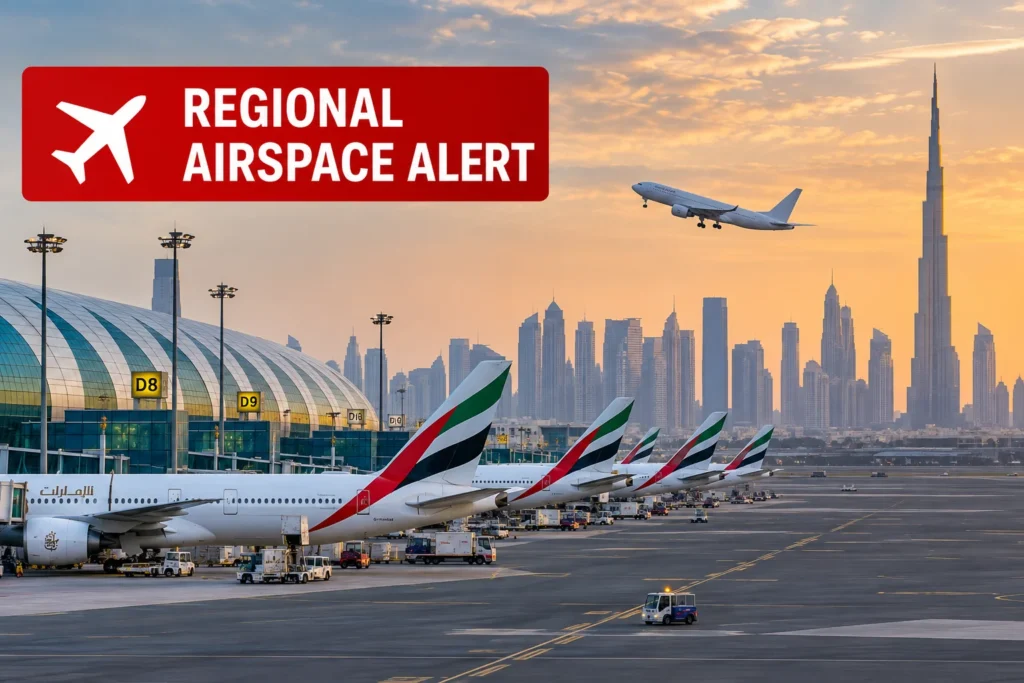
Aviation authorities and transport official bodies across the Middle East are closely monitoring regional developments affecting international flight corridors, maritime shipping lanes, and energy supply chains. For international visitors, transit passengers, and UAE residents planning business or leisure travel, official civil aviation updates confirm that while primary aviation hubs remain active, operational adjustments continue to shape flight schedules and transit times across the region.
Current Airport Operations and Civil Aviation Guidelines
According to public notices issued by national civil aviation regulators and official airport operators, major aviation gateways—including Dubai International Airport and Zayed International Airport in Abu Dhabi—maintain active commercial flight operations. Airlines operating within the region continue to process passenger arrivals, departures, and international transfers under continuous safety monitoring protocols.
However, civil aviation authorities note that flight paths across the Middle East are being dynamically adjusted to prioritize air safety. Because commercial air carriers are altering flight corridors to avoid restricted or sensitive airspace, several long-haul and regional routes are experiencing extended flight durations. Additionally, certain international carriers have implemented temporary suspensions, schedule modifications, or rerouting measures for specific destination points.
Official public advisories issued by civil aviation management urge all outbound and transit passengers to verify their flight status directly through official airline notification channels prior to departing for airport terminals. Passengers are also advised to allow extra processing time at check-in desks and security checkpoints due to potential schedule adjustments.
Impact on Maritime Logistics, Energy Corridors, and Global Freight
Beyond civil aviation, official energy ministry statements and maritime transport disclosures highlight significant developments along key trade routes. National energy authorities confirmed temporary operational adjustments to major overland pipelines designed to transport crude oil directly to Red Sea marine terminals, bypassing traditional Gulf transit choke points.
Concurrently, international maritime safety organizations and coastal monitoring agencies have heightened surveillance around vital maritime bottlenecks, including the Bab el-Mandeb Strait and the Strait of Hormuz. These narrow waterways collectively handle a substantial percentage of daily global petroleum shipments and containerized cargo traffic.
Official trade and logistics reports indicate that heightened maritime precautions and revised navigation paths have contributed to fluctuations in global oil benchmarks and increased commercial freight shipping indices. Marine safety bulletins are advising vessel operators to maintain direct communication with regional coast guard authorities and strictly follow established maritime security protocols when transiting regional sea lanes.
Environmental Monitoring in Coastal Waters
Environmental protection departments and coastal safety authorities are actively tracking marine environmental developments off regional waters. Marine monitoring bulletins have identified a localized oil slick in the Gulf of Oman spanning several hundred square kilometers.
State environmental agencies, alongside national coast guard units, have deployed marine monitoring equipment and containment booms to protect sensitive coastal ecosystems, marine habitats, and nearby desalination plant infrastructure. Desalination operators and port authorities confirm that municipal water intake facilities remain protected under standard safety and environmental monitoring procedures.
Diplomatic Consensus and International Safety Directives
Diplomatic communications issued through joint intergovernmental summits—including statements released by foreign ministry representatives and international trade blocs—continue to emphasize regional stability. Official communiqués call for maximum diplomatic restraint, open communication channels, and peaceful dispute resolution to safeguard global trade routes, economic stability, and international civil aviation safety.
National tourism boards and civil aviation directorates reaffirm that passenger safety remains the paramount priority across all international transport sectors. Official tourism authorities recommend that international travelers register their itineraries with their respective national diplomatic missions and rely exclusively on verified government press releases, official airport notifications, and civil aviation advisories for accurate travel updates.
Key Recommendations for Travelers and Transport Users
To navigate potential disruptions smoothly, official tourism and civil aviation guidance highlights the following steps:
Verify Live Flight Status: Check real-time flight boards via official airline mobile applications or official airport portal services before leaving your accommodation.
Update Contact Information: Ensure passenger contact details attached to flight bookings are current to receive instant SMS or email notifications regarding itinerary updates.
Buffer Extra Travel Time: Plan to arrive at airport departure terminals well ahead of standard check-in cut-off times to accommodate potential security or processing delays.
Follow Official Bulletins: Rely on direct notices from the General Civil Aviation Authority, official airport operators, and government ministry announcements rather than unverified social media reports.
As civil aviation bodies and maritime transport agencies continue to manage daily operations, official public updates will provide real-time updates regarding airspace status, carrier schedules, and travel recommendations.
For more travel news like this, keep reading Global Travel Wire