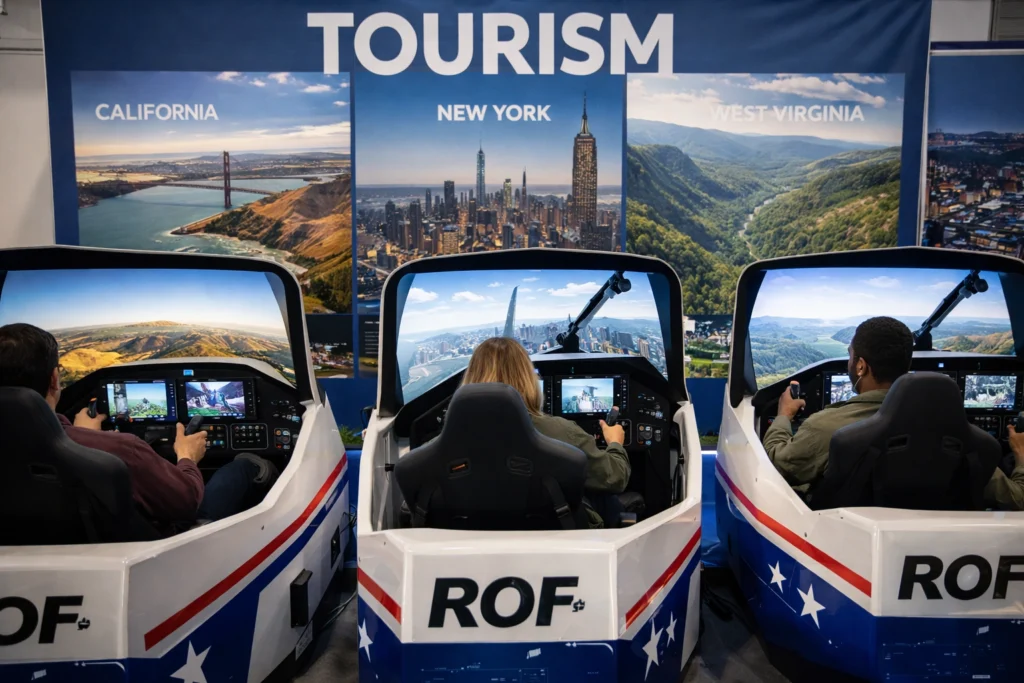
As the United States prepares for its 250th anniversary in 2026, a new tourism technology is emerging as a powerful tool for destination marketing, visitor engagement, and state branding. ROF flight simulators, developed by RoarFun, are being positioned as an interactive platform that allows states to showcase landscapes, culture, and history through immersive aerial experiences.
The concept arrives at a pivotal moment for U.S. tourism. America 250 celebrations are expected to attract millions of domestic and international visitors, creating major opportunities for states to stand out in a crowded national spotlight. Instead of relying only on brochures, videos, or static displays, destinations can now invite travelers to experience their identity through virtual flight journeys .
A New Era of Tourism Storytelling
Traditional destination marketing often depends on images, advertisements, and promotional campaigns. ROF introduces a more active model where visitors participate rather than observe.
Through advanced flight simulation, users can virtually fly across mountains, coastlines, skylines, and historic sites while engaging with stories tied to each region. This creates a stronger emotional connection than passive marketing and can inspire future travel decisions.
For tourism boards, that means turning geography into an experience and converting curiosity into real visitor interest.
Why America 250 Matters
The 250th anniversary of the United States is set to become one of the country’s largest national milestones, drawing attention from travelers, media, and global audiences. States will compete for visitor spending, event attendance, and long-term tourism exposure.
In that environment, immersive technology can become a major advantage. A memorable experience on the exhibition floor or at a public event may influence where travelers choose to visit next.
ROF offers states a way to present themselves not just as places on a map, but as living destinations with stories visitors can feel connected to.
Bringing Landscapes and History to Life
One of the strongest features of the platform is its ability to combine scenic beauty with storytelling. A state can highlight natural landmarks, urban icons, or historic achievements through a guided simulation experience.
Instead of reading about a destination, travelers can virtually soar above deserts, forests, rivers, or city centers while learning what makes that place unique.
This approach is especially valuable for younger audiences and families who increasingly expect hands-on, digital-first experiences at public attractions and exhibitions.
Flexible for Events, Airports, and Tourism Shows
ROF is designed to work in compact spaces, making it suitable for a wide range of tourism settings. It can be deployed at national celebrations, travel expos, airports, airline lounges, convention centers, museums, and city festivals.
That flexibility gives destinations more ways to reach potential travelers throughout the year rather than only during one major event.
For airports and airline partners, immersive simulators can also enhance the passenger experience while promoting routes and destinations in an engaging format.
Accessibility Expands Audience Reach
Modern tourism campaigns increasingly focus on inclusion, and interactive experiences must be accessible to diverse audiences. The platform is designed to accommodate a wide range of visitors, including families, seniors, and people with mobility needs.
This broader accessibility matters because tourism growth depends on welcoming more travelers, not fewer. Experiences that can be enjoyed by all audiences help destinations build stronger and more inclusive brands.
A Boost for State Branding
Every U.S. state has its own identity, from iconic skylines and national parks to music heritage, culinary culture, and historic milestones. The challenge is communicating that identity quickly and memorably.
ROF gives tourism marketers a new format to do exactly that. A few minutes inside an immersive simulator can leave a stronger impression than traditional displays, especially in busy exhibition environments where destinations compete for attention.
States seeking to attract leisure visitors, event travelers, or international tourists may find this especially valuable.
Economic Impact Beyond Marketing
If successful, immersive tourism activations can deliver more than brand awareness. Stronger destination visibility can increase bookings for flights, hotels, attractions, and local experiences.
During America 250, even a small rise in visitor conversion could generate meaningful benefits for airlines, hospitality providers, retailers, and local economies.
For lesser-known destinations, technology-led storytelling may help them compete with established tourism giants by offering something unexpected and memorable.
The Future of Travel Promotion
The rise of immersive platforms like ROF reflects a wider shift in tourism marketing toward interaction, personalization, and experience-led engagement. Travelers increasingly want to connect with destinations before they arrive, not just after they book.
That trend is likely to grow as virtual reality, AI, and experiential technology become more common across the travel industry.
A Defining Opportunity for U.S. Tourism
ROF flight simulators arrive at exactly the right time for America 250. They offer states a modern way to celebrate identity, attract visitors, and stand out during one of the biggest tourism moments in U.S. history.
As destinations look for fresh ways to inspire travel, immersive storytelling may prove just as important as traditional advertising in shaping where visitors go next.
For more travel news like this, keep reading Global Travel Wire