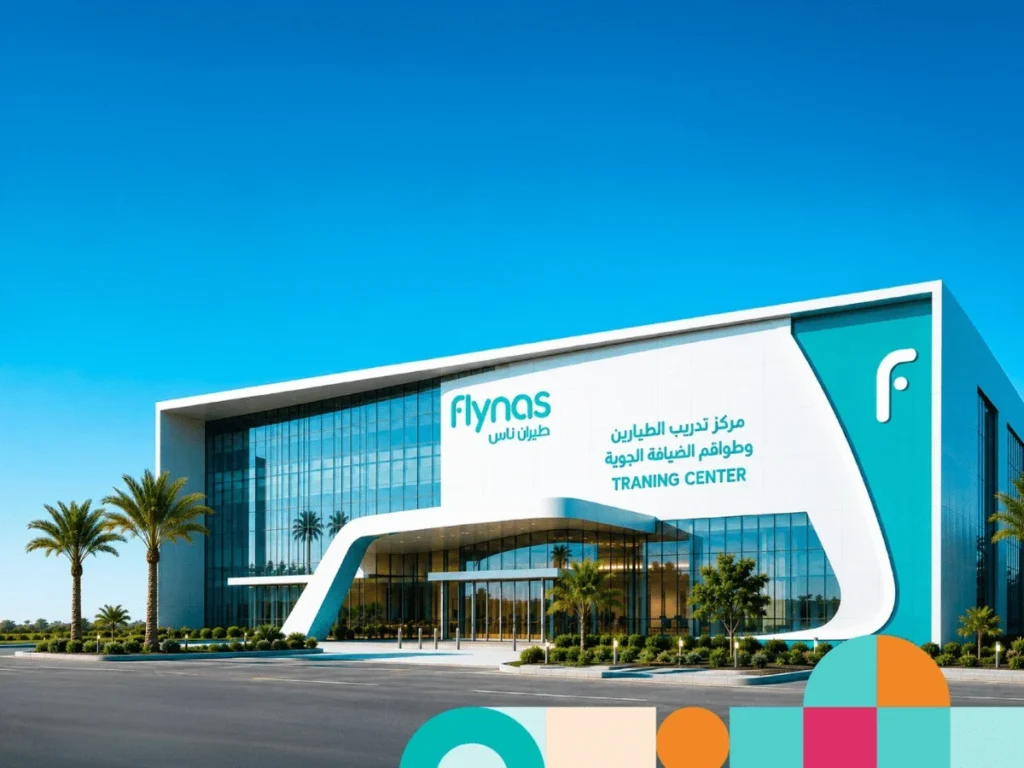
Saudi Arabia’s aviation expansion will receive a major workforce boost as Flynas develops an advanced pilot and cabin-crew training centre in Riyadh.
The airline plans to invest more than SAR200 million in the facility, equivalent to approximately US$53 million. The Flynas training centre is scheduled to open in 2028 and will bring more professional instruction into the Kingdom.
The approximately 13,000-square-metre facility will stand in Riyadh’s Al Rimal district, less than ten minutes from King Khalid International Airport.
Its location should help Flynas coordinate training with flight operations, crew schedules and recurrent licensing requirements. Reducing overseas training could also lower travel expenses and keep employees closer to their operating base.
Flynas is developing the project with Airbus, aviation training technology company CAE and Saudi organisation Restart. The partners will contribute different aircraft, simulation and local project capabilities.
Centre could serve 700 learners daily
The new facility is designed to accommodate approximately 700 trainees each day across different programmes and learning environments.
That figure does not represent 700 new graduates daily. Aviation training includes classroom instruction, digital learning, safety exercises, examinations, simulator sessions and recurring competency assessments.
Actual annual output will depend on programme duration, instructor availability, simulator use and regulatory approvals.
Three advanced flight simulators are planned for the first development phase. The building will initially contain space for eight simulators, with potential capacity for as many as 14 during future expansion.
However, Flynas has not confirmed that all 14 devices have been ordered. Additional installations will depend on fleet growth, financing, technical requirements and training demand.
Simulators allow pilots to practise standard operations, equipment failures, difficult weather and emergency situations without placing passengers or aircraft at risk. Instructors can assess decisions, introduce complications and review performance in a controlled setting.
Cabin crew safety remains central
The centre will also provide practical instruction for cabin crew, whose responsibilities extend beyond inflight hospitality.
Cabin employees must manage evacuations, smoke, fire, medical incidents and passenger movement during emergencies. They also prepare aircraft cabins for departure and arrival while enforcing regulatory safety requirements.
Purpose-built facilities can recreate aircraft interiors, doors and emergency exits. These environments allow employees to practise procedures repeatedly before applying them in commercial operations.
Flynas has not released a complete inventory of the planned cabin-training equipment. Nevertheless, bringing classroom, practical and digital instruction together could improve consistency across the airline.
The carrier has already expanded its service-related training. Previous programmes taught cabin and ground employees how to support passengers with autism. Flynas also introduced sign-language instruction for communication with deaf and hard-of-hearing travellers.
These initiatives can strengthen accessibility while mandatory operational training protects passenger safety.
New methods support pilot readiness
The physical centre follows Flynas’ April 2026 agreement with Airbus to adopt Evidence-Based Training and the Airbus MATe digital learning platform.
Flynas said it became the first Saudi airline to introduce these methods. Evidence-Based Training uses operational information and competency assessment to focus instruction on risks and skills relevant to actual flying.
The MATe platform lets pilots study aircraft systems and procedures through computers and mobile devices. Combining digital preparation with classroom and simulator instruction could create a more integrated training process.
The project may also give Flynas greater control over training calendars. Aircraft cannot produce commercial capacity unless enough qualified people are ready to operate them.
A larger domestic facility could therefore help align recruitment, aircraft deliveries and route expansion.
Saudi talent gains specialised career pathways
Flynas has positioned national workforce development at the centre of the investment.
Its six-month Flight Dispatcher Cadet Programme began receiving its first trainees in April 2026. The programme combines theoretical and practical instruction at the airline’s Operations Control Centre in Riyadh.
Flynas also says its Future Pilots Programme helped achieve full localisation of its co-pilot role in 2019. Meanwhile, the Future Engineers Programme provides workplace training for Saudi aviation and technology graduates.
The new centre could connect these workforce initiatives with the airline’s expanding operational requirements. However, Flynas has not announced how many permanent jobs the facility will create.
Fleet expansion drives training demand
Flynas operates more than 2,000 weekly flights across 156 routes. Its network covers over 80 destinations in more than 38 countries, while the airline has carried 110 million passengers since launching in 2007.
A 2024 agreement covering 160 Airbus aircraft will significantly expand its long-term training needs. The order includes 130 A320-family aircraft and 30 A330neo wide-body jets.
Every aircraft delivery creates demand for pilots, cabin crew, engineers, dispatchers and operational specialists. Additional aircraft types can also require new qualifications and conversion programmes.
Tourism growth depends on skilled crews
Saudi Arabia aims to accommodate 330 million air passengers annually and connect with more than 250 destinations under its National Aviation Strategy.
These targets support leisure tourism, business travel, investment and religious journeys. Yet airports and aircraft alone cannot deliver that growth.
Qualified professionals are essential for adding routes, maintaining safety and supporting peak Hajj and Umrah operations.
The Flynas training centre will not directly create visitor demand or guarantee lower fares. However, it can strengthen the workforce behind reliable airline capacity.
If completed as announced in 2028, the Riyadh facility will bring strategic aviation skills closer to home while supporting Flynas, Saudi tourism and the Kingdom’s long-term connectivity ambitions.
For more travel news like this, keep reading Global Travel Wire