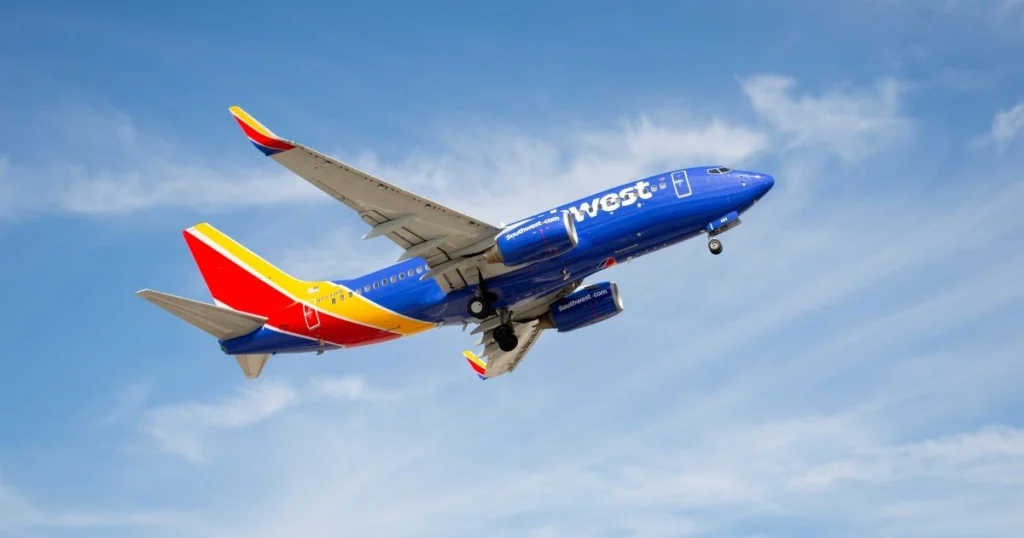
Southwest Airlines Flight SWA2973 diverted to Chicago Midway International Airport on July 11 while operating a scheduled journey from Minneapolis to St. Louis, creating an unexpected interruption for passengers travelling between the two major Midwestern cities.
The flight, operated by a Boeing 737-7H4, departed Minneapolis–Saint Paul International Airport before changing course and landing at Chicago Midway rather than continuing directly to St. Louis Lambert International Airport.
The aircraft reached the diversion airport safely. However, Southwest Airlines and the relevant aviation authorities had not publicly confirmed the reason for the diversion at the time the available information was compiled.
Consequently, travellers should avoid attributing the event to weather, a technical concern, a passenger illness or any other possible cause unless an official explanation is released.
Reason for Flight Diversion Remains Unconfirmed
The central question for passengers is why Flight SWA2973 was redirected to Chicago. Airlines can divert aircraft for several reasons, but no specific explanation has been officially connected to this flight.
Flight crews, airline dispatchers and air traffic controllers continually evaluate weather, airport conditions, aircraft performance and operational developments throughout a journey. When circumstances change, diverting to another airport may become the safest or most practical decision.
Possible causes of diversions across commercial aviation can include severe weather, air traffic restrictions, airport congestion, medical situations, technical assessments or operational requirements. Nevertheless, these remain general examples and should not be interpreted as explanations for the July 11 Southwest Airlines event.
Until Southwest provides further details, the confirmed development is that the Minneapolis-to-St. Louis flight landed at Chicago Midway instead of its scheduled destination.
What Is Known About the Aircraft?
Flight SWA2973 was reportedly operated by aircraft registration N246LV, a Boeing 737-7H4 belonging to the Boeing 737-700 family.
The Boeing 737-700 is part of the manufacturer’s Next-Generation 737 series. Boeing describes the aircraft family as designed for short- and medium-distance operations, making it widely suited to domestic services connecting cities across the United States.
Southwest has used Boeing 737 aircraft extensively throughout its network. These single-aisle jets support frequent services between large metropolitan gateways, regional business centres and popular leisure destinations.
The aircraft type should not be confused with the newer Boeing 737 MAX 7. The 737-7H4 designation refers to a 737-700 produced for Southwest, with the final characters representing a customer-specific model code used during aircraft manufacturing.
No official information supplied in connection with the diversion indicated injuries or aircraft damage. However, the absence of a detailed public statement means travellers should continue relying on confirmed updates rather than unofficial interpretations.
Chicago Midway Provides Major Southwest Operations Base
Chicago Midway International Airport is a significant destination within Southwest Airlines’ domestic network, giving the carrier operational resources and onward connectivity when a flight must make an unscheduled landing.
Its location also made Chicago a practical diversion point along a journey travelling southeast from Minneapolis towards St. Louis. An airline may select a diversion airport based on runway availability, weather, maintenance support, passenger services, fuel requirements and onward transport possibilities.
After a diverted aircraft lands, airline teams may need to assess the situation, inspect the aircraft or organise another journey before passengers can continue to their intended destination.
The process can lead to delays even when the diversion is precautionary. Passengers may remain aboard, enter the terminal, transfer to another aircraft or receive revised travel arrangements depending on the circumstances.
What Affected Passengers Should Do
Passengers affected by the diversion should monitor the Southwest Airlines mobile application, official flight-status platform and direct notifications for information about onward travel.
They should also retain boarding passes, baggage receipts and any records of additional expenses incurred during the disruption. These documents may be useful when seeking assistance or clarification from the airline.
Travellers with connecting journeys from St. Louis should review their entire itinerary rather than monitoring only the diverted flight. A delayed arrival could affect onward flights, ground transport, hotel bookings, business appointments or scheduled tourism activities.
Passengers should also verify where checked baggage will be collected, particularly when an aircraft lands at an airport different from the destination printed on the original baggage tag.
Diversions Demonstrate Aviation’s Safety-First Approach
An unexpected landing can cause concern, especially when passengers receive limited information while events are developing. However, diversions are established operational measures that allow crews to respond cautiously to changing circumstances.
Commercial aviation places safety ahead of maintaining the original schedule. Therefore, a diversion does not automatically mean that a serious emergency occurred.
For Flight SWA2973, the absence of an officially confirmed cause remains an important part of the story. Speculation could create unnecessary concern and misrepresent the decisions made by the crew.
Further information from Southwest Airlines or aviation authorities may clarify why the aircraft diverted on July 11. Until then, the safe landing at Chicago Midway and the resulting passenger disruption remain the principal confirmed elements of the journey.
For more travel news like this, keep reading Global Travel Wire