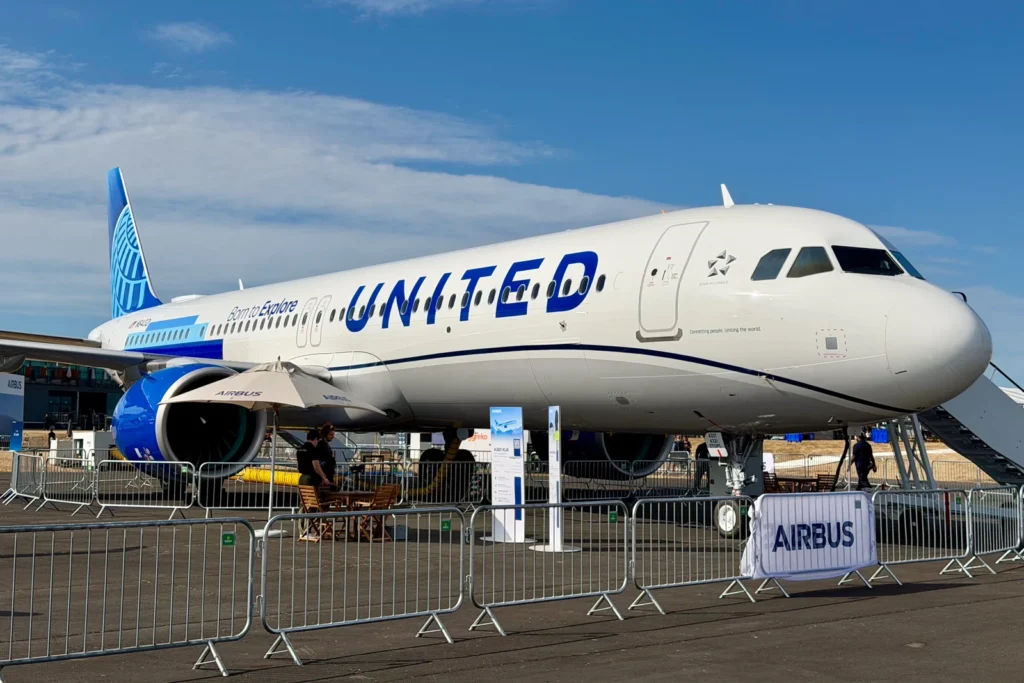
United Airlines’ planned Airbus A321XLR fleet could expand nonstop travel between the United States and Europe. The long-range, single-aisle aircraft gives the carrier another option for routes where a larger jet may offer too many seats.
United has ordered 50 A321XLR aircraft. Its plans position the jet for transatlantic flying as the airline renews its fleet and considers future routes. For travellers, the potential benefit is a wider choice of direct flights. For destinations, a viable new service could bring visitors beyond established international gateways.
The aircraft also offers a potential replacement for older Boeing 757 jets used on longer routes. However, an aircraft order does not confirm a new route, launch date or passenger schedule. Those details will depend on United’s operational plans.
Why the A321XLR Matters for International Travel
The A321XLR belongs to Airbus’s A320neo family and offers a published range of up to 4,700 nautical miles. That capability allows airlines to consider longer nonstop flights with fewer seats than a widebody aircraft.
Aircraft size matters when an airline evaluates a route. A city may attract enough travellers to support a direct flight but struggle to fill a larger jet throughout the year. A long-range, single-aisle aircraft gives the airline another way to match capacity with demand.
For passengers, that could mean reaching a destination without changing planes at a major hub. A nonstop service can simplify a trip, especially for travellers carrying luggage or building a holiday around several destinations. Its value still depends on the route and schedule an airline ultimately offers.
Transatlantic Routes Could Gain More Flexibility
United’s A321XLR order supports its interest in developing transatlantic services from key US hubs. The aircraft could serve markets where demand supports a direct connection but varies by season.
That flexibility matters across the tourism calendar. Summer holidays can bring strong demand to European destinations, while quieter months may require airlines to manage seat capacity carefully. A smaller long-range jet could help an airline assess those markets without committing the capacity of a larger aircraft.
The A321XLR could also help preserve convenient links as older aircraft leave service. United has identified its ageing Boeing 757 fleet as part of the replacement opportunity. A modern aircraft with long-range capability gives the carrier options as it plans future schedules.
These possibilities should not be mistaken for announced flights. Travellers will need confirmed destinations, dates and schedules before they can make plans around United’s A321XLR service.
What Better Air Access Could Mean for Tourism
A new nonstop flight can make a destination easier to include in an international holiday. Visitors who previously faced a connection may find a shorter, simpler journey more appealing.
If United launches additional routes, local hotels, restaurants and attractions could gain access to more US visitors. Airports and tourism organisations could also use improved connectivity to promote travel across surrounding regions. Business travellers may benefit from easier access between commercial centres.
The scale of any benefit would depend on actual flight frequency, fares and passenger demand. A destination would also need suitable airport facilities and ground transport to turn an air link into a convenient visitor experience.
The A321XLR creates an opportunity for those connections; it does not guarantee them. United’s eventual route decisions will show where the aircraft can make the strongest commercial case.
Fleet Renewal and the Passenger Experience
For United, the A321XLR forms part of a broader decision about how to renew aircraft while maintaining international reach. Newer jets can give airlines more choices when balancing fuel use, operating costs and the number of seats offered on a flight.
Airbus designed the A321XLR for longer journeys than earlier members of the A320neo family. Its capabilities could allow United to use a single-aisle aircraft on routes that require substantial range.
Cabin experience will matter just as much to travellers making an overnight crossing. Seating, onboard service and other features can shape whether a direct flight feels attractive alongside connecting alternatives. Passengers should look to United’s confirmed aircraft and cabin details when bookings become available.
What Comes Next for United’s A321XLR
The clearest development is United’s commitment to the aircraft and its stated transatlantic ambitions. The next meaningful steps will be confirmed delivery information and the airline’s own route announcements.
Until then, the A321XLR offers a view of how international networks may evolve. It gives airlines a way to consider long-distance markets that need direct service without the seat capacity of a widebody jet.
For tourism destinations, that could eventually open doors to new visitors. For travellers, it could mean more nonstop choices across the Atlantic. United’s schedules will determine when and where those possibilities become real flights.
For more travel news like this, keep reading Global Travel Wire