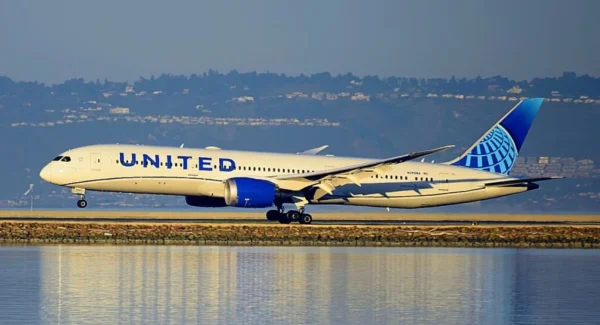
United Airlines Flight UAL576, operating from Minneapolis to Chicago, diverted to Madison, Wisconsin, on July 17, 2026, bringing an unexpected change to what was scheduled as a routine domestic journey.
The Boeing 737-724 was travelling toward Chicago when its routing changed and the aircraft landed at Dane County Regional Airport in Madison instead of continuing directly to its intended destination.
The diversion quickly attracted attention because Chicago O’Hare International Airport is one of the busiest aviation hubs in the United States and an important connecting point within United Airlines’ network.
However, the precise reason for the diversion has not been officially established in the information available for this report.
Without a confirmed explanation from the airline or relevant aviation authorities, travellers should avoid assuming that weather, a technical problem, a passenger medical situation or another operational issue caused the unscheduled landing.
Why do commercial flights divert?
A flight diversion does not automatically indicate that an aircraft has experienced a serious emergency.
Flight crews may decide to land at an alternate airport for many operational reasons, with passenger and crew safety remaining the priority.
Possible circumstances across commercial aviation can include severe weather at the destination, airport congestion, changing air traffic conditions, medical situations, precautionary technical assessments or other operational requirements.
These are general reasons why aircraft sometimes divert and should not be interpreted as the confirmed cause of the UAL576 event.
Pilots work with airline operations teams and air traffic controllers when determining whether an alternate airport provides the safest and most practical option.
Madison offers a practical alternate airport
Dane County Regional Airport serves Madison and provides commercial aviation infrastructure capable of supporting airline operations.
Its location between Minneapolis and the Chicago region can make Madison a practical alternate destination under certain operational circumstances.
When an aircraft lands at an alternate airport, several actions may follow depending on why the diversion occurred.
The aircraft could require refuelling, an operational assessment or a technical inspection. Airlines may also need to review crew duty requirements, passenger connections and airport handling arrangements before determining the next step.
In some cases, passengers remain aboard before the flight continues.
In others, travellers may disembark and receive revised transportation arrangements.
Diversions can affect connecting passengers
For travellers, one of the biggest consequences of an unexpected diversion can be disruption to onward connections.
Chicago O’Hare functions as a major United Airlines hub, meaning some passengers aboard a Minneapolis-Chicago service may have been travelling onward to other domestic or international destinations.
Even a relatively short diversion can therefore create wider itinerary changes.
Passengers affected by operational disruptions should monitor official airline communications for updated departure information, gate changes, rebooking arrangements and revised connection details.
Travellers with onward flights should also review every segment of their itinerary instead of focusing only on the diverted service.
Weather and technical causes remain unconfirmed
It is important to separate confirmed facts from possible explanations.
Chicago aviation can experience operational challenges ranging from thunderstorms and strong winds to congestion and air traffic restrictions. Commercial aircraft can also divert as a precaution when crews need a technical matter assessed.
Medical situations involving passengers or crew represent another recognised reason for unscheduled landings.
However, none of these possibilities should be presented as the cause of the July 17 UAL576 diversion without official confirmation.
The central confirmed detail is that the Minneapolis-Chicago journey was redirected to Madison.
Until a definitive explanation is issued, speculation about the reason should be avoided.
What travellers should do during a diversion
Passengers experiencing a diversion should keep airline notifications active and listen carefully to information provided by flight crews and airport staff.
Travellers with onward connections should check whether those flights remain reachable and review alternative arrangements when necessary.
Keeping essential medication, identification documents, chargers and basic necessities in carry-on baggage can also be useful when an unexpected diversion significantly extends a journey.
Travel insurance coverage may vary depending on the cause and duration of a disruption, so passengers should review their individual policy conditions before making claims.
Safety remains the overriding priority
Diversions are an established part of commercial aviation operations.
Although they can create inconvenience and uncertainty, the decision to use an alternate airport gives flight crews flexibility when circumstances make continuing with the original plan undesirable.
For United Airlines Flight UAL576, the most important point is that travellers should rely on confirmed operational information rather than speculation surrounding the cause.
Until United Airlines or the appropriate aviation authority provides a definitive explanation, the reason behind the Madison diversion should remain unconfirmed.
The July 17 incident ultimately highlights how quickly airline operations can change and why passengers should monitor official flight updates throughout their journey, particularly when travelling through major connecting hubs such as Chicago O’Hare.
For more travel news like this, keep reading Global Travel Wire