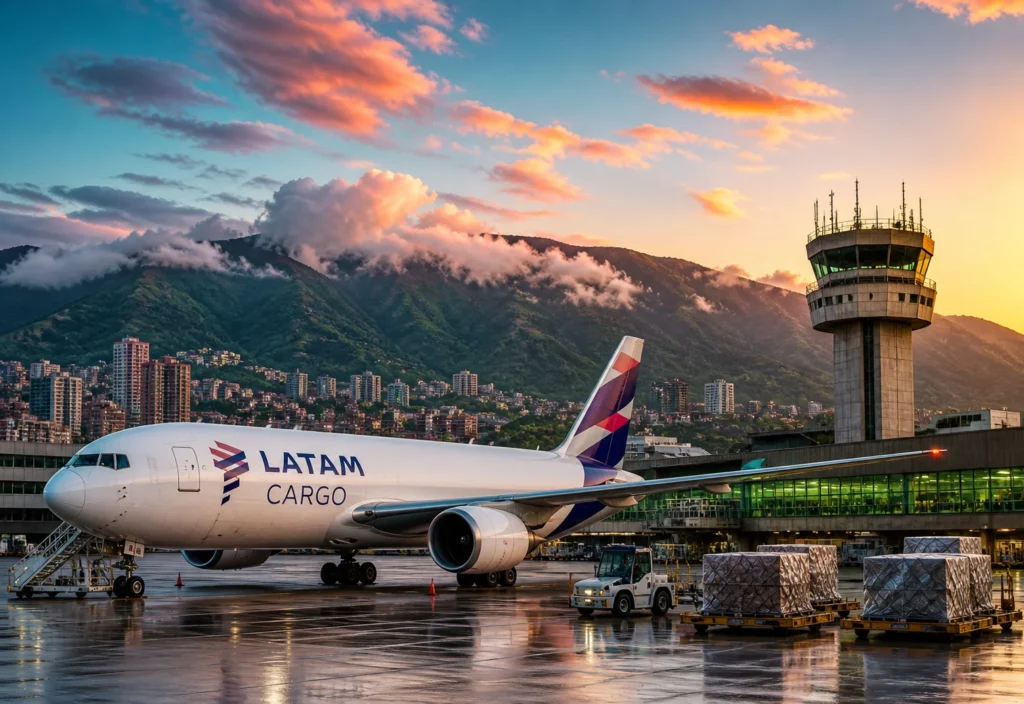
Venezuela’s tourism sector is entering a new phase of recovery as international aviation connectivity steadily improves. The latest development comes from LATAM Cargo, which has launched a new cargo route linking Miami and Caracas, reinforcing the country’s growing re-entry into global travel and trade networks.
The service, operated by the airline’s Colombian subsidiary, began operations on May 3, connecting Miami International Airport with Simón Bolívar International Airport in Caracas. Flights are scheduled twice a week, on Sundays and Thursdays, using Boeing 767 freighters. The route also extends to Bogotá, strengthening regional connectivity across Latin America.
This expansion is widely seen as a positive signal for Venezuela’s tourism and travel ecosystem. Although primarily focused on cargo, such routes play a critical role in restoring aviation infrastructure, enabling smoother passenger operations, and supporting hospitality and tourism services.
Officials and aviation stakeholders highlight that improved connectivity between the United States and Venezuela is essential for rebuilding international tourism flows. Increased cargo capacity ensures better supply chains, availability of goods, and operational stability for airlines and airports, all of which contribute indirectly to a stronger travel experience.
The introduction of this route follows recent policy changes that have eased restrictions on Venezuela’s aviation and financial sectors. These developments have allowed international carriers to resume operations, reconnecting the country with major global hubs. The reopening of air corridors is expected to encourage both business and leisure travel, particularly from North America and neighboring regions.
The Miami–Caracas link is especially significant, as Miami serves as a major gateway for Latin American travel. By strengthening this connection, airlines are helping to restore Venezuela’s accessibility for international visitors, including diaspora travelers and tourists seeking cultural and natural experiences.
LATAM Cargo officials stated that the new service was introduced in response to growing demand for connectivity between the United States and Venezuela. The airline emphasized its ability to quickly deploy resources and adapt its network to meet market needs, reflecting a broader trend of airlines responding to renewed opportunities in the region.
While the flights are primarily designed for general cargo and courier shipments, they also support specialized transport such as pharmaceuticals and oversized goods. This capability is crucial for tourism-related industries, including hotels, restaurants, and travel operators, which rely on consistent supply chains to maintain service quality.
The return of international cargo carriers to Venezuela is part of a wider aviation recovery. Several global airlines have recently increased their operations to Caracas, reflecting renewed confidence in the country’s market potential. Data indicates a significant rise in international cargo capacity, signaling a broader revival of air traffic.
Tourism authorities view this trend as a foundation for long-term growth. Reliable air connectivity is a key factor in attracting international visitors, and the gradual return of airlines helps rebuild trust among travelers. As routes expand and frequencies increase, destinations across Venezuela are expected to become more accessible.
The revival of aviation services also supports local economies. Tourism-dependent businesses, including hotels, tour operators, and transport providers, benefit directly from increased connectivity. Improved logistics ensure that essential goods and services are available, enhancing the overall visitor experience.
In addition, the strengthened air network is expected to facilitate the promotion of Venezuela’s पर्यटन offerings, from its Caribbean coastline to its राष्ट्रीय उद्यान and cultural landmarks. With better connectivity, tourism boards can more effectively market the country as a destination for international travelers.
Industry experts note that cargo operations often pave the way for passenger services. As airlines re-establish routes and build operational confidence, passenger flights are likely to follow, further boosting tourism. The recent resumption of flights between the United States and Venezuela marks a significant milestone in this process, ending years of limited connectivity.
The expansion of services by airlines like LATAM Cargo underscores a broader transformation in Venezuela’s aviation landscape. With improved infrastructure, supportive policies, and growing demand, the country is positioning itself for a gradual tourism recovery.
Looking ahead, continued collaboration between aviation authorities, tourism boards, and airlines will be essential to sustain this momentum. Strategic investments in airport facilities, route development, and marketing initiatives can further enhance Venezuela’s appeal as a travel destination.
As global travel demand continues to rebound, Venezuela’s renewed connectivity offers promising opportunities. The launch of new routes, combined with policy reforms and industry support, is creating a more stable environment for tourism growth.
With Venezuela tourism revival gaining pace, the country is steadily re-emerging on the global travel map. Enhanced air connectivity, supported by initiatives like LATAM Cargo’s new service, is expected to play a central role in shaping the future of tourism in the region.