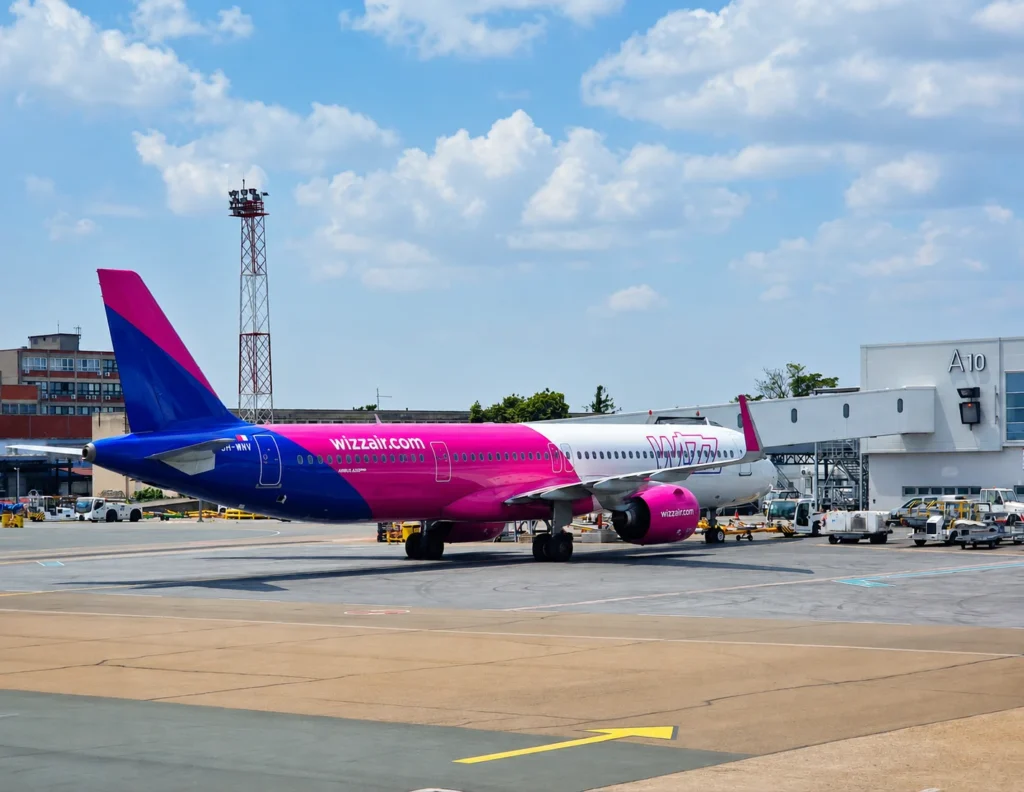
Wizz Air’s four-aircraft base at Belgrade Nikola Tesla Airport faces a decision ahead of the 2026/27 winter season. The outcome could shape Serbia’s direct flights to European cities and the visitor demand those services support.
The airline and Serbian authorities remain at odds over amended rules for foreign carriers. A decision is expected this week, and the base may continue operating through the winter schedule. However, Wizz Air and Serbian authorities have not yet confirmed that outcome. Travellers and tourism businesses should therefore treat the base’s future as unresolved.
The dispute concerns where a foreign airline can station aircraft and crews, rather than whether it can serve Serbia at all. That distinction matters for Belgrade. A locally based fleet gives Wizz Air more flexibility to schedule direct flights throughout the day. Without it, the airline could still fly to Serbia, but its network might change.
Why the Belgrade Base Matters
Wizz Air has operated a Belgrade base since 2011. Its four based aircraft connect the Serbian capital with European markets used by leisure travellers, business passengers and people visiting friends and relatives.
The airline reported carrying around 700,000 passengers in Serbia across June, July and August 2026, on more than 3,000 flights. Those figures show the scale of its recent activity, although they do not establish how many flights depend on the local base.
Aircraft stationed in Belgrade can begin and finish rotations there. Crews can also work from the airport, allowing the airline to arrange multiple services around its Serbian operation. If aircraft must instead arrive from another base, some schedules could become harder to maintain.
For passengers, any eventual change would depend on individual routes and frequencies. A base closure would not automatically mean that Wizz Air stops flying to Belgrade. It could, however, affect the number and timing of direct services.
Serbian Aviation Rules Under Review
The disagreement follows changes introduced by Serbia’s Civil Aviation Directorate to rules governing foreign carriers. Wizz Air argues that the amended framework prevents it from maintaining its current Belgrade base model. Serbian authorities maintain that the rules address how foreign airlines establish bases in Serbia.
The European Commission has examined whether the amended rules align with Serbia’s commitments under the European Common Aviation Area agreement. The regulatory question remains open, making the period beyond the coming winter particularly important for airline planning.
The 2026/27 winter aviation season runs from October 25, 2026, to March 27, 2027. Even if Wizz Air keeps its four aircraft in Belgrade for that period, a short-term arrangement would leave questions about later schedules.
Airlines plan aircraft assignments, staffing and routes well before each season begins. Greater clarity would help Wizz Air assess its Belgrade network and give travellers a firmer basis for planning future trips.
Tourism Businesses Watch Winter Connectivity
Direct low-cost flights can make Belgrade more accessible for city breaks and longer Serbian itineraries. They also support outbound trips from Serbia to European destinations, creating travel demand in both directions.
Hotels, restaurants, attractions and ground transport providers have an interest in the decision. International visitors arriving on direct flights may stay in Belgrade or continue to other parts of Serbia. Business visitors and passengers seeing family can also contribute to accommodation and local spending.
Winter connectivity matters because airlines adjust capacity as demand changes. A stable schedule could help hospitality businesses plan for guests during a quieter part of the travel year. Conversely, fewer frequencies could limit travel choices even where a route remains available.
Belgrade’s role as a gateway also gives the decision a wider tourism reach. Visitors who begin their trip in the capital may travel onward to Serbian cultural sites, regional destinations and events. Reliable air access makes those journeys easier to arrange.
What Travellers Should Watch Next
The immediate question is whether Wizz Air and Serbian authorities confirm that the Belgrade base will remain through March 2027. Any announcement should also clarify what it means for aircraft, crews and the published winter schedule.
A decision to retain the base would offer near-term reassurance, but it would not guarantee every route or frequency. Likewise, a different base arrangement would require passengers to check the services available for their specific travel dates.
Serbia’s longer-term challenge is securing clear operating conditions while preserving useful international connections. For travellers, the clearest measure of the outcome will be the direct flights they can book, their frequency and their affordability.
For more travel news like this, keep reading Global Travel Wire