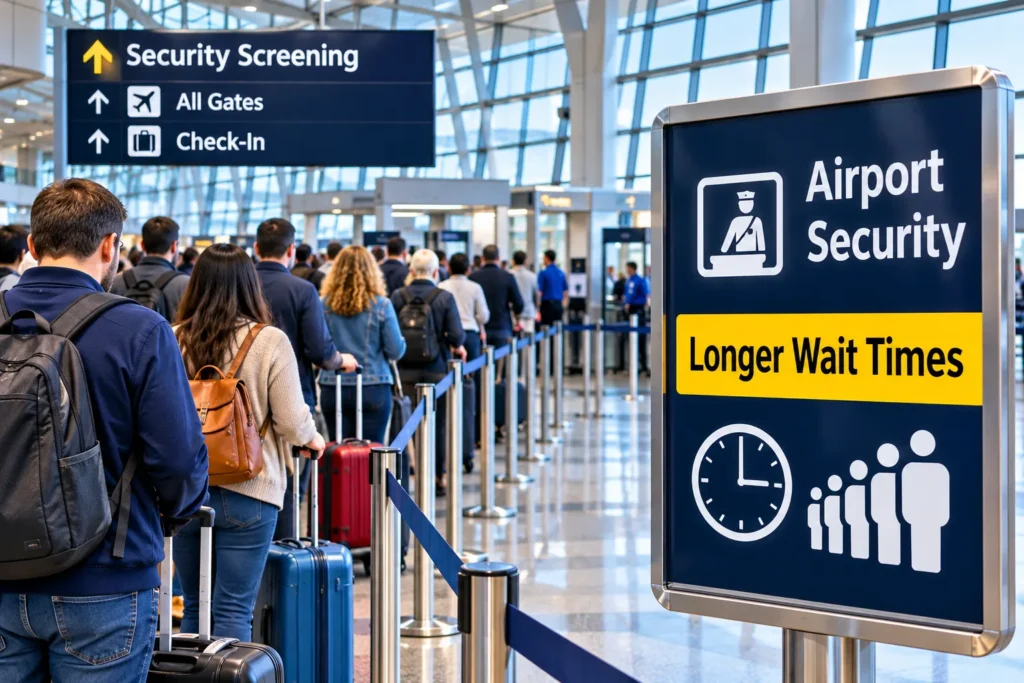
Official public statements from the Department of Homeland Security and administrative bulletins issued by municipal aviation departments confirm that passengers departing major domestic air hubs are encountering extended checkpoint queues and processing delays. The travel disruptions coincide with the annual spring break travel surge, creating significant operational congestion at screening checkpoints as a partial federal budgetary lapse impacts the Transportation Security Administration workforce. Federal homeland security representatives reported that security lines have exceeded two to three hours at high-volume aviation centers, resulting in missed flight departures and gate delays during peak departure windows.
Aviation facilities reporting extended queue times include William P. Hobby Airport and George Bush Intercontinental Airport in Houston, Louis Armstrong New Orleans International Airport in Louisiana, Hartsfield-Jackson Atlanta International Airport in Georgia, and Charlotte Douglas International Airport in North Carolina. Airport operations centers across these hubs are advising domestic and international passengers to arrive at departure terminals three to four hours before scheduled boardings to accommodate expanded physical screening and credential verification procedures.
High-Volume Seasonal Demand Challenges Checkpoint Infrastructure
The operational friction unfolds during one of the busiest leisure travel periods of the calendar year. Commercial passenger traffic estimates compiled by national airline trade federations project that domestic carriers will transport approximately 171 million passengers across the March and April seasonal window. This operational volume represents a four percent increase over passenger traffic recorded during the prior annual period, translating to an average of nearly three million flyers moving through airport concourses each day.
The concentration of passenger arrivals at terminal ticketing halls has highlighted checkpoint staffing constraints. At William P. Hobby Airport in Houston, airport management confirmed that security screening operated at restricted capacity, requiring the temporary closure of dedicated expedited screening lanes to consolidate available screening officers into primary passenger queues.
Federal screening authorities clarified that expedited lanes under the TSA PreCheck program remain operational nationwide where feasible, but local airport screening directors retain administrative authority to evaluate lane configurations on a facility-by-facility basis and adjust physical screening lanes to match active staffing levels. Meanwhile, federal customs processing centers noted that global entry administrative enrollments remain temporarily paused due to federal funding lapses.
Aviation Trade Groups and Airport Executives Urge Legislative Resolution
Civil aviation leadership and national airport directors have highlighted the systemic risks that sustained workforce disruptions pose to passenger mobility and national commerce. In public communications, executive leadership representing major commercial air carriers emphasized that while airlines have deployed additional customer service representatives and ground personnel to manage concourses, the uninterrupted operation of airport security personnel remains foundational to safe and efficient passenger aviation.
Airport leadership networks, including the American Association of Airport Executives, warned that prolonged funding impasses place severe physical and financial pressure on screening personnel. Transportation security officers worked through earlier pay periods under partial salary distributions, with subsequent pay periods subject to total funding freezes if congressional appropriations remain unresolved.
Airport authorities and commercial tenant associations across several metropolitan hubs have launched local community support initiatives, providing non-monetary relief such as food vouchers and fuel gift cards to security staff stationed at checkpoint lanes. However, airport executives emphasized that voluntary support measures cannot replace regular payroll disbursements, warning that prolonged funding lapses risk increasing unplanned worker absences and attrition, which would compound checkpoint delays during upcoming peak departure dates.
Aviation analysts note that operational disruptions can create ripple effects throughout the national airspace system. When secondary regional airports or major connecting hubs experience processing bottlenecks at screening gates, aircraft turnarounds face ground holds, leading to cascading departure delays across interconnected flight networks serving major metropolitan markets.
Evaluating Economic Multipliers and Past Shutdown Impacts
The current travel disruptions carry substantial economic implications for the broader leisure hospitality ecosystem. Comprehensive economic assessments released by the United States Travel Association following prior federal government shutdowns illustrate the vulnerability of the travel sector to administrative impasses. Historical monitoring documents that extended federal funding lapses generated delays or cancellations for more than 9,000 commercial flights, disrupting travel plans for six million passengers and resulting in approximately 6.1 billion dollars in direct and indirect economic losses across hospitality, retail, lodging, and passenger transport sectors.
Local convention and visitors bureaus observe that extended checkpoint delays undermine traveler confidence, reduce discretionary spending in airport concessions, and create logistical hurdles for business conferences and leisure excursions. Regional tourism boards depend heavily on the seamless flow of spring travelers to sustain hotel occupancy rates, car rental agencies, and cultural heritage attractions throughout warm-weather vacation corridors.
Terminal Guidance and Passenger Travel Recommendations
Aviation directors and transportation security officials continue to advise passengers to adopt proactive travel habits while checkpoint staffing constraints persist. Passengers are encouraged to monitor carrier mobile applications for real-time flight status alerts, utilize digital boarding passes, and pack carry-on luggage in strict compliance with federal liquids and hazardous materials regulations to minimize manual secondary bag inspections.
By arriving at airport terminals well ahead of standard boarding cutoffs, travelers can navigate expanded security queues safely without missing flight connections. As legislative authorities work toward resolving federal appropriations, transportation agencies and airport operators remain focused on preserving civil aviation security standards while maintaining passenger flow across the nation’s air corridors.
This reporting provides direct perspective on how passenger screening queues and terminal staffing shortages are impacting travelers during peak travel periods.
For more travel news like this, keep reading Global Travel Wire