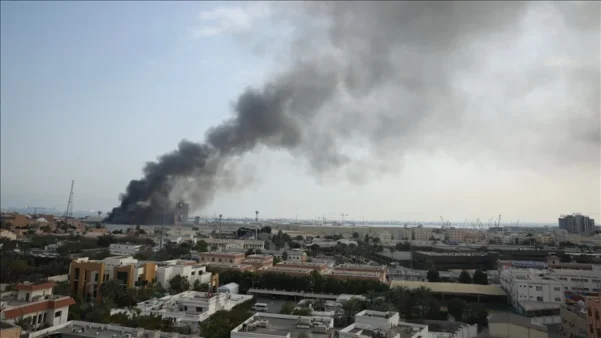
Bahrain reported an Iranian attack on a civilian industrial facility on Saturday, 21 November 2026, causing a fire and material damage.
An initial account reported no injuries. However, the Interior Ministry subsequently announced that two people were injured during Saturday’s attacks. The later update means the incident should no longer be described as casualty-free.
Separately, maritime warnings recorded tanker incidents near Oman’s Khasab in the Strait of Hormuz. The developments create further uncertainty for regional travel and transport businesses, although they do not establish a blanket airport closure.
For tourism operators, the immediate challenge is distinguishing confirmed disruption from military claims and rapidly changing operational information.
Later Update Changes the Injury Picture
In its Sunday update, Bahrain’s Interior Ministry identified the injured people as a Bahraini citizen and a Pakistani resident.
The ministry said the Bahraini citizen was stable, while the Pakistani resident remained in critical condition. Both were receiving hospital treatment.
This update concerns Saturday’s attacks overall. It should not automatically be interpreted as confirming the precise location or circumstances of each injury.
The distinction matters because preliminary emergency statements can change as authorities assess damage and identify those affected.
The industrial facility’s identity was not established in the initial information. Reports of smoke over a particular area are insufficient to identify the damaged installation conclusively.
Competing Accounts Leave Military Damage Unconfirmed
Bahraini authorities described damage to a civilian industrial site and reported interceptions of incoming aerial threats.
Iran’s Revolutionary Guard claimed that its forces targeted American military positions in Bahrain using missiles and drones.
Claims that specific US air-defence radars were destroyed remain unconfirmed in the information reviewed. They should not be presented as established operational results.
Similarly, the differing accounts do not independently establish the number of weapons launched, the complete interception rate or damage across military installations.
For travellers and businesses, these uncertainties reinforce the importance of relying on verified operational notices rather than drawing conclusions from competing battlefield statements.
Maritime Warnings Record Two Tanker Incidents
UK Maritime Trade Operations issued two warnings dated 21 November concerning outbound tankers near Khasab.
One described a tanker struck on its stern approximately 11 nautical miles north of the town.
The other recorded an engine-room strike by an unidentified projectile approximately 17 nautical miles east of Khasab.
Neither warning reported casualties at the time of publication. Environmental consequences remained unconfirmed.
The warnings do not establish responsibility for the projectiles or prove that two distinct vessels were involved.
Consequently, describing these particular incidents as deadly attacks would go beyond the available official notices. Maritime authorities advised caution while investigations continued.
Tourism Faces Uncertainty Without Confirmed Universal Closures
The attacks add uncertainty for people visiting Bahrain and passengers using Gulf airports for onward international connections.
However, an industrial-site attack or maritime warning does not automatically confirm that an airport, airline route or land crossing has closed.
Flight operations require separate assessment through the operating airline and airport.
Hotels, conference organisers and destination businesses may also need to review transfers and scheduled activities when local instructions change.
No quantified loss of tourism bookings, visitor spending or hotel occupancy has been established for these incidents.
Their immediate tourism significance is heightened uncertainty rather than a measured decline in demand.
Travel Businesses Need Precise Passenger Communication
Travel agents and tour operators should distinguish three issues when communicating with customers: local emergency instructions, flight availability and booking flexibility.
A passenger whose flight continues operating may face different choices from someone receiving a cancellation notice.
Likewise, an airline’s response to disruption does not automatically determine the refund conditions of an independently booked hotel or excursion.
Businesses should avoid promising reimbursement without checking the relevant booking terms.
Keeping written notices, booking references and records of changed arrangements can help travellers explain their circumstances to service providers.
Clear communication is particularly important for visitors unfamiliar with the region or travelling on complex connecting itineraries.
Further Official Updates Will Shape the Outlook
The next developments depend on updated damage assessments, maritime investigations and operational decisions by transport authorities.
Diplomatic exchanges may influence the wider situation, but predictions of an imminent full-scale regional conflict remain speculative.
For the travel industry, accurate reporting requires separating confirmed events from allegations and possible consequences.
The Bahrain attack and Khasab warnings demonstrate a serious regional security concern. They also underline why casualty figures, military claims and transport restrictions must each be checked independently as information develops.
For more travel news like this, keep reading Global Travel Wire