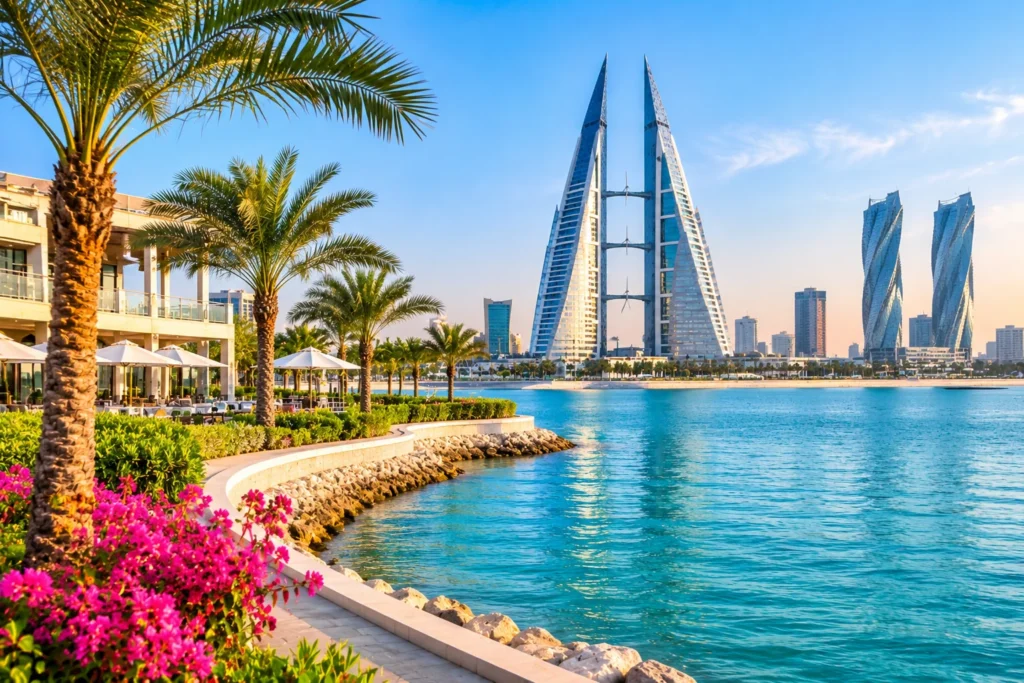
Official data released by the Bahrain Tourism and Exhibitions Authority indicates that the Kingdom of Bahrain continues to achieve milestone expansions across its hospitality, heritage, and marine leisure sectors under the national Tourism Strategy. The sustained influx of international travelers, drawn to the country’s luxury island resorts, historical pearling paths, and waterfront entertainment districts, has established tourism as a cornerstone of the national economic diversification agenda. However, as international arrivals and domestic staycations climb to historic peaks, the Kingdom’s hospitality sector relies directly on sophisticated, life-sustaining utilities. Foremost among these is seawater desalination, an engineering marvel that supplies over ninety percent of the country’s municipal water needs.
According to technical briefs from the Ministry of Electricity and Water Affairs, the arid geographical landscape of Bahrain offers negligible natural freshwater streams and minimal annual rainfall. Historically, the nation’s fresh water came from natural underground formations such as the Dammam aquifer. Decades of heavy agricultural, municipal, and commercial extraction severely degraded these traditional reserves, allowing marine saltwater intrusion to compromise underground water tables. Consequently, modern urban development, five-star hotel operations, water-themed leisure parks, and coastal dining hubs have been made possible through industrial-scale seawater desalination facilities.
Supporting Island Hospitality and Coastal Leisure Infrastructure
Modern island destinations require consistent, uninterrupted water supplies to maintain service quality and hygiene standards across international hotel chains, resort spas, conference facilities, and beachfront attractions. Major production complexes located across the archipelago utilize thermal desalination and advanced reverse osmosis methods to convert seawater into millions of cubic meters of potable water daily.
Government reports from the Supreme Council for Environment and the Ministry of Tourism emphasize that the preservation of Bahrain’s coastal and marine environments is vital to the Kingdom’s tourism identity. From diving excursions that explore historic oyster beds to leisure cruises visiting pristine shoals and barrier islands, the surrounding waters of the Arabian Gulf represent both the primary resource for freshwater manufacturing and the primary draw for eco-conscious travelers.
The traditional production cycle, while essential for sustaining urban and hospitality operations, presents ecological challenges that national environmental bodies are actively addressing. Large-scale thermal desalination plants generate super-heated, hyper-saline discharge known as brine, which is returned to the shallow, enclosed waters of the Gulf. Because these waters experience relatively slow natural circulation, continuous brine discharge with anti-scaling chemical residues can alter localized salinity levels, reduce dissolved oxygen, and exert thermal stress on nearshore marine ecosystems, including vital coral patches and seagrass meadows that sustain indigenous marine life.
National Initiatives for Green Desalination and Strategic Water Reserves
To reconcile rapid visitor growth with ecological preservation, Bahrain’s government agencies have instituted sweeping sustainable modernization policies across the energy and utilities sectors. Under national sustainable development roadmaps, the Ministry of Electricity and Water Affairs has prioritized the transition from energy-heavy thermal plants to energy-efficient reverse osmosis units powered by renewable energy installations.
Strategic investments in solar-assisted desalination facilities are designed to decentralize the water supply network across the island. By establishing smaller, modular water generation stations adjacent to high-demand leisure hubs and coastal developments, the Kingdom reduces reliance on centralized mega-facilities while lowering overall carbon footprints. This shift aligns directly with national net-zero commitments and the sustainable hospitality benchmarks championed by the Bahrain Tourism and Exhibitions Authority.
Simultaneously, water resource planners are advancing artificial aquifer recharge and recovery projects. These technical undertakings involve storing surplus treated fresh water within secure geological underground formations. Creating these strategic underground emergency reservoirs guarantees that the nation’s municipal distribution systems, including vital tourism corridors and commercial hospitality zones, maintain resilience against potential unforeseen disruptions, extreme climate-induced temperature surges, or marine pollution incidents.
Sustainable Practices Transforming Resort and Hotel Operations
Bahrain’s hospitality operators are aligning with official environmental conservation directives through localized water-saving technologies and circular resource models. Luxury hotels and beachfront resorts across Manama, Amwaj Islands, and Diyar Al Muharraq have incorporated on-site greywater treatment installations, high-efficiency sensor fittings, and native desert landscaping designed to minimize irrigation demands. Treated wastewater is increasingly utilized for public golf courses, hotel gardens, and municipal green belts, ensuring that high-grade potable water is conserved strictly for guest consumption and core operational needs.
By linking national water security planning with sustainable travel guidelines, Bahrain is demonstrating how an arid island economy can preserve its delicate natural heritage while scaling its global tourism footprint. Official statements from tourism and environmental authorities reaffirm that the ongoing deployment of renewable desalination, decentralized infrastructure, and responsible water management will ensure that the Kingdom remains a premier, ecologically resilient travel destination for decades to come.
For more travel news like this, keep reading Global Travel Wire