Brazil’s visitor economy continues to demonstrate structural stability and historic visitor momentum following official national electoral procedures in the federal capital of Brasília. While representatives from opposing political camps filed legal petitions with judicial authorities following supreme electoral court decisions regarding voting extensions, federal administrative institutions and municipal gateways remain fully functional. Across key entry corridors from Rio de Janeiro to the Amazon basin, the South American nation continues to report uninterrupted international flight connectivity, bustling hotel occupancy, and rising overseas visitor arrivals.
Official monitoring bulletins released by the Brazilian Tourist Board, Embratur, and the Ministry of Tourism indicate that commercial travel networks, municipal transit authorities, and federal border agency operations are maintaining normal service schedules nationwide. Government statements emphasize that institutional stability and robust transport links ensure overseas holidaymakers and corporate delegations face no logistical disruption when exploring the country’s diverse geographical regions.
Unprecedented Numbers Highlight International Travel Appeal
The latest statistical releases from the Ministry of Tourism illustrate the remarkable resilience of Brazil’s travel sector. Official government data confirms that inbound international visitor numbers reached historic records, with annual foreign arrivals surpassing nine million visitors. Inbound leisure spending contributed billions of dollars directly into the national economy, cementing tourism as one of the fastest-recovering engines of foreign exchange and regional employment across South America.
Key source markets—including neighboring Mercosur partners such as Argentina, Chile, and Uruguay, as well as long-haul inbound corridors across North America and Europe—continue to report high booking volumes. Federal tourism officials attribute this growth to sustained promotional roadshows, the restoration of critical long-haul routes, and streamlined visa frameworks that make entering Brazil straightforward for global vacationers.
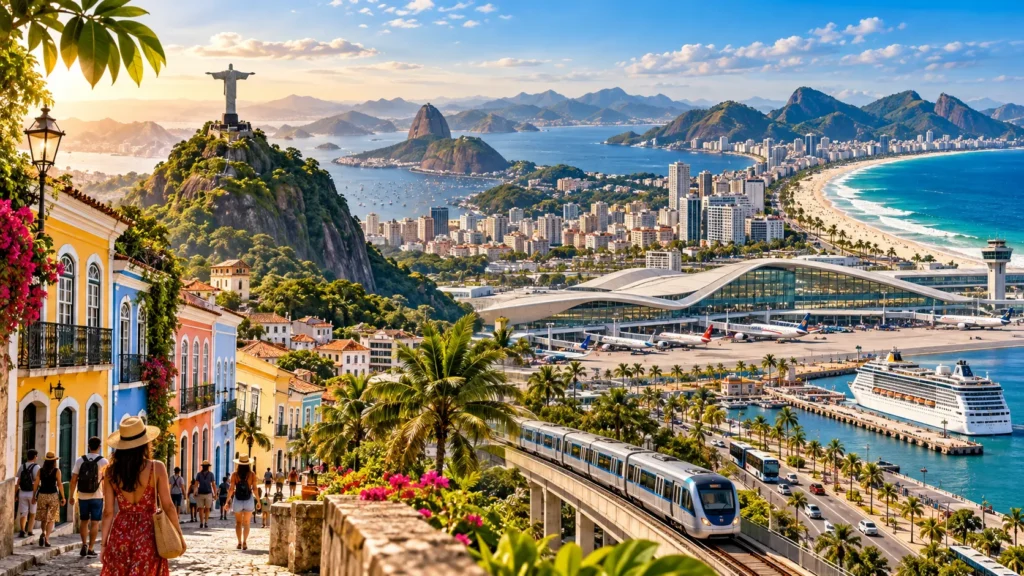
Regional airport hubs, including São Paulo’s Guarulhos International Airport and Rio de Janeiro’s Galeão International Airport, have processed increased flight frequencies to meet heavy seasonal demand. With major convention centers, cultural festivals, and coastal resort complexes operating at high capacity, national tourism authorities report that international visitor sentiment remains decidedly focused on the country’s celebrated natural wonders and hospitality heritage.
Nationwide Transport and Urban Safety Operations Proceed Smoothly
Following public declarations by national figures regarding electoral administration in the capital city, federal security departments and public transportation agencies moved swiftly to guarantee uninterrupted freedom of movement. Municipal transport authorities across metropolitan areas verified that public buses, interstate rail, and airport shuttle networks are executing regular operational timetables.
The Ministry of Justice and Public Security coordinates closely with military police brigades and municipal tourist police units in popular visitor areas. Strategic urban corridors—including Rio de Janeiro’s southern beach districts of Copacabana and Ipanema, Salvador’s historic Pelourinho colonial quarter, and Foz do Iguaçu’s world-renowned national park circuit—maintain high-visibility community patrols to ensure holidaymakers navigate cultural landmarks safely and without hindrance.
Furthermore, official consumer protection bodies and national hotel associations have published operational notices verifying that hospitality venues, excursion operators, and ground logistics providers are functioning without interruption. Government advisory channels continue to affirm that metropolitan transport infrastructure remains secure for both business travelers and eco-tourists traversing Brazil’s expansive territory.
Diversification Beyond Traditional Sun and Sand Destinations
Central to the national tourism development agenda is the strategic distribution of visitors across under-explored regional corridors. While classic coastal gateways maintain strong seasonal occupancy, the Ministry of Tourism’s official promotional blueprint directs targeted investments toward sustainable eco-tourism, community-based heritage trails, and gastronomy circuits in the interior.
Pantanal wetland reserves and the Amazonian rainforest continue to see sustained demand from conservation-minded international tourists seeking guided river expeditions and indigenous cultural encounters. Federal environmental agencies, working in unison with municipal eco-tourism councils, maintain stringent sustainability standards that protect fragile biomes while generating direct income for local riverine communities.
Simultaneously, the architectural and historical significance of inland capitals is drawing renewed interest. In Brasília, guided architectural excursions detailing the modernist monuments designed by Oscar Niemeyer—including the National Congress, the Cathedral of Brasília, and the Planalto Palace—remain operational under standard public visiting guidelines, illustrating the capital’s unique position as a UNESCO World Heritage site.
Enduring Momentum for the South American Giant
The steady progression of cross-border travel underscores the global community’s enduring fascination with Brazil’s biodiversity, musical traditions, and scenic landscapes. Through transparent communication from official tourism ministries, ongoing airport modernization programs, and diligent public safety frameworks, the country continues to project an open, energetic, and highly dependable visitor environment.
With expanded air carrier capacity connecting South America to global hubs and consistent demand recorded across leisure and MICE industries, Brazil’s tourism landscape stands firmly insulated from cyclical domestic political debates. The nation continues to welcome the world with vibrant cultural festivities, world-class hospitality, and unrivaled natural wonders that define its reputation as an essential global destination.
For more travel news like this, keep reading Global Travel Wire