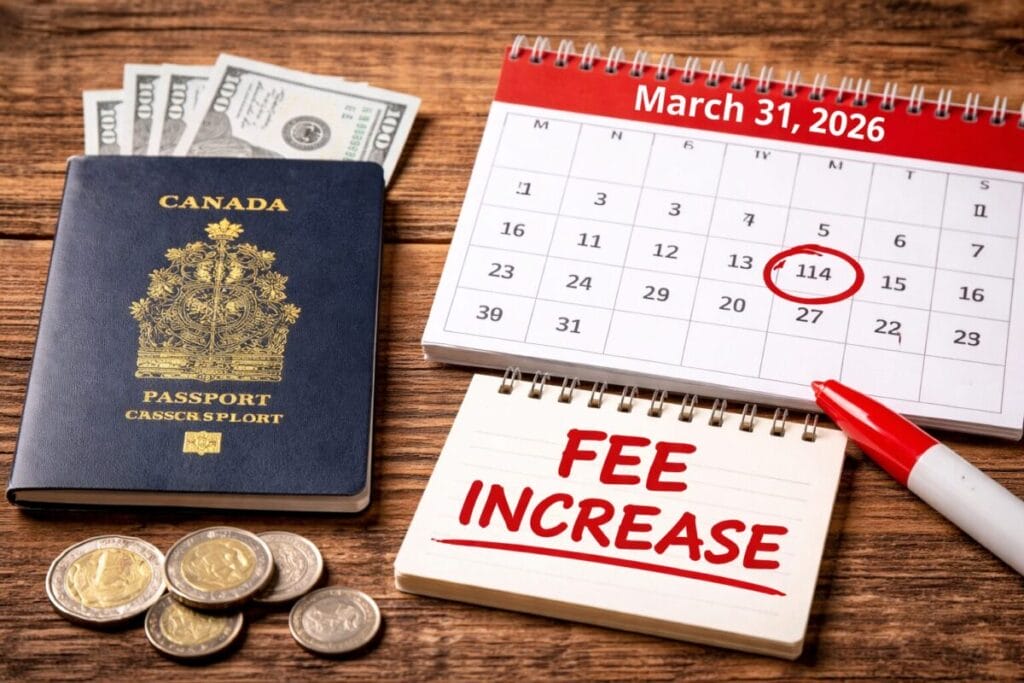
Canada will increase passport fees starting March 31, 2026. The move will affect millions of travelers planning trips to Europe. Switzerland, Germany, Denmark, Ireland, Hungary, Poland, Romania and more than thirty-six European countries will feel indirect impacts.
The Canadian government confirmed a 2.7% increase across passport and travel document services. Officials aligned the adjustment with inflation based on the Consumer Price Index.
While the increase appears modest, it arrives at a time of rising global travel costs. Airfares, accommodation rates and visa systems already strain travel budgets.
What Changes on March 31, 2026
From the end of March 2026, Canadians will pay more for passport services. The fee applies to applications inside Canada and abroad.
A 10-year adult passport currently costs about CAD $120. After the adjustment, the price will rise to roughly CAD $123.
Child passport fees will increase from around CAD $57 to approximately CAD $58.50.
Though the difference may seem small, families renewing multiple passports will notice the added expense.
The government also confirmed annual inflation-linked increases moving forward. This marks the beginning of a recurring cost adjustment system.
Why Canada Is Raising Passport Fees
Immigration, Refugees and Citizenship Canada stated that operational costs have outpaced revenue. Officials explained that current fees do not fully reflect program expenses.
Administrative systems, security upgrades and document processing require ongoing funding. The government aims to make the passport program financially sustainable.
Officials noted that about 85% of operational costs remain uncovered under the existing structure. A full cost recovery model could have triggered far higher increases.
Instead, Canada chose a gradual approach tied to inflation. Authorities will review the broader fee structure through public consultation.
Impact on European Travel Corridors
Canadian passport holders enjoy visa-free access to most European destinations. Countries such as Switzerland, Germany, France, Spain and Italy remain popular among Canadian travelers.
Ireland, Denmark, Hungary, Poland and Romania also rank high for tourism and business travel.
Although European entry rules remain unchanged, the higher passport cost increases overall travel expenses. Travelers renewing passports in 2026 must budget accordingly.
Canada also plans to comply with Europe’s new ETIAS system. From 2026, Canadians will need electronic travel authorization for Schengen Area visits.
The ETIAS application will cost around €20. This adds another layer of expense to European trips.
Rising Travel Costs Across Europe
European travelers already face inflation-driven increases in accommodation and transportation. Switzerland and Germany report higher hospitality operating costs.
Ireland and Denmark continue to experience strong tourism demand, which drives pricing upward.
Poland, Hungary and Romania remain comparatively affordable, yet costs continue to rise gradually.
The addition of higher passport and authorization fees compounds these trends. Travelers must account for documentation, visas and currency fluctuations.
Strong Canadian Passport Still Offers Advantages
Despite the fee increase, Canada retains one of the world’s most powerful passports. Canadian citizens can travel visa-free to over 180 destinations.
This global access remains a major advantage for business and leisure travelers. European nations continue welcoming Canadian tourists without traditional visa barriers.
The passport’s strength reflects Canada’s diplomatic ties and international agreements.
Broader Implications for the Tourism Sector
European tourism boards monitor travel trends from North America closely. Canada represents a significant inbound market for several EU countries.
Higher documentation costs may slightly influence travel planning decisions. However, analysts expect demand to remain steady for top destinations.
Airlines and tour operators may adjust marketing strategies. Many companies now emphasize early booking and bundled travel packages.
Budget-conscious travelers may shorten trips or select fewer destinations. Luxury travel markets may feel less impact.
What Canadian Travelers Should Do Now
Travelers planning European trips in 2026 should renew passports early. Submitting applications before the March deadline may help avoid higher fees.
Canadians should also monitor ETIAS rollout timelines. Understanding authorization requirements will prevent last-minute complications.
Travel experts recommend budgeting for document fees alongside flights and hotels. Even small administrative costs can accumulate quickly.
Families should review expiration dates for all members. Some countries require passports valid for six months beyond travel dates.
Looking Ahead
Canada’s passport fee adjustment reflects a global trend toward cost recovery in government services. Inflation pressures continue affecting administrative programs worldwide.
European nations also review travel infrastructure funding and border systems. Digital authorization programs like ETIAS reflect this modernization trend.
While the passport increase may not dramatically change travel patterns, it signals rising documentation costs in international travel.
For Canadians heading to Switzerland, Germany, Ireland, Poland and beyond, preparation will prove essential.
Travel remains accessible, but careful budgeting matters more than ever. As 2026 approaches, Canadian travelers must factor in new passport fees, authorization systems and ongoing inflation across Europe.
For more travel news like this, keep reading Global Travel Wire