



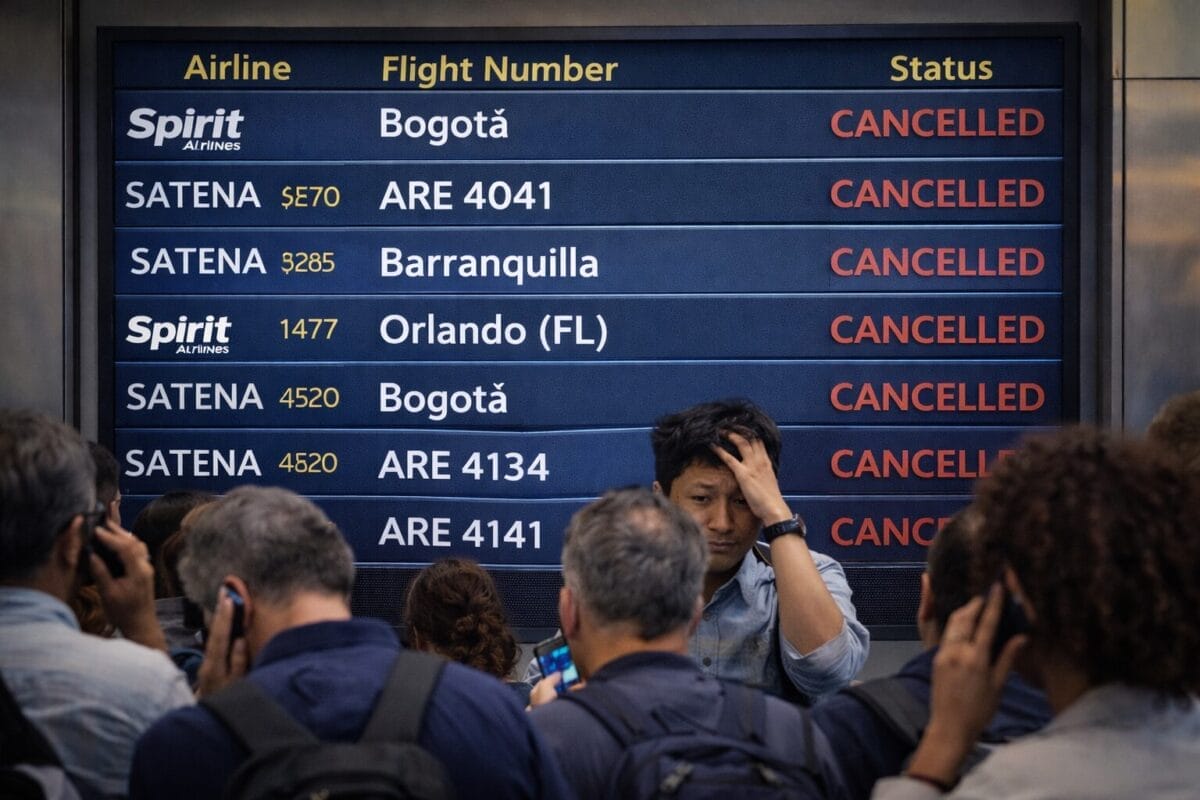

Colombia’s aviation network recently experienced several travel disruptions after airlines cancelled five scheduled flights. These cancellations affected routes linking major Colombian cities and one international destination.
Passengers traveling through Bogotá, Medellín, Cali, and Barranquilla faced sudden schedule changes. An international route connecting Medellín with Orlando in the United States also stopped operating.
The disruptions involved Colombian regional carrier SATENA and international airline Spirit Airlines. Both carriers suspended departures from key airports across the country.
Although the number of cancelled flights remains limited, the impact spread quickly. These routes connect some of the busiest airports in Colombia’s air transport system.
Air travel disruptions in major hubs can influence passenger movement across the entire network.
Four Major Colombian Airports Affected
The recent cancellations affected four major airports across Colombia. These facilities handle large volumes of domestic and international passenger traffic.
The affected airports include El Dorado International Airport in Bogotá. Jose Maria Cordova International Airport in Medellín also experienced disruptions.
Alfonso Bonilla Aragon International Airport in Cali saw a scheduled departure cancelled. Ernesto Cortissoz International Airport in Barranquilla also reported a suspended flight.
These airports serve as important connection points for travelers across the country. Bogotá’s El Dorado Airport functions as Colombia’s largest aviation hub.
Airlines use these airports to connect regional cities with international destinations. Operational changes at these locations therefore affect many passengers.
The cancellations highlight the interconnected nature of Colombia’s aviation system.
Bogotá Airport Cancellation Affects Caribbean Route
El Dorado International Airport experienced one important cancellation. The affected flight normally connects Colombia’s capital with the Caribbean coast.
SATENA scheduled the flight to depart Bogotá in the afternoon. The aircraft assigned for the service was an Airbus A320.
The destination for the cancelled route was Barranquilla’s Ernesto Cortissoz International Airport. This connection normally supports both tourism and business travel.
Barranquilla attracts visitors with Caribbean beaches and cultural festivals. Business travelers also frequently travel between the coastal city and Bogotá.
When this route cancels, travelers must search for alternative flights. Airlines usually attempt to rebook passengers on later services.
However, available seats may remain limited during disruptions.
Medellín Airport Disruptions Affect Domestic and International Travel
Jose Maria Cordova International Airport in Medellín experienced two cancellations. One flight served a domestic route linking Medellín with Bogotá.
SATENA scheduled the service using an Airbus A320 aircraft. The flight normally supports passenger movement between two of Colombia’s largest cities.
A second cancellation affected an international route operated by Spirit Airlines. This flight normally connects Medellín with Orlando in Florida.
Orlando attracts many Colombian tourists each year. Families often travel there for holidays and theme park visits.
The Spirit Airlines cancellation therefore affected leisure travel plans. Passengers heading to the United States had to adjust their itineraries.
International flight cancellations often create additional complications for travelers. Passengers must consider visa requirements and alternative routes.
Cali to Bogotá Route Suspended
Another cancellation occurred at Alfonso Bonilla Aragon International Airport in Cali. This airport connects southwestern Colombia with other major cities.
SATENA scheduled a morning flight linking Cali with Bogotá. The route represents one of the country’s busiest domestic travel corridors.
Business travelers frequently rely on this connection for meetings and conferences. Tourists also travel between the two cities for cultural exploration.
Cali attracts visitors with salsa music, cultural festivals, and historic districts. Bogotá offers museums, restaurants, and government institutions.
The cancellation removed a convenient connection between these economic centers. Travelers needed to search for later flights or alternative routes.
Domestic route cancellations often disrupt business travel schedules.
Barranquilla Departure Cancellation Impacts Capital Connection
Ernesto Cortissoz International Airport in Barranquilla also experienced a cancelled flight. The scheduled service normally connects the Caribbean city with Bogotá.
SATENA planned the departure during the afternoon. The flight usually operates with an Airbus A320 aircraft.
Barranquilla plays an important role in Colombia’s tourism and business economy. The city hosts the famous Barranquilla Carnival each year.
Many travelers fly between Barranquilla and Bogotá for events and government business. When flights cancel, passengers must adjust travel plans quickly.
Alternative flights may depart later the same day. However, seat availability may remain limited during disruptions.
Airlines typically assist affected travelers with rebooking options.
Impact on Travelers and National Connectivity
Although the cancellations involved only five flights, the impact reached multiple cities. Colombia’s aviation network relies heavily on hub airports.
Bogotá serves as the central hub connecting most domestic routes. Flights from Medellín, Cali, and Barranquilla often connect through the capital.
When routes to Bogotá cancel, passengers may miss connecting flights. This situation can delay both domestic and international travel plans.
Travelers heading to international destinations may face additional challenges. Rebooking international flights often requires coordination with immigration requirements.
Tourists and business travelers therefore experience different levels of disruption.
Airlines Adjust Operations During Flight Disruptions
Airlines must quickly reorganize schedules after flight cancellations. Operational teams coordinate aircraft availability and crew assignments.
Weather conditions, technical checks, or operational factors may trigger sudden schedule changes. Airlines constantly monitor safety and efficiency when managing flights.
When a flight cancels, airlines usually provide rebooking options for passengers. Some travelers receive alternative flights later the same day.
Others may travel through different connecting airports. Airlines often prioritize passengers with international connections.
Airport staff also assist travelers during disruption events. Customer service desks help passengers update itineraries.
Travel Advice for Passengers
Passengers should monitor flight updates before traveling to the airport. Airlines regularly publish schedule changes through their digital platforms.
Travelers should check airline notifications for updated departure times. Mobile applications and airline websites provide real time flight information.
Passengers should also arrive early for alternative flights. Airport staff may offer rebooking options at check in counters.
Travelers with connecting flights should allow extra time between departures. Unexpected delays sometimes occur during operational disruptions.
Flexible travel planning helps passengers manage sudden schedule changes.
Colombia Aviation System Remains Strong Despite Disruptions
Colombia operates one of the largest aviation networks in Latin America. Domestic flights connect major cities across mountains, forests, and coastal regions.
Air travel remains essential for transportation across the country. Many regions rely on aviation due to geography and distance.
Airports such as Bogotá, Medellín, Cali, and Barranquilla handle millions of passengers each year. These facilities support tourism, business travel, and international connections.
Occasional flight disruptions occur in all aviation systems. Airlines and airport authorities usually respond quickly to restore normal operations.
Passengers across Colombia continue to rely on these networks for travel. The recent cancellations highlight the importance of coordination across the country’s aviation infrastructure.
For more travel news like this, keep reading Global Travel Wire