Global demand for high-value travel is undergoing a fundamental transformation as affluent adventurers move away from traditional large-scale cruising in favor of purposeful, immersive exploration. Official insights from international polar tourism authorities and environmental management bodies indicate that travelers are prioritizing exclusive access, scientific engagement, and small-ship navigation over conventional luxury amenities. This structural shift highlights a broader trend across high-end tourism, where personalized learning and rare geographic encounters carry greater value than traditional leisure metrics.
Specialized expedition fleets operate under rigorous international environmental standards, navigating sensitive polar marine ecosystems while offering small group excursions. Rather than relying on volume-based itineraries, expedition operators design programs that connect guests directly with polar environments through curated field activities led by naturalists, marine biologists, and polar historians. This focus on small-scale access aligns with global sustainable travel mandates aimed at protecting fragile biomes while fulfilling growing consumer demand for transformative, educational journeys.
Specialized Excursions and Participatory Science Programs
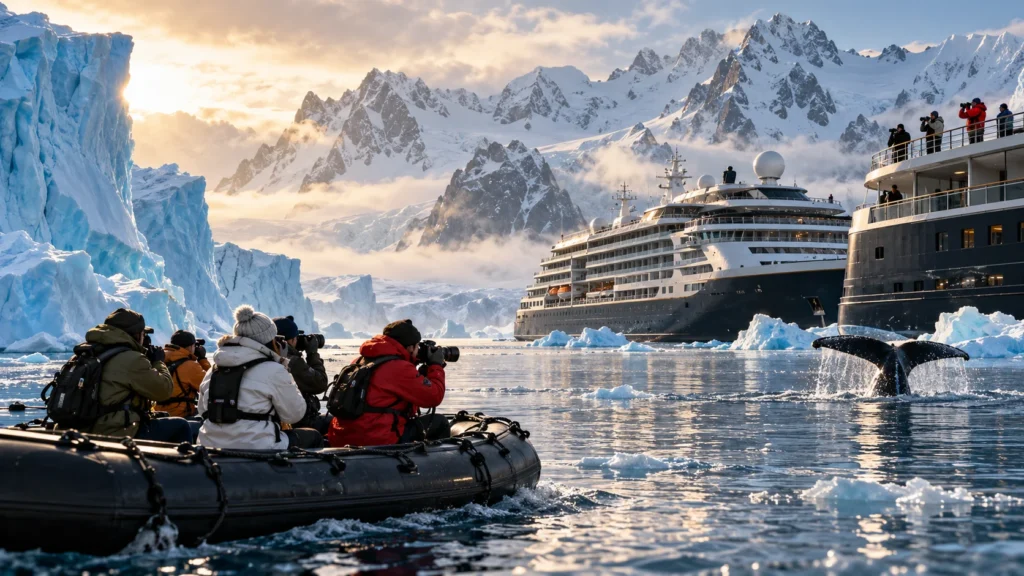
To meet changing traveler expectations, polar operators are expanding specialized expedition frameworks that integrate hands-on learning with active outdoor pursuits. Programmatic developments emphasize smaller group sizes to ensure minimal environmental impact and deeper engagement during field operations. Small-vessel deployments allow small inflatable craft excursions into remote coves, enabling guests to observe ice shelf dynamics and native polar fauna safely and responsibly.
A central element of this evolution is the integration of structured citizen science and expert-led educational initiatives. Official polar travel guidelines encourage guest participation in observational research, water sampling, and migratory species tracking in partnership with global scientific institutions. Furthermore, specialized photography programs restrict excursion groups to small cohorts, providing dedicated guidance to capture extreme light conditions and polar wildlife without disrupting natural behaviors. By blending adventure with active conservation awareness, expedition programs cater to travelers seeking meaningful contributions alongside their voyages.
Strategic Booking Shifts and Seasonal Demand Patterns
Traveler booking behavior within the polar sector reveals distinct regional planning timelines and rising financial commitment for ultra-remote itineraries. Official industry monitoring shows that reservations for Antarctic voyages are being secured significantly further in advance compared to historical baselines. Travelers demonstrate a willingness to commit early to lock in specific high-demand itineraries, polar landing allocations, and specialized activity slots, resulting in higher average booking valuations across the sector.
Conversely, Arctic itineraries maintain a different booking rhythm, often attracting shorter lead times and flexible seasonal planning. However, overall demand across both polar zones reflects a shift away from late-stage discounting or opportunistic booking. High-value travelers are prioritizing guaranteed access to limited-capacity vessels and rare seasonal events, such as solar eclipses or peak wildlife aggregation periods, establishing early reservation as a critical strategy in premium travel planning.
Integrating Advanced Technology with Essential Human Expertise
Modern polar expedition vessels incorporate advanced marine technology and digital tools to enhance navigational efficiency, safety, and guest personalization. Real-time satellite ice mapping, dynamic positioning systems, and automated environmental monitoring allow vessels to navigate complex polar passages with reduced operational footprints. Digital platforms on board also assist guests in tracking scientific data, reviewing expedition logs, and customizing daily educational schedules.
Despite technological advancements, industry standards emphasize that digital tools remain supporting elements rather than replacements for human expertise. Field safety, environmental stewardship, and guest engagement rely entirely on the specialized knowledge of experienced expedition teams, vessel captains, and research scientists. The interplay between cutting-edge maritime engineering and expert human leadership remains the cornerstone of modern polar exploration, ensuring that high-value travel continues to deliver authentic, safe, and deeply educational experiences across the world’s most remote environments.
For more travel news like this, keep reading Global Travel Wire