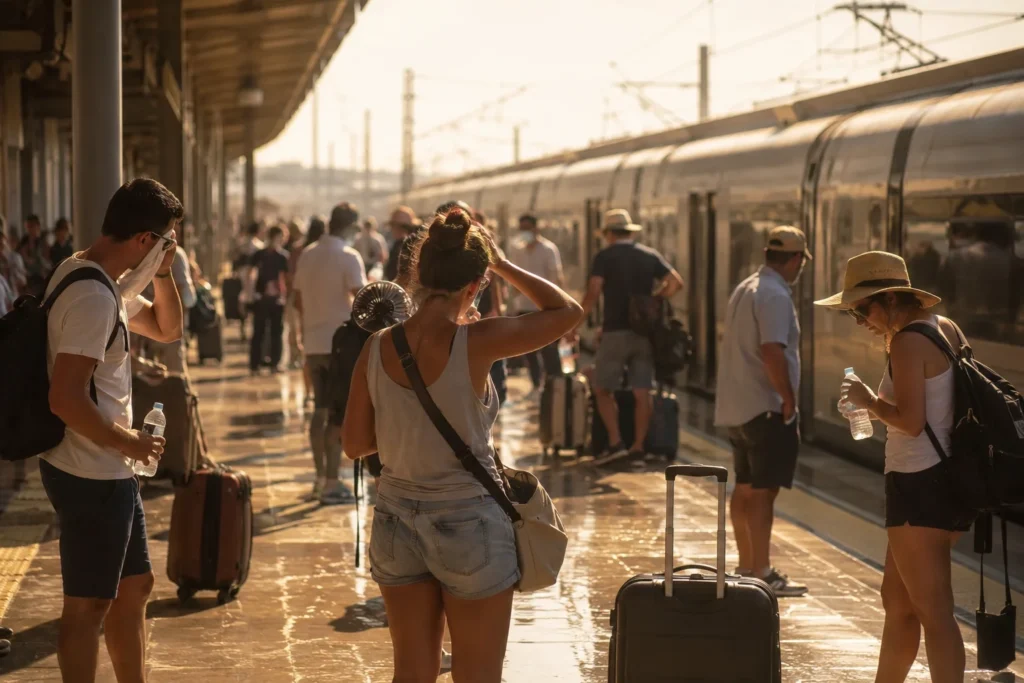
A severe meteorological event is continuing to cause widespread disruption to the United Kingdom‘s transportation infrastructure, prompting rail operators and infrastructure managers to extend emergency travel advisories. Following an intense and prolonged period of surging temperatures across the country, South Western Railway, in coordination with Network Rail Wessex, has officially extended its critical “essential travel only” warning. The strict advisory, which was originally implemented to mitigate the initial impacts of the weather system, will now remain firmly in place to protect passenger safety and maintain network integrity.
According to formal statements issued by rail transport authorities, the prolonged high temperatures are severely impacting critical operational components, including tracks, complex signaling systems, and rolling stock. Official engineering assessments indicate that steel railway tracks exposed to direct, unfiltered sunlight absorb a massive amount of solar radiation, causing infrastructure temperatures to soar up to 20 degrees Celsius higher than the surrounding air temperature. This intense thermal expansion significantly elevates the risk of track buckling, structural component misalignment, and overhead line sagging, necessitating immediate precautionary interventions.
Reduced Timetables Implemented Across the Regional Network
To manage the heightened safety risks associated with the current climate emergency, a substantially reduced timetable has been deployed across the entire South Western Railway network. Operational reports indicate that trains will run at significantly reduced speeds over affected track sections to lower the mechanical stress placed on the vulnerable infrastructure. Consequently, scheduled services will be far less frequent, transit durations will be notably prolonged, and certain routes are projected to terminate much earlier in the day than standard schedules dictate.
Public safety executives have emphasized that the primary objective of these emergency alterations is to maintain a predictable, albeit limited, service framework to avoid erratic cancellations. However, transport officials warn that despite strategic scheduling adjustments, sudden short-notice changes and localized service suspensions remain highly probable as track temperatures reach peak levels during mid-afternoon periods. Passengers who must undertake journeys are being advised that remaining operational services will experience heavy passenger volume and severe crowding.
Transport Authorities Issue Direct Warnings to Coastal Excursionists
The extension of the travel warning specifically targets leisure travelers and tourists who may be planning day trips to popular coastal destinations and regional beach resorts. Transport managers have strongly cautioned against utilizing the rail network for recreational travel during this operational crisis. The core concern raised by transit safety teams is the high probability of travelers becoming stranded at distant coastal stations due to sudden afternoon infrastructure failures or emergency line closures.
The operational leadership for South Western Railway and Network Rail Wessex expressed deep regret over the ongoing inconvenience caused to the traveling public. Representatives emphasized that while field engineering teams are working continuously to maintain core connectivity for individuals who absolutely must travel, the sheer intensity of the weather event leaves no choice but to limit network capacity. The official mandate remains focused on discouraging non-essential movement to ensure that limited emergency rail capacity is preserved entirely for critical travel needs.
Comprehensive Passenger Welfare and Flexible Ticketing Policies Announced
In response to the prolonged operational constraints, national rail authorities have implemented comprehensive passenger welfare protocols and flexible ticketing policies to accommodate affected commuters. Rail operators have introduced temporary ticket acceptance easements across the network. Under these emergency guidelines, passengers holding valid travel tickets can utilize alternative routes or defer their journeys to subsequent days when environmental conditions are projected to stabilize, entirely bypassing standard peak restrictions and administrative change fees.
For individuals who determine that their planned travel is no longer viable under the current restrictions, transport ministries have mandated that full, fee-free refunds be made available through original points of purchase. Simultaneously, on-board staff and station management teams have been placed on high alert to assist passengers struggling with the oppressive conditions. Commuters are being systematically urged to consult digital journey planners immediately prior to leaving their residences, carry substantial amounts of drinking water to maintain hydration, and avoid boarding any stationary vessel if they experience initial symptoms of heat-related illness.
Technical Maintenance Measures and System Monitoring
Network Rail engineering divisions have deployed specialized mobile response teams and track safety technicians across vulnerable sectors of the Southern and Wessex networks. Maintenance logs show that crews are utilizing specialized thermal imaging equipment and remote sensors to monitor real-time track expansion at known hot spots. Additionally, mechanical teams are performing accelerated inspections on train cooling systems to minimize mechanical failures while carriages are in transit.
The current restrictions are expected to remain fluid as meteorologists and infrastructure experts analyze shifting weather patterns. Transport agencies maintain that these strict operational constraints will only be lifted once track temperatures return to standardized baselines and thorough safety inspections confirm the absolute structural integrity of the lines. Until such official clear advisories are issued, the public is urged to comply fully with the active emergency travel guidelines.
For more travel news like this, keep reading Global Travel Wire