Film tourism in Hungary is witnessing unprecedented international visibility as landmark audiovisual productions bring the rich architectural and historical legacy of Central Europe onto living room screens around the globe. Supported by official state cultural funds and national development initiatives, historical screen epics are increasingly acting as dynamic ambassadors for cultural heritage travel. With major international distribution rights recently secured across premier English-speaking markets, including North America and the United Kingdom, global fascination with medieval European chronicles is poised to drive travel interest directly toward the region’s preserved castles, historic strongholds, and scenic landscapes.
The ten-part epic series titled Rise of the Raven, developed with substantial institutional backing from the National Film Institute of Hungary, has achieved record-shattering domestic television viewership figures and dominant video-on-demand rankings. However, regional tourism boards and cultural ministries emphasize that the broader victory extends well beyond screen metrics. By capturing fifteenth-century defensive campaigns that reshaped the continent, the production serves as an authentic cultural gateway, prompting history enthusiasts and heritage vacationers to explore the living sites where Central European history unfolded.
Historic Strongholds and Castle Destinations Take the Spotlight
At the center of this burgeoning cultural heritage travel movement is the enduring legacy of János Hunyadi, the celebrated medieval military commander whose strategic triumphs famously defended Europe against massive Ottoman expansion. For destination marketers and regional heritage planners, Hunyadi’s historic life path maps out an extraordinary tourist trail spanning historic fortresses, royal riverside towns, and frontier settlements.
Prominent architectural monuments connected to this medieval chapter—from the majestic ramparts of Visegrád Castle overlooking the picturesque Danube Bend to monumental royal palaces in Budapest—stand ready for an influx of inquisitive international travelers. State preservation agencies have devoted decades to the conservation of these defensive structures, and the global arrival of high-profile cinematic storytelling allows these monuments to communicate their historical importance to worldwide audiences. Tour operators across Central Europe are already adapting their itineraries to showcase the actual battlegrounds, royal palaces, and Gothic monuments featured in the narrative.
Cinematic Architecture Bolsters National Film Tourism
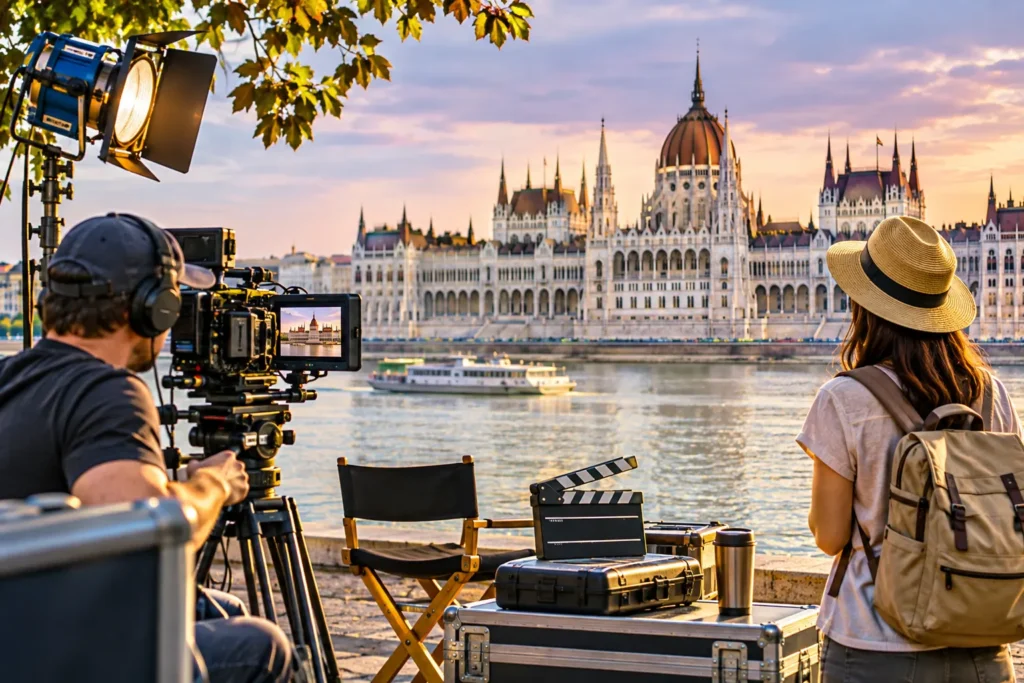
The development of the series represents one of the largest and most ambitious creative undertakings in Central European cinema history, co-produced by leading independent entities alongside Austrian public broadcaster ORF and supported through official national film subsidies. Filming utilized extensive studio sets and authentic regional countryside settings, highlighting Hungary’s unique status as a premier global hub for international film production and set-jetting tourism.
Visitors venturing into regions such as the Danube basin, Páty, and historical settlements outside the capital can immerse themselves directly in the scenic topographies that provided the authentic backdrop for the screen adaptation. Cultural tourism initiatives frequently demonstrate that travelers who encounter a destination through compelling visual narratives show higher engagement levels, longer average stays, and greater spending on guided museum tours, artisanal crafts, and historic hospitality venues.
A Multilingual Canvas Connecting European Heritage Routes
A defining characteristic of the historical production is its commitment to cultural and linguistic authenticity, featuring an expansive international cast with performers speaking in their respective historical native languages. This multidimensional approach reflects the intricate, interconnected medieval diplomacy of Italy, Austria, Serbia, Poland, and Hungary.
For the regional travel and tourism sector, this multilingual storytelling fosters valuable opportunities for cross-border tourism corridors. When visitors learn about the diplomatic pacts, military alliances, and dramatic court intrigues that united neighboring nations in defense of the continent, it sparks interest in transnational road trips and regional rail adventures. International vacationers regularly combine city breaks in Vienna and Budapest with visits to historic fortress towns across the Danube corridor, turning a single screen viewing into a multi-country exploration of shared European heritage.
Expanding Central European Cultural Travel
Official tourism statistics from across the European Union continue to emphasize that modern holidaymakers actively seek educational and transformative travel experiences. Rather than choosing purely passive resort vacations, international voyagers are increasingly drawn to destinations that offer deep narrative depth, architectural grandeur, and legendary historical figures.
The international expansion of Rise of the Raven across major distribution networks in North America, Western Europe, the Asia-Pacific region, and the Middle East ensures that Central Europe remains at the forefront of global travel inspiration. As prospective vacationers become immersed in the thrilling accounts of fifteenth-century resistance, medieval politics, and decisive historical turning points, the real-world fortresses, museums, and historic landscapes of Hungary and its neighbors are set to welcome curious travelers eager to walk through the actual pages of history.
For more travel news like this, keep reading Global Travel Wire