Budget airline travel is entering a distinct new era as low-cost aviation operators recalibrate the inflight passenger experience. In an official shift from its traditional single-cabin interior, Denver-headquartered Frontier Airlines has commenced ticket sales for its newly introduced premium seating arrangements. Designed to occupy the front section of the aircraft, the seating concept represents a noticeable departure from conventional ultra-low-cost cabin configurations and promises to influence passenger choices across major domestic holiday routes.
Tourism boards, airport authorities, and transport industry analysts have increasingly observed that modern travelers seek affordability without sacrificing physical comfort. As air travel demand continues to expand across North American leisure corridors, airlines are redesigning interior aircraft layouts to appeal to vacationers, family groups, and regional tourists who desire extra personal space without paying traditional network carrier prices.
Modernizing Inflight Options for Holiday Destinations
According to official fleet modification details released by the air carrier, the premium seating is installed across the first two rows of its Airbus aircraft. Travelers booking regional getaways or cross-country vacations can now secure access to this forward cabin for departures beginning in early spring. The introduction aligns directly with peak seasonal getaways, spring holiday journeys, and warm-weather leisure tours across popular national park gateways and coastal hubs.
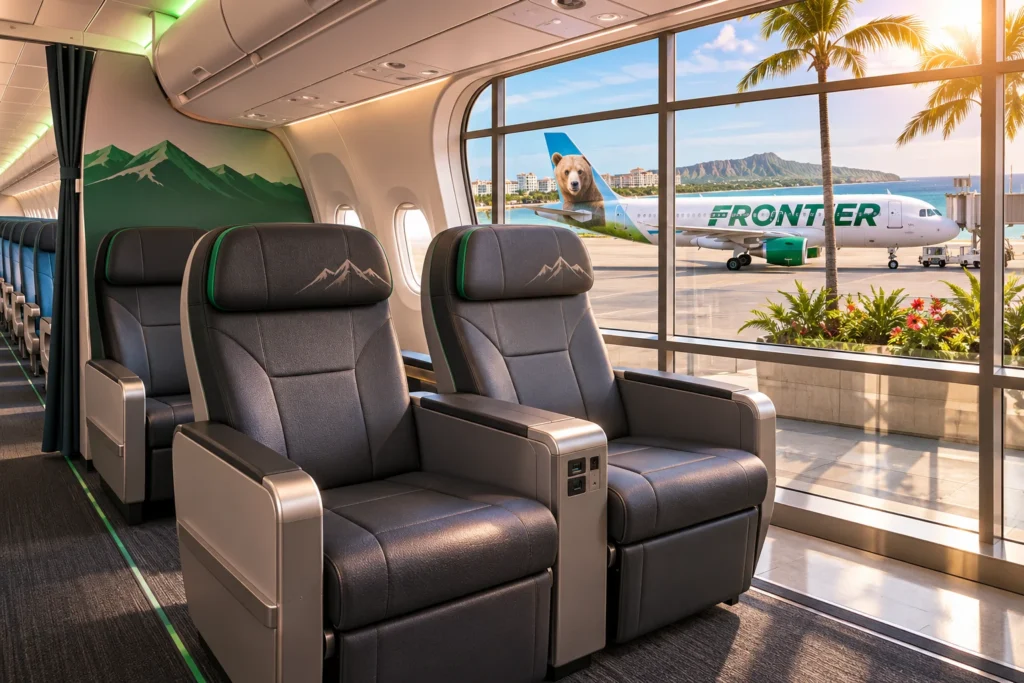
The newly installed seating units feature sleek black upholstery complemented by the carrier’s signature green emblem on the headrests. In structural appearance, the seats offer dimensions comparable to standard domestic premium recliners seen across commercial aviation, delivering significantly wider seat bases and expanded legroom relative to standard economy configurations. However, consistent with the structural engineering of weight-conscious fleet designs, the hardware utilizes an ergonomic, pre-reclined design contour rather than an active mechanical reclining mechanism. This fixed-pitch engineering helps ensure that passenger space remains predictable and consistent throughout the flight, maintaining open sightlines and unencumbered footwells.
Balancing Cost Efficiency with Passenger Comfort
Low-cost carriers play a vital role in domestic tourism development by establishing direct links between secondary cities, suburban communities, and world-class tourist attractions. Official economic impact reports consistently highlight that competitive airfares stimulate destination spending by freeing up traveler budgets for lodging, dining, guided tours, and local entertainment.
Frontier’s approach to premium seating maintains this unbundled commercial architecture. Rather than bundling complimentary meal services, free alcoholic beverages, and inclusive baggage allowances into an inflated ticket price, the carrier preserves its core a la carte format. Passengers in the front rows will continue to purchase snacks, beverages, and baggage options separately according to their individual travel needs.
This unbundled framework ensures that seat pricing remains accessible relative to conventional legacy first-class offerings. Official company commercial leadership has emphasized that the pricing model is deliberately structured to deliver transparent value, providing travelers with the physical benefit of an expanded seating footprint while preventing forced charges for unwanted services. For budget-conscious leisure travelers visiting friends, family, or domestic holiday spots, the product offers a practical middle ground between bare-bones economy transit and exorbitant premium tickets.
Rewarding Loyalty Among Frequent Flyers
In addition to direct retail seat purchases, the carrier has outlined significant upgrades for participants in its official loyalty framework. With tourism spending increasingly tied to brand loyalty and frequent-flier engagement, structured rewards play a major role in driving repeat visits to domestic resort hubs.
Members with elite tier standing inside the carrier’s frequent flyer programme will receive prioritized opportunities for complimentary seat enhancements prior to flight departure, subject to space availability:
Silver status travelers qualify for complimentary standby cabin upgrades starting up to four hours prior to scheduled departure.
Gold status members receive upgrade eligibility beginning eight hours before departure.
Platinum tier members gain access to upgrade clearing up to eighteen hours before takeoff.
Diamond tier holders enjoy the earliest access window, with upgrades clearing up to twenty-four hours ahead of flight time.
These structured windows reward consistent patronage and encourage leisure travelers to consolidate their annual holiday bookings with the carrier, further boosting passenger volume across the airline’s nationwide network.
Broader Implications for Domestic Tourism Infrastructure
The debut of extra-comfort seating on low-cost aircraft reflects ongoing changes in traveler expectations. Department of Transportation figures and national travel association reports indicate that leisure fliers constitute the largest share of domestic commercial air traffic. As vacation patterns evolve, travelers are displaying a willingness to invest selectively in personal wellness, personal space, and convenience during transit.
By offering enhanced physical comfort at an accessible entry price, low-cost carriers are making relaxed air transit attainable for a broader demographic. Whether heading to scenic outdoor reserves, convention destinations, or coastal resorts, passengers can customize their journey to match their budget and preferences. As fleet installations progress throughout the season, this new seating initiative marks a meaningful development in modern aviation and domestic holiday travel.
For more travel news like this, keep reading Global Travel Wire