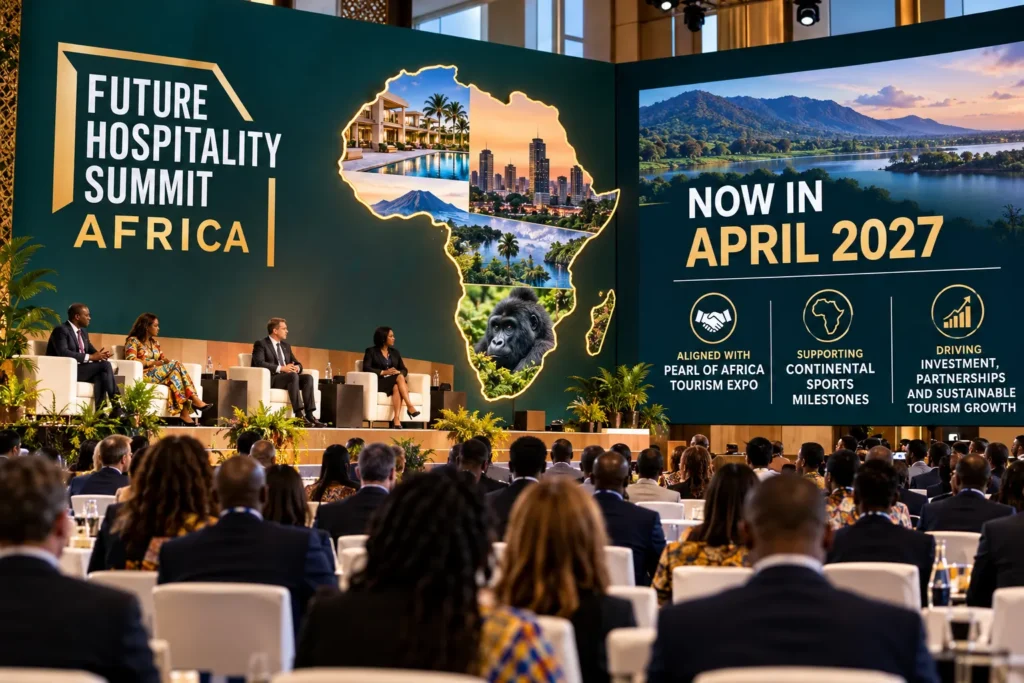
KAMPAULA — The Future Hospitality Summit Africa (FHS Africa) has officially announced a strategic adjustment to its event calendar, moving its scheduled gathering to 28–29 April 2027 at the Speke Resort Munyonyo in Kampala, Uganda. Originally slated for early February 2027, the rescheduling directly aligns the summit with the Pearl of Africa Tourism Expo (POATE). This unified timeline is designed to build a unified platform connecting global capital, destination marketing, and regional infrastructure planning across East Africa.
The official schedule revision follows extensive consultations with public sector tourism authorities, hotel owners, international developers, and financial stakeholders. By co-locating with POATE, the summit aims to merge hospitality investment discussions with broad-scale travel promotion, allowing international delegates to experience Uganda’s commercial and tourism potential within a single timeframe.
Strategic Alignment Drives Regional Tourism and Infrastructure Investment
The decision to combine the two major industry platforms reflects a coordinated approach to expanding East Africa’s hotel and tourism ecosystem. Integrating hospitality capital flows with destination promotion provides a comprehensive environment for market entry, property development, and public-private partnerships.
Uganda continues to enhance its positioning as a regional hub for international business, leisure, and eco-tourism. Bringing together property developers, institutional investors, hotel operators, and government ministers enables direct dialogue on regulatory frameworks, land development, project financing, and sustainable tourism infrastructure.
Official tourism projections highlight that joint commercial platforms accelerate the development pipeline required to accommodate growing international visitor numbers. The alignment allows international investors to evaluate real estate opportunities alongside active destination promotion campaigns led by national tourism boards.
Leveraging Major Regional Events and AFCON 2027 Infrastructure Demand
The strategic timing of FHS Africa and POATE comes at an important moment for East Africa. Uganda, in partnership with Kenya and Tanzania, is preparing to co-host the Africa Cup of Nations (AFCON) football tournament in mid-2027. The hosting of the continent’s flagship sporting event requires expanded hotel room inventories, modernized airport facilities, upgraded transport corridors, and enhanced service standards.
By staging FHS Africa and POATE in April 2027, venue operators, municipal planners, and hotel developers gain an vital opportunity to finalize projects, establish management agreements, and secure financing ahead of the influx of international sports fans and official delegations.
The combined events serve as a key gateway for stakeholders looking to participate in the broader East African market. Discussions will focus on long-term capital deployment, hotel operational efficiency, asset management, and secondary market growth across sub-Saharan Africa.
Public Sector and Industry Leaders Outline Shared Growth Objectives
Government representatives and event organizers emphasized that closer collaboration between investment forums and trade expos enhances overall market effectiveness.
Leadership at The Bench noted that FHS Africa was created to connect capital and expertise with emerging market opportunities across the continent. Aligning the Kampala summit with POATE creates a stronger value proposition for international investors, hotel brands, and local developers seeking transparent market intelligence and tangible deal-making opportunities.
The Uganda Tourism Board welcomed the co-location, emphasizing that the dual event will highlight the country’s natural attractions, cultural heritage, and expanding commercial potential. Public authorities noted that the joint platform creates a unified stage to demonstrate how public policy, investment incentives, and destination marketing can work together to support sustainable economic expansion.
The IDEAS Framework: Structuring Capital and Sustainable Hospitality Growth
To maximize commercial outcomes across regional markets, public and private stakeholders at the summit will emphasize structured frameworks aimed at improving project viability and long-term asset management:
Investment Mobilization: Attracting private equity, institutional capital, and development finance to address accommodation shortages and tourism infrastructure gaps across East Africa.
Distinctive Positioning: Developing unique, environmentally conscious lodge, resort, and urban hotel assets that reflect authentic local architecture and cultural heritage.
Engagement and Experience: Aligning property design and guest services with shifting global travel demographics, particularly experiential and eco-conscious travel segments.
Authentic Sustainability: Implementing rigorous environmental standards, local community employment initiatives, and responsible land management practices across hotel developments.
Seamless Connectivity: Streamlining regional travel pathways, digital booking channels, and transportation access to facilitate movement between primary cities and secondary tourism destinations.
Strengthening Kampala as a Gateway for African Hospitality Development
The rescheduled summit highlights Kampala’s growing status as a central meeting point for hospitality development, financial structuring, and regional tourism planning. Bringing together decision-makers under a unified calendar creates direct opportunities to negotiate management agreements, review hotel pipeline projections, and establish strategic partnerships.
As global interest in African hospitality assets grows, the co-location of FHS Africa and POATE in April 2027 establishes an efficient business environment. The combined platform demonstrates how synchronized investment strategies and tourism promotion can drive long-term economic development, enhance regional hospitality standards, and prepare East Africa for major international events.
For more travel news like this, keep reading Global Travel Wire