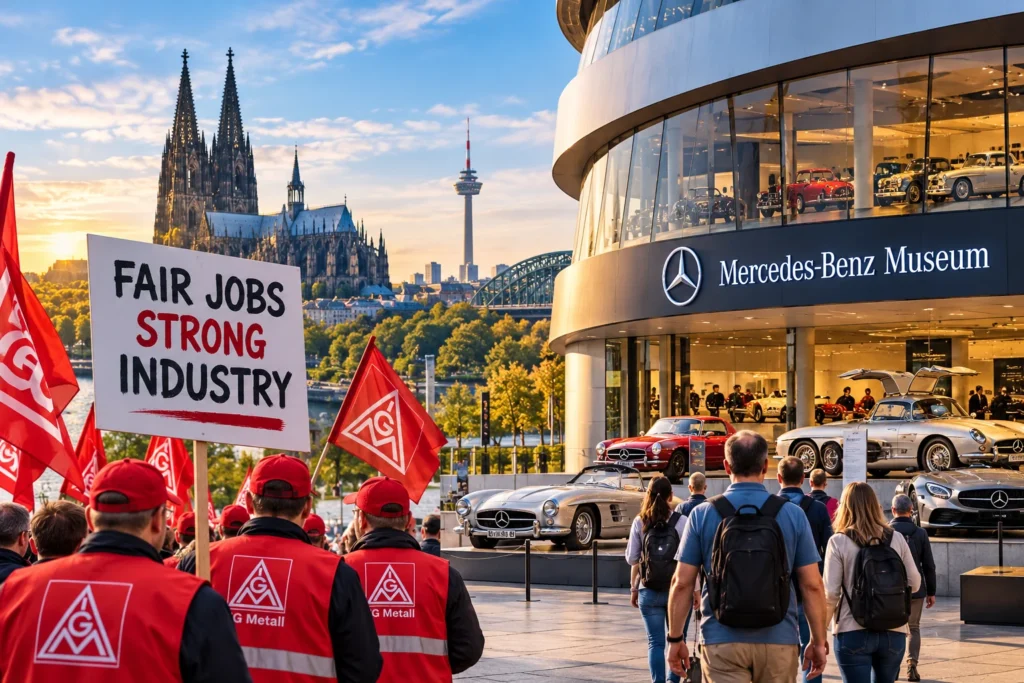
Labor representatives in Germany continue active efforts to safeguard established collective bargaining agreements, emphasizing the retention of the thirty-five-hour workweek across industrial production sites. At historically significant industrial locations such as the Mercedes-Benz production facilities in Berlin-Marienfelde, trade union organizations have convened public assemblies to highlight employee protections. Leadership from the German Trade Union Confederation and IG Metall have reiterated that maintaining standard working-hour limits remains a central pillar of labor policy within the nation’s manufacturing sector.
Official ministry statements and labor administration frameworks underscore the role of collective agreements in supporting workforce stability, regional economic output, and high operational standards. Historically, standardized working hours in manufacturing have contributed to structured shift schedules, high productivity levels, and sustained employment quality across western and eastern federal states.
The ongoing dialogue between industrial employers and trade union representatives reflects broader structural transformations within European manufacturing. As production facilities adapt to new technological requirements, sustainable manufacturing practices, and international market dynamics, operational frameworks at major industrial plants remain a focus of regional economic development strategies.
Industrial Tourism Trends and Heritage Visits at European Plants
The evolving landscape of manufacturing has a direct impact on industrial tourism trends across Germany and Central Europe. Industrial heritage sites, working plant tours, and automotive visitor centers represent an important segment of cultural and educational travel, attracting domestic visitors and international delegations interested in engineering history, regional craftsmanship, and modern production methods.
Official tourism board releases highlight the cultural significance of manufacturing corridors in cities like Berlin, Stuttgart, Munich, and Wolfsburg. Guided factory tours, interactive manufacturing museums, and technological exhibition centers offer travelers direct insight into Europe’s industrial history. These visitor programs support local service economies, including regional hospitality, municipal transport networks, and heritage conservation projects.
When operational changes or labor negotiations take place, visitor management strategies at major industrial plants are adjusted to ensure public tours, educational visits, and corporate exhibitions remain accessible. Tourism authorities emphasize that maintaining open, transparent access to industrial heritage facilities reinforces regional destination branding and highlights ongoing innovation in sustainable mobility.
Regional Workforce Mobility and Economic Impact on Local Travel
The balance between labor regulation and industrial operational efficiency influences regional workforce mobility and corporate travel patterns. Manufacturing hubs rely on a network of specialized engineers, international technical consultants, logistics professionals, and supply-chain partners who travel regularly between production sites, research centers, and corporate headquarters across Europe.
Government economic statistics indicate that manufacturing clusters generate significant secondary demand for business travel, hotel overnight stays, regional rail transport, and municipal conference facilities. Sustaining stable working conditions and clear labor frameworks contributes to predictable business travel schedules and steady commercial occupancy rates in surrounding municipalities.
Furthermore, educational travel programs organized by universities, technical institutes, and international trade associations frequently visit German manufacturing centers to study workplace organization, labor relations models, and advanced engineering practices. These academic and professional exchanges form a vital component of MICE (Meetings, Incentives, Conferences, and Exhibitions) tourism across federal states.
Future Outlook for Automotive Experience Tourism in Europe
As the global automotive landscape transitions toward electric mobility and digitalized manufacturing processes, tourist destinations centered around industrial heritage are evolving their offerings. National tourism boards and municipal development agencies are partnering with industrial heritage routes to showcase transition technologies, green manufacturing techniques, and historic preservation.
Visitors traveling to European manufacturing centers increasingly seek holistic cultural experiences that combine technical factory insights with local gastronomy, architectural tours, and regional cultural sites. Federal travel initiatives continue to promote integrated transport passes and regional tourism cards that connect industrial heritage sites with surrounding natural parks and historic city centers.
Public policy statements from economic and tourism ministries reaffirm the commitment to supporting sustainable destination development. By highlighting both the historic contributions of labor frameworks and the future of clean manufacturing, regional tourism strategies aim to maintain Germany’s position as a premier destination for industrial heritage, technical education, and international cultural travel.
For more travel news like this, keep reading Global Travel Wire