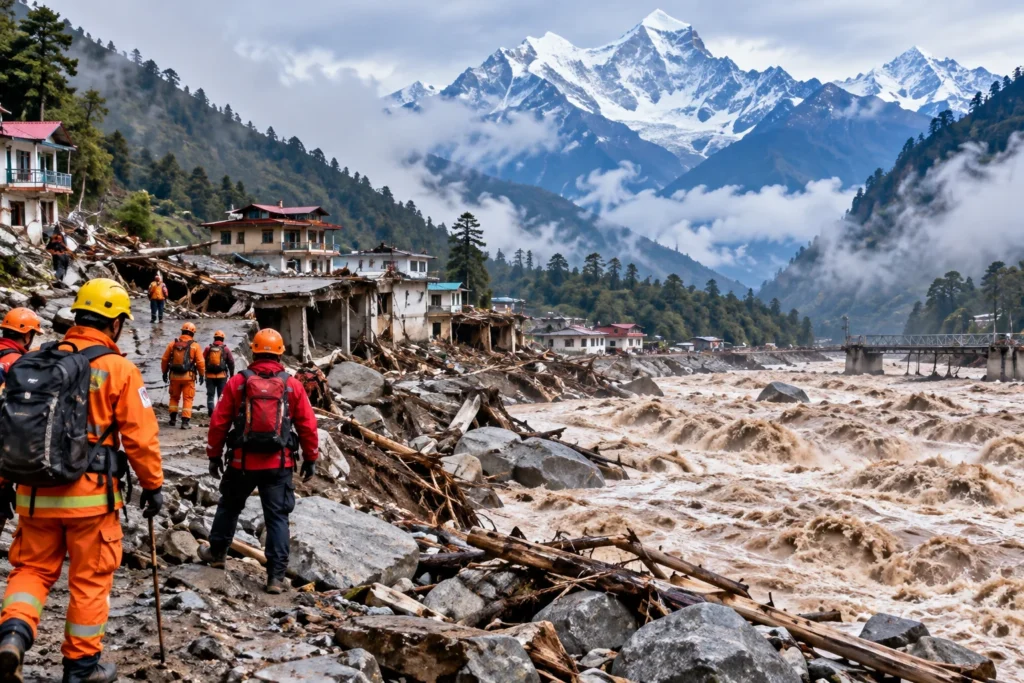
A catastrophic natural disaster along the Himalayan border region has prompted emergency search and rescue operations, placing a national spotlight on emergency response protocols and Himalayan tourism safety. Heavy surge waters swept through the northern Rasuwa district early Wednesday, impacting riverside infrastructure, transportation corridors, and local communities along the Trishuli River basin. Official government reports confirm that over a hundred people have died, while hundreds of individuals remain unaccounted for across the affected mountain corridors.
Among those reported missing are foreign travelers visiting the high-altitude region, including at least 47 American citizens who were traveling along popular travel routes near the Nepal-Tibet border. Government agencies and emergency responders have deployed specialized disaster management units, high-altitude rescue personnel, and aerial search teams to locate missing persons, provide emergency relief, and restore communications throughout the impacted zones.
Massive Search Operations Underway in Northern Border Zones
Following the sudden rush of water through the river valley, official government channels released formal statements expressing condolences to affected families while detailing active emergency operations. The Prime Minister’s Office confirmed that dedicated disaster units from the armed forces, national police, and emergency medical services were mobilized immediately. Multi-agency search operations continue around the clock despite difficult mountain weather conditions and severed road access.
Authorities reported extensive damage to key transport routes, bridges, and municipal infrastructure. Search teams are prioritizing river banks, border transit stations, and temporary lodging facilities where travelers were registered. Official public statements emphasize that identifying individuals and verifying safe evacuations remain the primary focus of field operations.
International diplomatic partners have issued statements of support as coordinated emergency aid begins arriving in the region. Formal announcements confirm that emergency shelter equipment, clean water supplies, and specialized disaster response advisors are being provided to reinforce local relief efforts.
Impact on Pilgrimage Routes and Foreign Travelers
The affected region serves as a major transit corridor for international travel and religious pilgrimages, most notably the historic journey toward Mount Kailash located in the neighboring autonomous region. The high-altitude peak holds immense spiritual significance for multiple global faith traditions, drawing thousands of international travelers annually through northern border crossings.
Official reports indicate that numerous organized tour groups were positioned at border facilities when floodwaters surged through the valley. Local travel agencies and international tour coordinators confirm that group members were situated along the border transit route during the event. Field personnel are actively attempting to re-establish contact with remote groups whose communication channels were cut off by infrastructure damage.
Tourism officials are working in direct coordination with local law enforcement, tourist police divisions, and diplomatic representatives to reconcile passenger manifests, track traveler itineraries, and facilitate safe transit back to urban centers for non-injured visitors.
Strengthening Infrastructure and Himalayan Tourism Safety
Disaster management experts and environmental authorities point to the increasing vulnerability of high-altitude mountain corridors during extreme weather events. Rapid flash floods along transboundary river systems present distinct challenges for safety monitoring, emergency alerting, and remote evacuation management.
Government ministries and regional planning authorities have outlined immediate and long-term priority actions to enhance travel resilience:
Real-Time Hydrological Monitoring: Expanding automated water level sensors and early warning systems across high-altitude river basins.
Enhanced Communication Networks: Deploying satellite communication technology to remote border posts and high-traffic trekking itineraries.
Resilient Transit Corridors: Rebuilding critical bridges, roadways, and emergency shelters to withstand intense seasonal weather conditions.
Coordinated Emergency Tracking: Standardizing traveler registration systems among local tour operators and border control agencies to expedite accounting during natural disasters.
For more travel news like this, keep reading Global Travel Wire