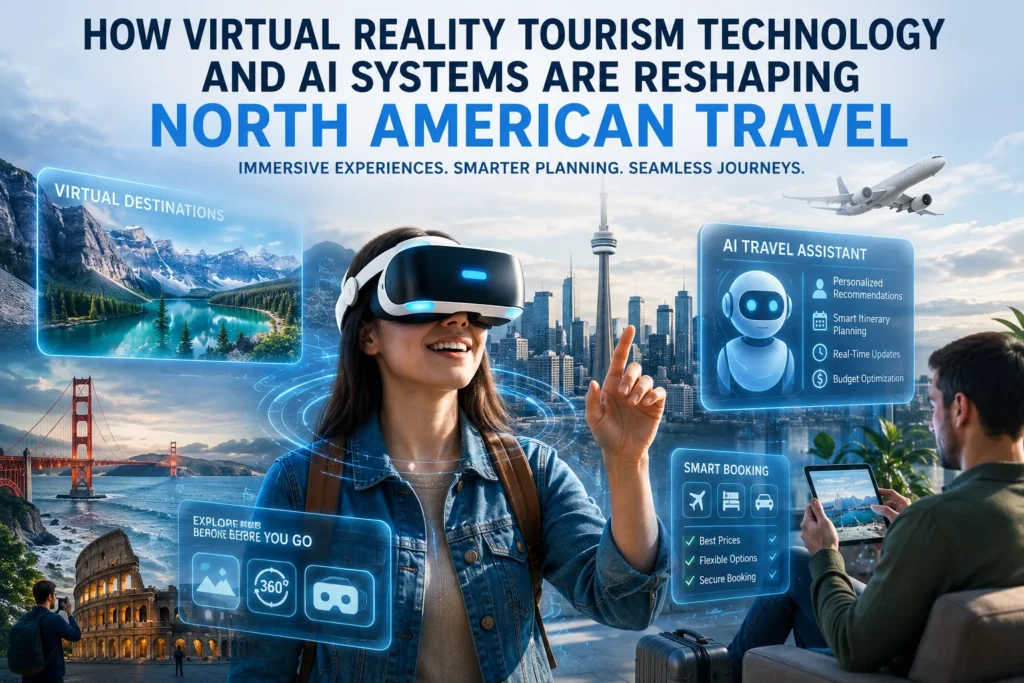
Across North America, virtual reality tourism technology and artificial intelligence are transitioning from trial programs into essential operational tools. Public tourism boards, transport authorities, and federal agencies are utilizing immersive digital solutions and data platforms to modernize destination marketing, streamline visitor logistics, and transform international travel management.
From state tourism initiatives showcasing national heritage sites to federal aviation programs upgrading passenger processing at major transit hubs, public sector organizations are establishing modern benchmarks for technology integration in global tourism.
Immersive Pre-Trip Previews and Virtual Destination Showcases
Destination marketing organizations across Canada and the United States are deploying virtual reality tourism technology to give prospective travelers immersive previews of national parks, historic monuments, and cultural districts. By distributing high-resolution digital simulations through visitor centers, international trade expos, and official web portals, public tourism authorities allow prospective visitors to explore trails, landmark buildings, and coastal reserves before making travel bookings.
Official research and visitor analytics compiled by national tourism boards indicate that immersive destination previews significantly boost visitor engagement and influence itinerary planning. Allowing travelers to experience accurate 3D renderings of remote or lesser-known destinations encourages visitors to explore regional attractions beyond traditionally congested urban corridors. This digital strategy aids environmental preservation by dispersing tourism traffic across broader geographic areas while promoting sustainable economic growth for rural and indigenous communities.
In addition to physical tourism promotion, virtual access provides an inclusive alternative for individuals facing mobility constraints or travel limitations, establishing accessible, long-term exposure for public landmarks and cultural heritage sites.
AI Data Platforms and Public Itinerary Planning Tools
Artificial intelligence is becoming a core foundation for travel planning and regional tourism management in North America. Tourism development agencies are building integrated data platforms that harness artificial intelligence to process travel statistics, seasonal visitor flows, and economic indicators.
A prominent example is Destination Canada’s national tourism data initiative, created in collaboration with Statistics Canada and federal economic development departments. The centralized platform utilizes artificial intelligence to provide local communities, tourism operators, and public planners with actionable insights into regional travel trends. Advanced predictive models allow local authorities to optimize municipal services, plan infrastructure upgrades, and tailor promotional initiatives to match evolving international visitor preferences.
Simultaneously, public transit operators and destination management organizations are deploying conversational AI assistants across official visitor channels. These tools evaluate public transport schedules, museum operational hours, seasonal weather conditions, and accessibility features to deliver customized, real-time trip recommendations. By organizing complex logistical data into accessible digital interfaces, regional travel authorities ensure visitors can navigate destinations efficiently and reliably.
Smart Airport Infrastructure and Biometric Passenger Facilitation
The adoption of artificial intelligence and biometric identity systems is accelerating across physical transportation networks in North America. Transport agencies and federal border protection authorities are implementing automated passenger verification systems to enhance security procedures and reduce processing delays at major international gateways.
Federal guidelines and official aviation development programs outline a progressive expansion of facial recognition technology and biometric departure systems across national airports. Integrated digital identity verification allows participating travelers to proceed through security checkpoints, immigration processing, and flight boarding gates with minimal physical document inspection.
Complementing biometric verification, airport authorities are using predictive artificial intelligence algorithms to manage passenger flow within terminals. Machine learning systems monitor queue density, forecast security checkpoint wait times, and automatically reallocate staff resources during operational peaks. During severe weather events or air traffic delays, automated communication tools help transport hubs broadcast real-time schedule updates and rerouting options directly to passengers.
Through coordinated investments in virtual reality tourism technology, intelligent analytics platforms, and biometric airport infrastructure, North American public agencies are constructing an efficient, data-driven travel ecosystem designed to meet future global tourism demand.
For more travel news like this, keep reading Global Travel Wire