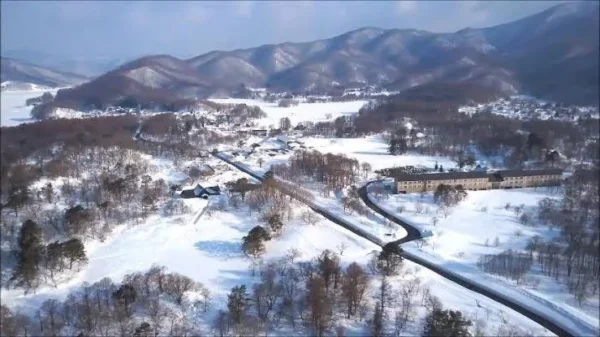
Road access has returned to Lake Hibara in Japan’s Fukushima Prefecture after heavy snow and fallen trees cut off 450 overnight guests and 948 residents. An 18-kilometre stretch of National Route 459 reopened at 18:00 on Sunday, 22 November, giving all stranded guests a way out. Fukushima Prefecture reported no injuries.
Kitashiobara lifted its final national or prefectural road closure at 17:00 on Tuesday, 24 November, when the lakeside stretch between Wasezawa and Kotakamori reopened. The village expects the Hibara–Urabandai community bus, suspended on Tuesday, to run normally on Wednesday. Power outages continued in parts of Hibara and Urabandai, leaving some visitors with another detail to confirm before arrival.
How Crews Restored Access to Kitashiobara
Snow brought trees down across roads around the lake on Friday, 20 November. Authorities closed the main approach at 18:30. At nearby Inawashiro, snow depth rose from three centimetres on Thursday to 50 centimetres on Friday and reached 53 centimetres on Saturday.
The prefecture’s Saturday tally counted 1,398 people cut off across ten settlements. The total included 450 overnight guests and 948 residents in 514 households. By 10:00 on Sunday, 107 guests at two properties still lacked road access. The evening update recorded zero after crews cleared snow and fallen trees and reopened Route 459.
Two smaller stretches also reopened that evening, reconnecting Hibara with Wasezawa and Kotakamori with Kengamine. The opening of the remaining Wasezawa–Kotakamori stretch on Tuesday lifted the last closure on the village’s national and prefectural roads. Kitashiobara warned that some reopened sections remained narrow and urged drivers to watch for snow and ice.
Trains Resume as Lakeside Bus Prepares to Return
The storm also disrupted the Ban’etsu West Line after a train struck a fallen tree and derailed between Kitakata and Yamato on 20 November. Nobody was injured. Further obstructions slowed recovery, and JR East cancelled services on sections of the route between Kitakata and Tsugawa without replacement buses. Tuesday morning’s operating updates showed normal service again.
For travellers coming from Tokyo, a usual route to Urabandai is the Shinkansen to Koriyama, a local train to Inawashiro and a bus into the highlands. The bus to Urabandai Kogen normally takes about 40 minutes. Passengers staying farther around Lake Hibara may need another connection to reach their accommodation.
Three regular routes ran on Tuesday, serving Kitakata–Urabandai, Kitakata–Oshio and Inawashiro–Oshio. The suspended Hibara–Urabandai community bus normally runs daily, is free to use and serves stops near guesthouses around Sohara. The village’s evening update listed normal service for Wednesday, 25 November. Visitors relying on it should confirm the stop nearest their property and the time of their connection.
Power Cuts Remain a Concern for Lakeside Stays
Kitashiobara reported 173 properties without electricity at 16:00 on Tuesday, down from 467 that morning. Water service had returned throughout the village. Mobile service had also returned, although the village warned it could remain unstable and said some districts still had landline problems.
Guests with bookings in Hibara or Urabandai should ask their accommodation provider whether power and heating are available. They should also confirm which road serves the property, especially if arriving after dark. For those travelling by bus, checking the stop name with the property can help avoid getting off too early and having to cover the remaining distance on foot.
Why Road Recovery Matters for Urabandai Tourism
Kitashiobara’s Bandai Highlands recorded about 1.65 million visits in 2025, according to Fukushima Prefecture’s tourism survey. The highlands ranked second among destinations in the survey despite a 4% fall from 2024. Those figures include day trips and give a sense of how many visitors use the area’s road and transport links over a year.
The reopening of Route 459 resolved the immediate problem for guests who had been unable to leave. Tuesday’s lakeside reopening and Wednesday’s planned bus return restore more options for people arriving. For the next journey, the details that matter most are the condition of the approach road, the nearest operating bus stop and whether the accommodation has power.
For more travel news like this, keep reading Global Travel Wire