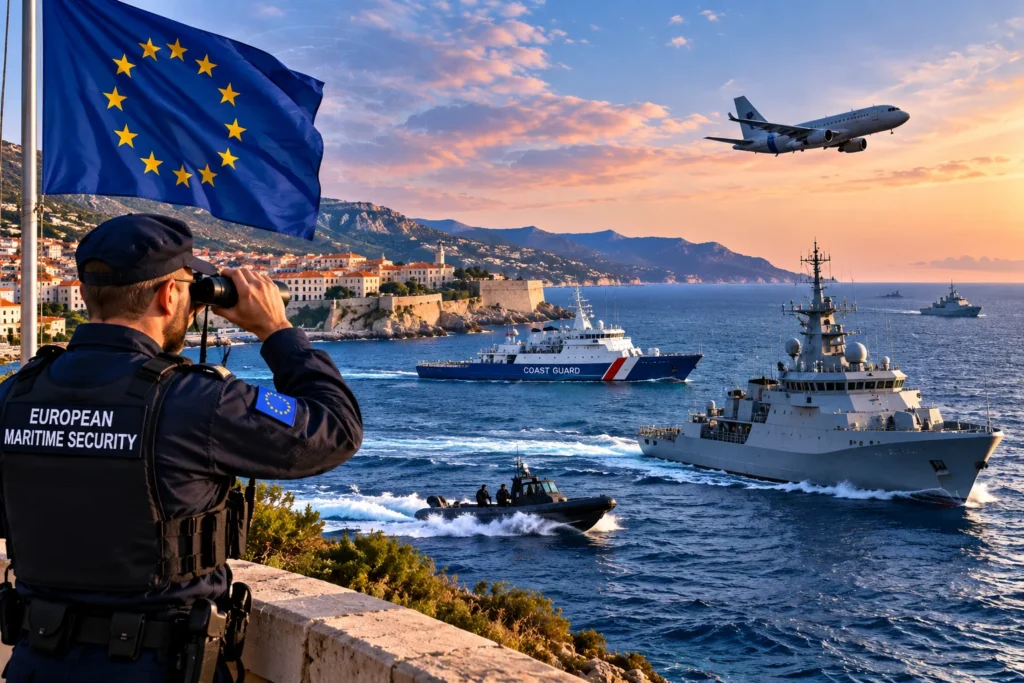
Security oversight across regional maritime corridors and coastal transit routes has intensified following a critical incident in the Black Sea. Official emergency response notifications confirm that a commercial cargo vessel carrying agricultural goods caught fire and sank approximately 20 nautical miles off the coast of Romania, within the country’s Exclusive Economic Zone and near offshore energy infrastructure.
The event has heightened concerns regarding navigation safety, port operations, and coastal tourism security across the broader Black Sea basin. Neighboring maritime states and regional transport authorities have reinforced vigilance along key shipping corridors connecting Eastern European supply routes to International Mediterranean ports.
Incident Details and Emergency Maritime Rescue Operations
Official logs from the Romanian Maritime Administration and national search-and-rescue agencies indicate that emergency protocols were activated immediately following reports of a severe onboard explosion and fire approximately 9 nautical miles from the Pescăruș offshore platform.
The affected vessel, identified in maritime registers as the Royad Mammadov, was operating under the flag of Saint Kitts and Nevis and managed by a Turkish shipping entity. Having departed from the Ukrainian Danube port of Izmail with a cargo of corn bound for Ravenna, Italy, the vessel was traversing neutral international waters when the incident occurred.
In response to the emergency signal, Romanian rescue vessels—including the specialized units SAR Apollo, SAR Artemis, and SAR Ares—alongside Romanian Coast Guard patrols and specialized aviation units, deployed to the location. Rescuers successfully extracted 11 crew members, using helicopter winches to evacuate injured personnel for immediate medical stabilization. Official casualty reports confirmed two fatalities, including the ship’s captain, with search operations continuing for remaining crew members. Crew rosters on board included foreign nationals from Azerbaijan and India.
Official Statements and International Security Context
In official public statements, Ukrainian state leadership addressed the sinking, confirming that the civilian agricultural vessel was struck in neutral waters while transporting commercial grain supplies. Official communications emphasized that such incidents directly jeopardize freedom of navigation, international civil aviation safety over maritime zones, and global food supply security.
Official statements from state authorities in Romania reaffirmed that the event occurred within proximity to essential national energy infrastructure and near key regional transit routes. Civil defense and maritime defense forces in Romania continue to monitor territorial waters and airspaces, citing previous incursions by unmanned aerial vehicles and drifting naval mines in regional sea routes.
Regional authorities stress the necessity of strict international compliance with maritime safety protocols to guarantee unhindered passage for commercial, civilian, and seasonal passenger vessels operating across the Black Sea.
Implications for Maritime Travel, Port Operations, and Coastal Tourism
The recurring security challenges in the Black Sea exert wider economic and operational effects on coastal commerce, passenger transport, and maritime tourism across Southeast Europe:
Heightened Operational Surveillance: Port authorities in regional maritime hubs, including Constanța, Varna, and Istanbul, have introduced elevated security monitoring for incoming and outgoing civilian vessels.
Impact on Coastal Cruise and Ferry Operations: Maritime tourism operators managing regional cruises, leisure charters, and coastal ferry routes continue to re-route transit paths further south toward the Bosporus to avoid high-risk international waters.
Insurance and Freight Transport Adjustments: Rising marine risk assessments in the northern and western Black Sea impact insurance premiums for commercial shipping, indirect logistics costs, and seasonal nautical tourism infrastructure.
Offshore Safety and Infrastructure Protection: Regional governments have stepped up naval patrols and air surveillance around key offshore energy installations and coastal resort zones to maintain overall public safety and restore market confidence in coastal tourism.
For more travel news like this, keep reading Global Travel Wire