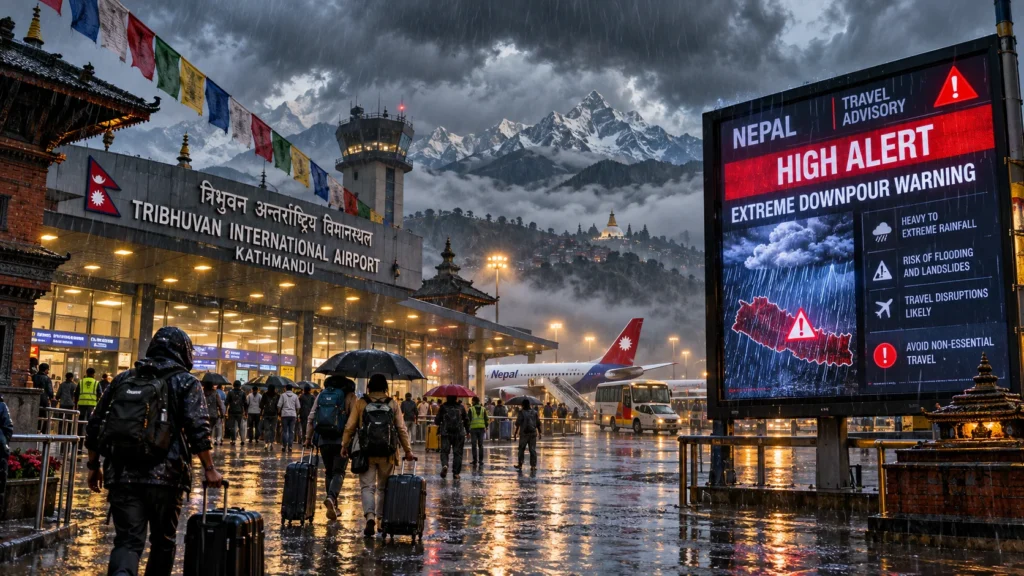
The Ministry of Home Affairs and the Department of Tourism have officially activated emergency disaster response mechanisms across Nepal following a severe weather bulletin predicting widespread heavy downpours. A developing low-pressure system originates over the Bay of Bengal and is forecast to bring torrential rain, severe thunderstorms, lightning, and strong winds across multiple provinces. Government authorities have cautioning domestic citizens, foreign visitors, and tourism operators against non-essential travel while directing immediate precautions across high-risk terrain.
Official bulletins highlight that intense rainfall, soil erosion, flash floods, urban inundation, and landslides are expected across low-lying regions and hilly belts, while high-altitude Himalayan areas face heavy snowfall. In response, government agencies have issued comprehensive safety directives affecting trekking, mountaineering, domestic aviation, and highway transit.
Regional Meteorological Forecast and Impact Zones
Meteorological models indicate that adverse weather conditions will affect all seven provinces, with severe precipitation concentrated across specific regions:
Gandaki and Lumbini Provinces: Heavy to extremely heavy downpours accompanied by gale-force winds are expected, with heightened alert levels surrounding major tourism destinations such as Pokhara and adjacent hilly belts.
Koshi, Bagmati, and Madhes Provinces: High-intensity rainfall threatens river basins, steep valleys, and urban centers, with specific landslide precautions urged for mountainous areas including Taplejung.
Karnali and Sudurpaschim Provinces: Significant rainfall is forecast across western districts, including Jumla, where sudden mudslides and river surges pose hazards to transportation infrastructure.
Civil aviation and road transport divisions have requested maximum operational vigilance, warning that domestic flight schedules and inter-district highway travel may experience short-notice delays, cancellations, or route closures.
Directives for Mountaineers, Trekkers, and Tour Operators
The Department of Tourism has released specific guidance for international tourists, mountaineers, trekking agencies, and field staff currently active in high-altitude destinations. Officials strongly urge individuals to postpone non-essential outdoor expeditions and avoid high-risk river corridors or unstable slopes.
Trekkers and expedition groups already in mountain corridors—particularly within high-altitude trail routes such as the Khumbu region, Manang, and Sama Gaun in Gorkha—are strictly advised to assess local weather conditions, maintain continuous communication with tour leaders, and descend to safe shelter locations if conditions deteriorate. Mountaineering teams are cautioned against attempting high-altitude summits during active weather windows due to heightened avalanche risks and sudden snowfall accumulation.
To ensure uninterrupted medical coverage during the weather event, the Department of Tourism has coordinated with healthcare institutions and regional medical centers across key trekking hubs and major urban centers, including Kathmandu and Pokhara, to maintain operational readiness for emergency support.
Government Preparedness and Emergency Channels
The National Disaster Risk Reduction and Management Authority (NDRRMA) under the Ministry of Home Affairs has deployed district-level response frameworks across all administrative regions. District Administration Offices have been mobilized to coordinate search-and-rescue units, clear highway blockages, and monitor rising water levels along major river systems.
Government representatives urge the public and international travelers to avoid unverified rumors and rely exclusively on updates published by official channels, such as the Department of Hydrology and Meteorology and state security agencies. Dedicated emergency helplines and local administrative offices are fully operational to provide immediate assistance and real-time guidance.
For more travel news like this, keep reading Global Travel Wire