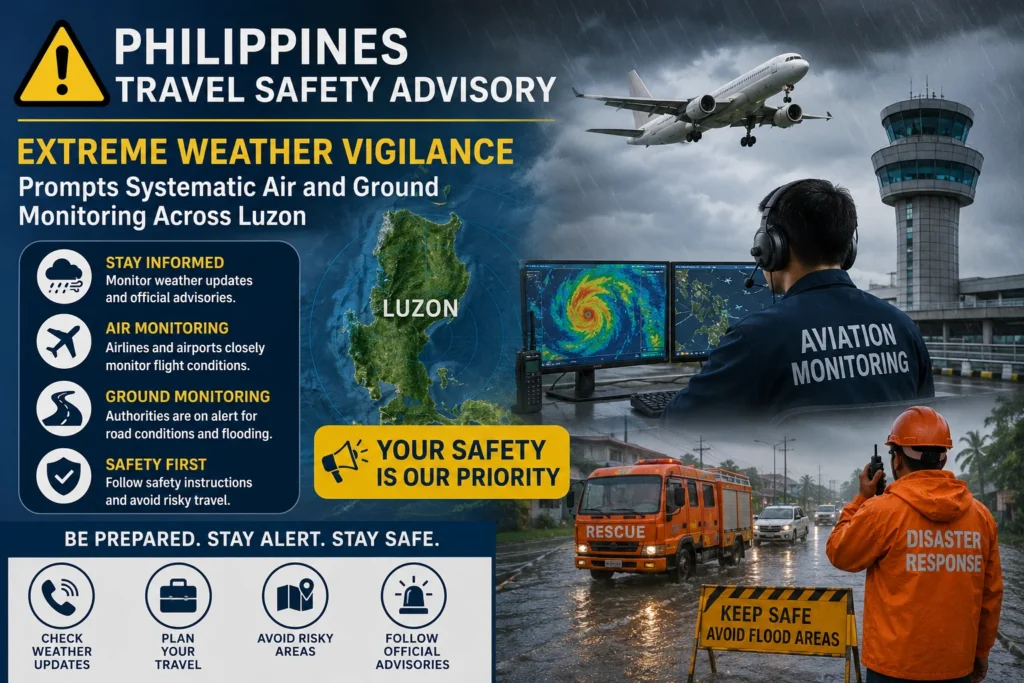
The Philippine Atmospheric, Geophysical and Astronomical Services Administration (PAGASA) and national transportation boards have increased monitoring protocols across major domestic travel corridors. This elevated precautionary posture follows localized monsoonal activities and unpredictable weather systems impacting Metro Manila and the CALABARZON region. Civil aviation authorities are actively advising travelers to exercise structured vigilance as volatile weather systems necessitate routine schedule adjustments across the western Pacific transportation belt.
The heightened caution highlights a long-standing historical challenge within the Philippine Area of Responsibility (PAR), where shifting storm tracks frequently cross critical travel zones. Public safety reports frequently reference the historical precedent of Typhoon Basyang, an intensely erratic system that dramatically shifted course toward central Luzon, demonstrating the extreme rapidity with which atmospheric conditions can alter commercial logistics. The Department of Transportation is using these historical models to deploy pro-active infrastructure management, working to prevent cascading travel delays at key transit hubs.
Air Traffic Realignment and Infrastructure Impacts at NAIA
Aviation operations throughout the island of Luzon are executing flexible safety protocols to minimize disruptions for arriving and departing passengers. The Manila International Airport Authority (MIAA) has implemented enhanced coordination measures at Ninoy Aquino International Airport (NAIA) to handle sudden visibility reductions and severe wind shears caused by the southwest monsoon. The hub remains entirely functional, though airfield teams are strictly managing ground movements to guarantee maximum runway safety.
The impact of these localized weather shifts spreads across key regional transit zones, requiring distinct administrative actions:
At Ninoy Aquino International Airport, ground handling crews and air traffic control are prioritizing staggered aircraft separation intervals during heavy precipitation, ensuring that international and domestic connections preserve standard landing safety parameters.
In the CALABARZON region, spanning Cavite, Laguna, Batangas, Rizal, and Quezon, land management agencies are providing real-time highway updates. This monitoring helps travelers identify alternative routes when localized flash floods affect primary roads leading to provincial transport terminals.
Along coastal maritime routes, the Philippine Coast Guard maintains an active presence, temporarily restricting small craft movement and regional ferry operations when offshore wave swells reach heights between 1.5 and 3.5 meters along the western seaboard of Luzon.
Airline Responses and Passenger Communication Mandates
Major commercial air carriers based within the archipelago are working in complete alignment with civil aviation safety mandates. Philippine Airlines, Cebu Pacific, and AirAsia Philippines have adjusted their passenger communication networks to provide immediate, automated alerts regarding schedule alterations. The airlines have prioritized proactive ground positioning, ensuring that aircraft rotations are mathematically isolated from prolonged weather delays.
The national flag carrier, Philippine Airlines, is advising passengers on intercontinental itineraries to constantly review flight logs via its official mobile applications before starting their journey to the terminal. Cebu Pacific has deployed expanded digital self-service tools, enabling travelers affected by weather-related adjustments to immediately utilize flexible rebooking options or move their fares into specialized travel funds. Concurrently, AirAsia Philippines has increased its customer relations presence at domestic terminals, guiding passengers through check-in queues and recommending earlier airport arrival windows during heavy monsoonal rain showers.
Regulatory Protections and Air Passenger Bill of Rights
To protect consumer interests during weather-related delays, the Civil Aeronautics Board (CAB) enforces the complete implementation of the Air Passenger Bill of Rights. Because structural disruptions stemming from severe weather conditions are legally classified under force majeure, or extraordinary circumstances beyond corporate control, explicit regulatory guidelines dictate how airlines must manage passenger welfare:
Complimentary Rebooking Options: Under standing federal mandates, when a scheduled flight is canceled due to severe meteorological alerts, the operating carrier is required to offer free rebooking on the next available operational flight within their network.
The Travel Fund Alternative: Passengers who choose to defer their travel plans entirely are entitled to convert the full value of their ticket into a secure, non-expiring digital travel fund or request specific routing alternatives.
The Basic Duty of Care: If weather-induced ground delays surpass a continuous four-hour window at the departure gate, airlines must provide complimentary meals, refreshments, and access to necessary communication facilities.
Insurance Substantiation: For travelers seeking compensation through independent corporate travel insurance policies, carriers are legally required to provide formal, certified flight cancellation certificates to validate trip interruption or delay claims.
Strategic Guidelines for International and Domestic Holidaymakers
As the Department of Tourism continues to record significant growth in international visitor arrivals, public agencies are encouraging travelers to adopt smart, climate-resilient habits when planning itineraries during the rainy season. Tour operators officially suggest maintaining wide connection windows when scheduling transitions from international long-haul flights to regional island transfers, specifically avoiding tight, single-hour layovers in Manila.
Furthermore, tourism officials advise booking flexible lodging options that permit last-minute schedule adjustments without financial penalty. Travelers are urged to source all meteorological data exclusively from official government updates provided by PAGASA, ensuring that personal travel choices are informed by verified scientific analysis rather than unverified channels. Through the systematic integration of real-time weather forecasting and strict adherence to international safety standards, the Philippine tourism sector successfully preserves travel continuity while maintaining the absolute well-being of every visitor.
For more travel news like this, keep reading Global Travel Wire