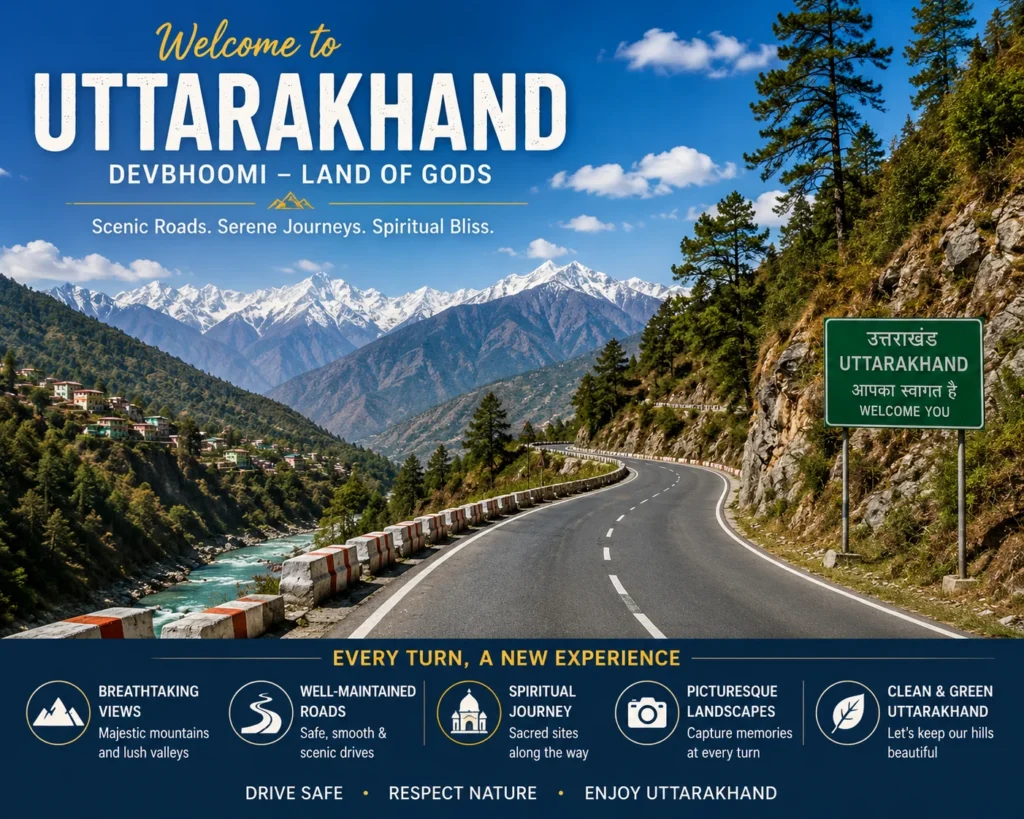
The commencement of the peak summer pilgrimage window has brought a significant influx of travelers to the regional transit systems of northern India. According to the daily bulletin issued by the Department of Tourism and the Uttarakhand State Transport Authority, the structural capacity of the regional highway network is being actively monitored to accommodate a historic surge in registered visitors. Official statistics confirm that overall registrations for the Char Dham Yatra 2026 have surpassed the 3.3 million milestone, with over 1.26 million devotees successfully completing their visits to the high-altitude shrines during the opening weeks of the season.
This major volume of vehicular movement has placed structural demands on the primary entry points of Rishikesh and Haridwar. To prevent extensive delays along the approach roads, the state administration has enacted coordinated traffic management strategies. Law enforcement personnel and municipal monitoring teams are working together to maintain continuous vehicle movement, using systematic routing techniques designed to distribute the travel load away from traditional urban bottlenecks and toward newly developed arterial bypass systems.
Regional Highway Network Adapts to Intensified Visitor Volumes
The geographic position of Rishikesh as the primary low-altitude gathering point for the Himalayan shrines makes its municipal corridors essential to the overall safety of the journey. Traffic data released by the state monitoring cell highlights that the combination of standard weekend leisure travelers and dedicated pilgrims creates highly concentrated travel windows, particularly along National Highway 7 and the main peripheral ring roads. To counter localized congestion, transport authorities have established specialized check posts to monitor the entry speed and safety compliance of inbound passenger vehicles.
Part of this active traffic regulation involves the enforcement of strict vehicle readiness criteria. Under the current state directives, commercial transport operators and private drivers must possess a valid technical clearance document, commonly known as a green card, before ascending onto the mountain highway sectors. These documents verify that vehicles have undergone necessary brake, engine, and safety inspections, reducing the likelihood of mechanical failures that can block single-lane mountain passes and cause cascading delays across the entire low-altitude transit network.
Strategic Ground Operations and Diversion Paths Activated
In response to the heavy weekend travel patterns, the regional police administration has deployed additional field officers to manage key intersections manually during high-volume hours. These efforts are heavily supported by digital crowd-monitoring systems centered at the Rishikesh Transit Camp, where physical registration verification takes place. Automated signaling adjustments and real-time electronic signage boards have been positioned at critical entry junctions to guide drivers toward alternative bypass paths, helping to divert a steady percentage of vehicle traffic away from the crowded market districts.
To assist travelers navigating these modified routes, emergency service vehicles and recovery cranes have been positioned at regular intervals along the highway. These public safety assets ensure that minor road incidents or vehicle stalls are addressed within minutes, preserving the continuous flow of the transit columns. Furthermore, the state has improved communication links between regional control rooms and the main border check points, allowing authorities to temporarily hold or slow the release of inbound vehicle batches when high-altitude transit pathways experience temporary capacity limits.
Registration Compliance and Safety Frameworks for the Peak Season
The Department of Tourism continues to emphasize that compliance with the free digital registration framework remains mandatory for all travelers entering the temple circuits. To streamline this process, the state has expanded its registration infrastructure, operating 30 dedicated verification counters within Rishikesh and an additional 20 counters in neighboring Haridwar. Pilgrims are required to present valid identity credentials, such as an Aadhaar card, to generate the official quick-response tracking codes necessary for temple access verification at Sonprayag, Gaurikund, and Janki Chatti.
A key focus of the official advisory releases is the strong recommendation for pre-travel health evaluations. Given the rapid change in elevation from the plains of Rishikesh to the high-altitude environments of Kedarnath and Badrinath, medical wellness is an important part of travel planning. The state ministry has set up upgraded health screening facilities along the main footpaths and transit bases, providing immediate medical assessments and emergency oxygen infrastructure to safeguard the well-being of visitors throughout their spiritual itineraries.
Looking Forward: Long-Term Infrastructure and Route Management
As the summer travel window transitions into the monsoon cycle, state planning groups are continuously analyzing traffic data from this season’s surges to refine future expansion projects. Current initiatives include the ongoing development of wider high-altitude highways and the consideration of long-term bypass corridors that will allow transit traffic to bypass major urban centers entirely. These structural upgrades aim to balance the preservation of regional ecological zones with the growing demands of national religious tourism.
For individuals currently organizing travel itineraries within the region, the official directive remains focused on early morning departures and the strict avoidance of late-evening mountain driving. By coordinating travel times with allocated temple slots and maintaining close contact with official state digital help desks, visitors can experience the rich cultural and scenic landscape of the region while supporting the safety and structural order of the collective journey.
For more travel news like this, keep reading Global Travel Wire