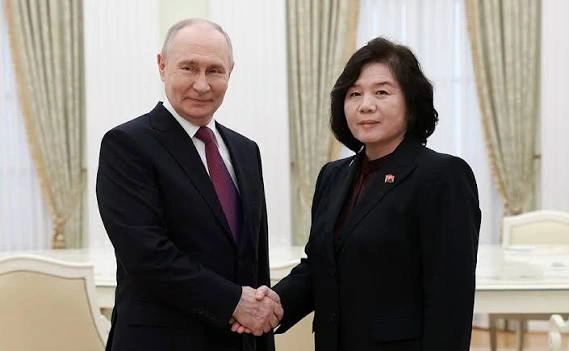
Russia and North Korea have placed Northeast Asian travel and security back under the global spotlight after Russian President Vladimir Putin hosted North Korean Foreign Minister Choe Son Hui at the Kremlin on July 19, 2026.
The high-level diplomatic meeting signals continuing cooperation between Moscow and Pyongyang at a time when international travellers face significant restrictions, government warnings and geopolitical uncertainty involving both countries.
For tourists, airlines and travel planners, however, the diplomatic movement should not be confused with a broader reopening of borders or easier tourism access.
No new commercial airline service, tourism programme or relaxed entry arrangement was announced in connection with the meeting.
The development instead highlights a widening contrast between increasing official exchanges and the severe restrictions affecting ordinary international travel.
Moscow meeting deepens strategic relationship
Choe’s Moscow visit follows the continued implementation of the Comprehensive Strategic Partnership Treaty established between Russia and North Korea in 2024.
The relationship covers political, strategic and economic cooperation and has resulted in increasingly visible exchanges between senior officials.
Putin’s July meeting with Choe further demonstrated the importance Moscow places on its relationship with Pyongyang.
For international travellers, diplomatic visits of this kind operate through government-controlled arrangements and should not be interpreted as indicators of normal tourism conditions.
Senior officials can cross borders through protected diplomatic channels even when ordinary visitors face visa restrictions, limited transportation choices and serious government travel warnings.
Russia remains a high-risk travel environment
Russia continues to present major challenges for international travellers.
The United States maintains its highest Level 4 “Do Not Travel” advisory for Russia, citing terrorism, unrest, wrongful detention and other risks.
Travellers should also recognise that consular assistance can be limited, particularly during detention or emergency situations.
The diplomatic activity surrounding Choe’s visit therefore does not signal improved conditions for tourism.
Anyone considering essential travel to Russia should review the latest official advice issued by their own government, confirm entry requirements and carefully examine insurance coverage before departure.
Travel policies may exclude protection when visitors enter destinations against official government warnings.
North Korea remains tightly restricted
North Korea continues to operate one of the world’s most controlled international travel environments.
For US citizens, ordinary passports cannot normally be used to enter or transit North Korea. Special passport validation is required in limited circumstances, while official advice continues to warn strongly against travel.
Choe’s journey to Moscow therefore does not represent a general tourism reopening.
Any future change affecting international visitors would require separate confirmation involving border authorities, visa policies and approved tourism arrangements.
Travellers should be particularly cautious about unofficial claims suggesting unrestricted access has resumed.
Diplomatic exchanges and tourist entry operate under entirely different systems.
South Korea tourism continues under regional vigilance
South Korea remains a major international tourism destination, but developments involving North Korea can increase security attention across the Korean Peninsula.
Visitors may encounter military exercises, emergency alerts or enhanced security procedures during periods of heightened tension.
These developments do not automatically indicate an immediate threat to tourists.
However, travellers should follow instructions from South Korean authorities and remain informed about security developments.
Visitors should also avoid restricted military areas and sensitive border zones.
Transport and public activities can occasionally be affected by demonstrations or emergency exercises, making official local information particularly important.
China remains a crucial regional gateway
China continues to play an important diplomatic and transportation role across Northeast Asia.
Its extensive aviation network makes Chinese airports major connecting points for travellers heading throughout the region.
However, travellers should not assume that transiting through China provides automatic access to North Korea.
North Korean entry remains subject to separate immigration controls, nationality restrictions and official approvals.
Visitors travelling through China should verify visa and transit requirements before departure and ensure any onward travel arrangements are formally confirmed.
Regional diplomatic relationships between governments do not guarantee unrestricted movement for foreign tourists.
No new airline route confirmed
The July diplomatic meeting did not produce an official announcement of expanded commercial aviation between Moscow and Pyongyang.
No confirmed new airline, scheduled route, increased frequency or international tourism package was announced as part of Choe’s Kremlin visit.
Travellers should therefore avoid interpreting diplomatic transportation as evidence of expanded public aviation access.
Government delegations may use arrangements completely separate from regularly scheduled passenger services.
Any genuine route expansion would require confirmation from airlines, airports or aviation authorities.
Could diplomacy affect regional aviation?
There is currently no direct evidence that the Putin-Choe meeting itself has caused widespread flight cancellations or new airspace restrictions.
Nevertheless, geopolitical developments can influence aviation when security conditions deteriorate.
Airlines may change routings to avoid sensitive airspace, producing longer flight times or schedule adjustments.
Insurance conditions can also change when governments update destination advisories.
Tour operators may suspend programmes, while border authorities can introduce additional controls.
These remain potential consequences rather than confirmed outcomes of the Moscow meeting.
Travellers should therefore base decisions on verified operational information rather than speculation.
What international travellers should monitor
Anyone planning travel involving Russia, North Korea or surrounding Northeast Asian destinations should check government advisories regularly.
Flight status should be confirmed directly with operating airlines before departure.
Travellers should also understand transit requirements, particularly when journeys involve China or other regional hubs.
Comprehensive travel insurance remains important, but policy exclusions must be reviewed carefully when destinations carry severe government warnings.
Flexible airfares and accommodation can provide additional protection when geopolitical conditions remain unpredictable.
Travellers should also keep emergency contacts available offline and avoid relying on social media claims concerning border openings, new flights or changes to visa policies.
Diplomatic movement does not equal tourism reopening
The July 19 Kremlin meeting confirms that Russia and North Korea continue strengthening high-level diplomatic engagement. The Kremlin’s official record confirms Putin’s meeting with Choe Son Hui in Moscow.
For the international travel sector, however, the immediate impact remains limited.
There has been no confirmed broad tourism reopening, major aviation expansion or relaxation of entry restrictions directly resulting from the meeting.
The most important lesson for travellers is to separate diplomatic symbolism from practical travel access.
Russia and North Korea may be increasing government-level exchanges, but ordinary travel remains highly sensitive and, in several cases, subject to some of the world’s strongest official warnings.
Across Northeast Asia, travellers should continue relying on confirmed border rules, government security guidance and airline information as diplomatic relations evolve.
For more travel news like this, keep reading Global Travel Wire