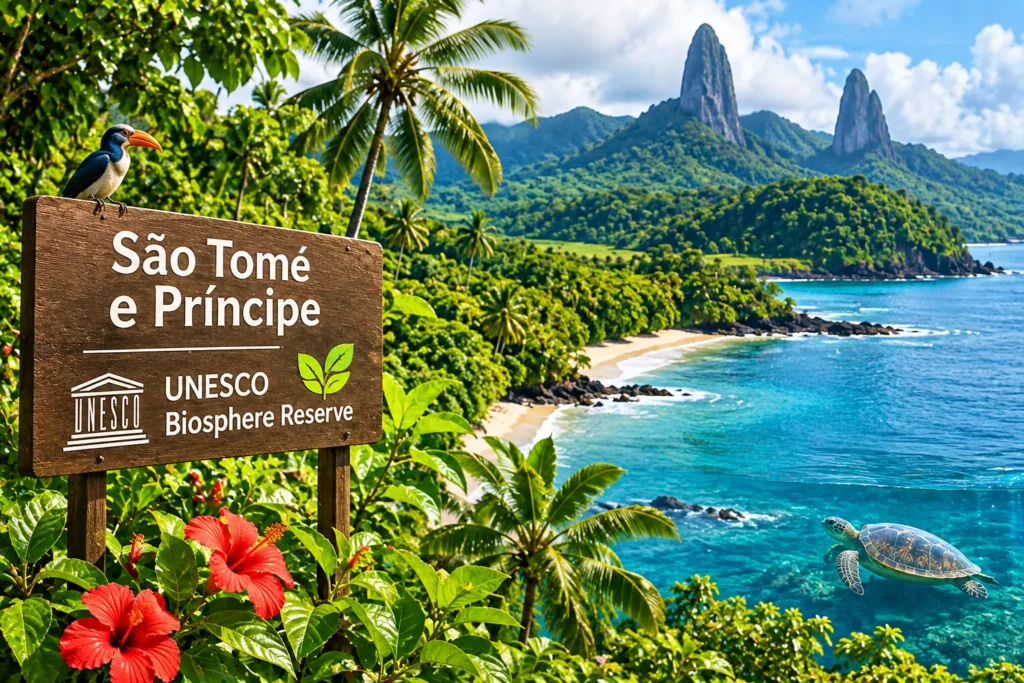
São Tomé, November 25, 2026 — The West African island nation of São Tomé and Príncipe has achieved a landmark milestone in global environmental stewardship by becoming the first entire country in the world to have its complete territory designated as a UNESCO Biosphere Reserve. Approved under UNESCO’s Man and the Biosphere (MAB) Programme as part of a global expansion introducing 26 new biosphere reserves across 21 countries, the newly inscribed Ilha de São Tomé Biosphere Reserve spans 1,130 square kilometres of dramatic volcanic peaks, mist-shrouded rainforests, mangrove coastlines, and vibrant coral reefs.
By adding the main island of São Tomé to the World Network of Biosphere Reserves, the archipelago unites its entire landmass and surrounding marine ecosystems under international conservation recognition. Its smaller sister island, Príncipe, earned UNESCO Biosphere Reserve status in 2012, establishing a proven framework for mangrove restoration, biodiversity research, and low-impact visitor management that now encompasses the whole nation.
Protecting Endemic Biodiversity and Living Heritage
Rising out of the equatorial waters of the Gulf of Guinea, São Tomé and Príncipe shelters the ancient Obô primary tropical rainforest—an irreplaceable ecological sanctuary spanning both islands. Often described by naturalists as an island laboratory of evolution, the archipelago is home to remarkable endemic wildlife, including the São Tomé dwarf ibis, the São Tomé fiscal shrike, the São Tomé shrew, and globally significant nesting beaches for endangered sea turtles.
Equally central to UNESCO’s biosphere model is the harmony between conservation and local livelihoods. Roughly 130,000 residents across São Tomé sustain traditional practices in artisanal coastal fishing and shade-grown organic cocoa and coffee cultivation—industries that preserve forest canopy while supporting rural communities. This biosphere milestone also complements the international recognition of São Tomé and Príncipe’s historic roças—century-old agricultural estates scattered across the volcanic interior that showcase the archipelago’s distinctive architectural and cultural heritage.
Global Biosphere Expansion Spotlights Premier Nature Destinations
The landmark addition of Ilha de São Tomé formed part of UNESCO’s largest biosphere network expansion in two decades, bringing the World Network of Biosphere Reserves to 785 sites across 136 countries and protecting approximately 5% of the planet’s surface. Several other newly designated reserves highlight premier wildlife and nature-based tourism corridors across Asia and Africa:
Madagascar: The newly inscribed Mantadia and Tsimembo Biosphere Reserves safeguard critical eastern rainforest and western dry forest ecosystems essential for endemic lemur populations and rare birdlife.
Indonesia: The Raja Ampat Biosphere Reserve recognises one of Earth’s richest centres of marine biodiversity, protecting coral triangle reefs and archipelago communities.
India: The Cold Desert Biosphere Reserve in Himachal Pradesh highlights and protects fragile high-altitude trans-Himalayan wilderness environments and snow leopard habitats.
Malaysian Borneo: The Kinabatangan Biosphere Reserve preserves vital riverine rainforest corridors supporting Bornean orangutans, pygmy elephants, and proboscis monkeys.
Elevating São Tomé and Príncipe Ecotourism on the Global Stage
For international travellers seeking authentic, uncrowded nature experiences, whole-country UNESCO recognition reinforces the appeal of São Tomé and Príncipe ecotourism. Rather than pursuing mass-market resort development, national conservation authorities and local hospitality operators focus on small-scale eco-lodges, guided forest trekking through Obô Natural Park, community-led agro-tourism tours on historic cocoa and coffee estates, and regulated marine excursions for whale watching and turtle nesting observation.
As UNESCO encourages every Member State to establish at least one biosphere reserve by 2035, São Tomé and Príncipe stands as an international blueprint for small island developing states. By placing biodiversity conservation, regenerative agriculture, and community stewardship at the heart of its visitor economy, the archipelago demonstrates how responsible travel can actively protect rare ecosystems while delivering lasting benefits to local residents.
For more travel news like this, keep reading Global Travel Wire