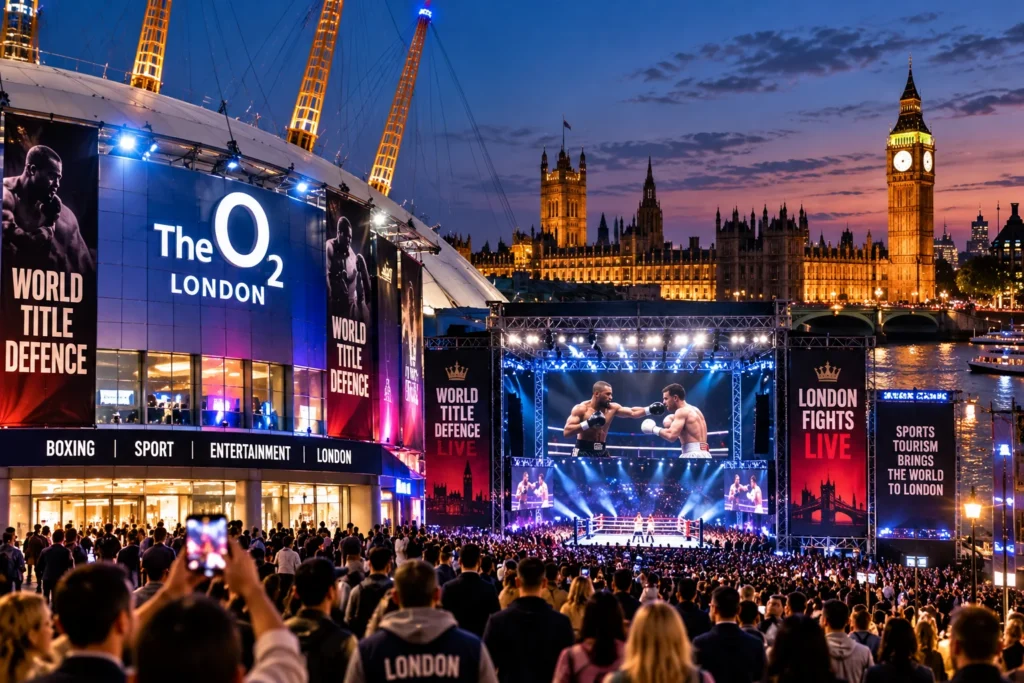
The international sports tourism landscape in the United Kingdom experienced a significant economic boost over the weekend as championship boxing returned to Greenwich’s iconic O2 Arena. Daniel Dubois successfully defended his World Boxing Organization heavyweight title with a decisive second-round victory against challenger Fabio Wardley, showcasing the ongoing appeal of marquee athletic events in attracting global visitors, flight bookings, and overnight hotel stays across the capital.
Major international sporting events hosted across the city generate hundreds of millions of pounds in direct economic value annually, according to official municipal impact reports released by the Greater London Authority. World title bouts staged at world-class entertainment venues serve as critical catalysts for local hospitality, driving increased spending across regional transport networks, food and beverage establishments, and leisure facilities.
World Championship Boxing Drives High-Yield International Visitors
The return of high-profile heavyweight matchups underscores the strategic role of sports tourism London in maintaining high hotel occupancy rates and supporting night-time economy sector growth. Traveling boxing enthusiasts, domestic fight fans, and international media delegations filled nearby Greenwich hospitality venues, providing substantial footfall for surrounding retail and leisure operations.
Key tourism and economic factors surrounding major arena sporting events in the city include:
High-Volume Visitor Footfall: Multi-thousand seat capacity events at venues like the O2 Arena attract large cohorts of domestic and overseas travelers seeking overnight accommodations.
Hospitality and Leisure Spending: Arena patrons contribute significantly to localized food, beverage, and retail revenues prior to and following prime-time sporting fixtures.
Global Broadcast Exposure: International distribution of major title fights elevates the host city’s visibility across key global tourist source markets.
Transportation and Infrastructure Utilization: Direct connection via river transit, tube networks, and cable car systems ensures efficient visitor movement and sustained transit revenue.
Official venue performance metrics published by operator AEG highlight that world-class arenas in the capital continue to record high ticket sales and visitor footfall, reflecting sustained demand for live sports entertainment.
Dominant Performance Highlights Arena Entertainment Appeal
Inside the ring, 29-year-old champion Daniel Dubois established immediate dominance before a sold-out arena crowd. Dubois delivered a powerful straight right punch early in the opening round, forcing Wardley to beat the referee’s count. Despite surviving a barrage of follow-up combinations along the ropes in the first round, the challenger could not withstand the champion’s momentum in the second, leading to a stoppage victory after referee intervention and a towel submission from the opposing corner.
Following the match, Dubois expressed confidence in his championship campaign, emphasizing his focus on maintaining his title reign at the highest level of world boxing. The victory marks another milestone for the Greenwich venue, which regularly hosts world-title events, premier music concerts, and global sporting showcases.
Wardley, who originally claimed the WBO title following official sanctioning updates, acknowledged the intense nature of elite competition, stating his commitment to learning from the outcome and continuing his career at the highest level.
Strategic Economic Value of Major Events for Capital Tourism
Official public statements from the Mayor of London and municipal tourism planning bodies consistently emphasize the economic multiplier effect of hosting major global sporting events. Strategic sports event hosting boosts city branding, encourages repeat tourism visits, and supports tens of thousands of jobs across the broader tourism and service sectors.
City hall data shows that international visitors attending major athletic events typically record longer stays and higher average daily expenditures compared to traditional leisure travelers. By regularly hosting heavyweight championship bouts, international league fixtures, and mass-participation sporting events, the city maintains its position as a leading global destination for sports travel.
As municipal tourism boards continue to integrate major event bidding into wider economic development strategies, world-class venues and high-profile title fights remain central to attracting global audience engagement and sustaining visitor expenditure across the capital.
For more travel news like this, keep reading Global Travel Wire