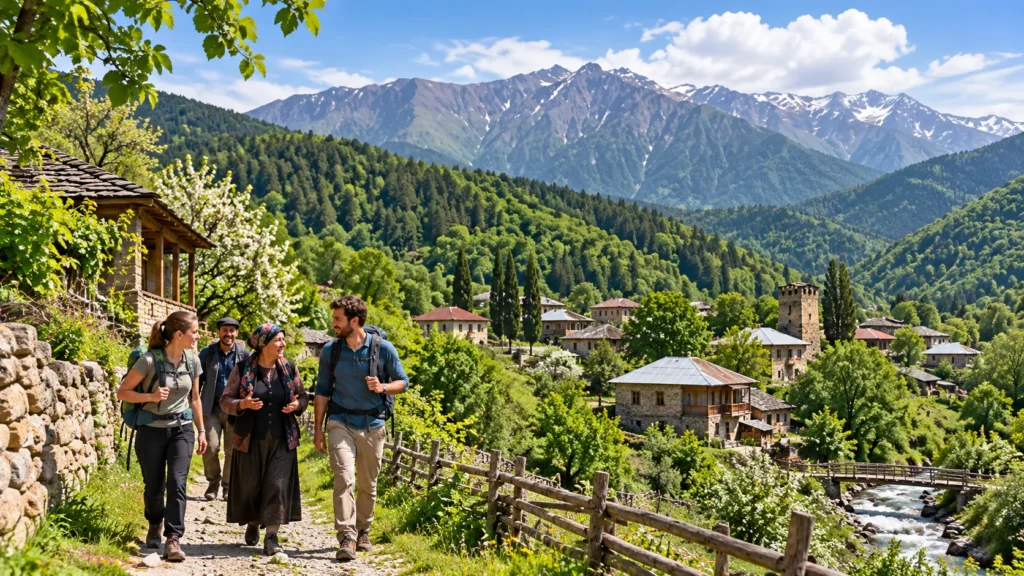
For decades, external narratives and old international safety advisories cast a persistent shadow over Georgia’s Pankisi Valley. Today, official regional initiatives and local hospitality projects are rewriting that story. Nestled beneath the Greater Caucasus mountains along the Alazani River, this scenic destination is shifting from historical geopolitical warnings to a thriving center for authentic cultural heritage and community-based travel.
Driven by community-led organizations like the Pankisi Valley Tourism & Development Association, residents are actively developing local infrastructure. By offering family-run guesthouses, guided nature excursions, and immersive cultural tours, the valley demonstrates how community enterprise can overcome past stigmas and reshape destination appeal.
The Rise of Sustainable Pankisi Valley Tourism
Travelers seeking sustainable travel and meaningful human connection are finding a unique destination in Pankisi. Regional authorities and tourism statistics highlight steady growth across Georgia’s mountain corridors, with non-traditional destinations increasingly capturing international interest.
Instead of large commercial developments, Pankisi Valley tourism relies on authentic homestays. Visitors stay directly with local families, fostering sustainable income generation that supports rural livelihoods. Online platforms managed by local development groups provide direct booking access for family lodgings, guided treks into the nearby Tusheti region, and horseback tours through protected alpine reserves.
These grass-roots efforts serve a dual purpose: providing reliable employment for local youth and giving global travelers an unfiltered view of daily life in the valley. The peaceful reality on the ground stands in stark contrast to outdated travel advisories, offering an inviting atmosphere for adventurers, cultural researchers, and eco-tourists alike.
Discovering Kist Heritage and Mountain Traditions
The cultural foundation of the valley lies in its unique demographic story. The region is primarily home to the Kists, a Vainakh sub-ethnic group whose ancestors settled in Georgia during the 19th century. Today, Kist culture blends deep-rooted ancestral customs with traditional Georgian mountain hospitality.
Trilingualism is part of daily life across villages such as Duisi, Jokolo, and Birkiani, where residents fluently speak Chechen alongside Georgian and Russian. Visitors can explore historic architecture, including traditional stone defense towers and century-old religious sites, reflecting the community’s resilient identity.
Spiritual traditions also draw interest from cultural historians. The local population practices traditional Sufi and Sunni Muslim customs. A distinct spiritual ritual occurs weekly at the historic Old Mosque in Duisi, where local women gather every Friday to perform Zikr—a sacred chant and meditative rite rooted in Sufi mysticism. Recognized as one of the few places in the world where women lead and perform this sacred tradition, the event offers a profound window into living heritage.
Culinary Heritage and Local Enterprise Innovations
Gastronomy plays a pivotal role in the region’s hospitality offerings. Kist cuisine incorporates mountain-farmed ingredients and regional spices, creating a distinct food profile within Georgia’s famed culinary landscape.
A classic centerpiece of Kist food culture is zhizhig galnash, a hearty homemade dish consisting of hand-shaped flour or corn pasta served with tender meat and rich garlic broth. Guesthouses frequently host hands-on cooking classes, allowing visitors to learn traditional preparation methods directly from local hosts.
Innovation has also revitalized historical beverage traditions. Entrepreneurial initiatives have successfully launched small-scale production of Kisturi Draft, a traditional non-alcoholic beverage brewed from wild rosehip and hawthorn. Visitors can visit local tasting facilities to sample these artisanal brews while learning about indigenous plant harvesting and regional brewing methods.
Complementing food and beverage experiences are local craft workshops, such as traditional felt-making studios, where artisans preserve ancient textile techniques through modern sustainable products.
Ecotourism and Outdoor Exploration in the Caucasus
Beyond its rich heritage, the valley serves as a gateway to untouched natural landscapes. The region borders the Batsara Nature Reserve, home to ancient yew forests and diverse wildlife populations. Outdoor enthusiasts can access mountain biking paths, alpine hiking trails, and multi-day equestrian expeditions reaching high-altitude plateaus like Tbatana.
Official tourism initiatives focus on low-impact, eco-friendly outdoor recreation. By linking outdoor adventure directly with local Kist guides and horse owners, visitor spending goes directly into preserving local ecosystems and maintaining ancestral mountain trails.
A Transforming Narrative Built on Trust
The steady evolution of travel in the valley proves how local empowerment and authentic hospitality can rebuild a region’s international identity. By welcoming travelers into their homes, kitchens, and mountain pastures, the people of the valley are proving that genuine connection easily overcomes outdated perceptions.
As Georgia continues to expand its profile as a premier destination for international tourism, the valley stands as a powerful example of community resilience. For travelers seeking unscripted experiences, rich cultural traditions, and breathtaking natural beauty, this welcoming Caucasus destination delivers a memorable journey far beyond expectations.
For more travel news like this, keep reading Global Travel Wire