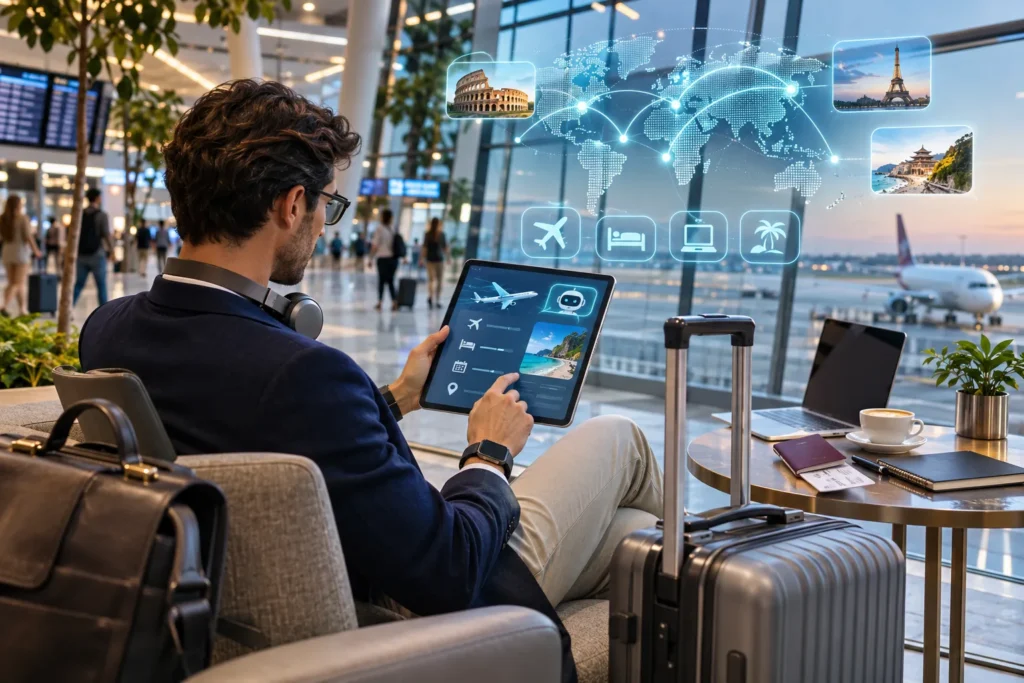
International tourism has entered a definitive phase of digital integration and flexible mobility. Worldwide travel patterns indicate that seamless digital infrastructure, artificial intelligence, and blended work-leisure itineraries are fundamentally altering visitor behaviour. Modern visitors now prioritize stress-free navigation and reliable global access, making continuous connectivity a baseline utility for modern hospitality, aviation, and destination management.
Official tourism industry assessments present clear evidence of an evolving international visitor profile: the connected traveller. Rather than disconnecting during international journeys, an overwhelming ninety-eight percent of international tourists state that maintaining continuous mobile access abroad is vital to their itinerary. Only two percent of modern international travellers opt to remain completely offline, establishing uninterrupted network access as a core requirement across hotels, transport hubs, and municipal attractions.
Digital Mobility Replaces Traditional Roaming and Public Networks
The migration toward embedded digital technology marks one of the quickest infrastructural shifts in international visitor habits. Travel statistics reveal that twenty-nine percent of international voyagers now rely on digital eSIM profiles as their main connectivity tool during foreign trips. This marks a significant acceleration from seventeen percent recorded in the previous year.
Concurrently, tourist dependence on conventional, unsecured public Wi-Fi hotspots has dropped significantly to sixteen percent. Destination authorities and smart city planners attribute this development to growing consumer awareness surrounding cybersecurity, digital identification protocols, and paperless border procedures. Travellers increasingly prefer secure, immediate cellular coverage upon touching down at international airports and maritime ports, reducing the administrative drag historically associated with sourcing foreign physical SIM cards or paying high roaming surcharges.
As mobile access transitions into an essential, low-friction element of cross-border trips, tourists gain unprecedented flexibility. Reliable connectivity allows international travellers to adjust bookings instantly, access cloud-based travel documentation, make paperless digital payments, and navigate foreign transportation networks without language barriers.
The Bleisure Phenomenon Reshapes Destination Economies
The traditional boundary dividing corporate travel from holiday leisure has dissolved into the phenomenon known as bleisure. Seventy-one percent of global travellers report combining professional business responsibilities with leisure tourism during the same journey.
This behavioral pivot carries profound economic implications for municipal tourism boards, regional development authorities, and hospitality operators. Rather than confining visits to standard two-week vacation periods or short, rigid corporate trips, remote professionals and corporate employees are extending their stays across regional destinations.
To capitalize on this demographic shift, national tourism ministries and immigration departments across Europe, Asia-Pacific, the Americas, and the Middle East continue to institutionalize targeted digital nomad visas, long-stay tourist permissions, and co-working infrastructure investments. Destinations are upgrading high-speed broadband availability in heritage centers, coastal towns, and rural eco-lodges, directly benefiting secondary and tertiary locations that previously struggled with seasonal tourist drops.
Artificial Intelligence and Real-Time Itinerary Management
Smart technology adoption extends well past mobile networks directly into the pre-trip planning and on-site discovery phases. Nearly three-quarters of international tourists have incorporated artificial intelligence into their travel preparations, with forty-four percent actively relying on AI-powered algorithmic systems to design itineraries, translate foreign dialects in real time, and navigate unfamiliar public transit networks.
This shift toward smart travel assistance has transformed destination marketing. Travellers no longer follow static guidebooks; they require dynamic, real-time advice tailored to live transit schedules, operational hours, and crowd densities. Smart tourism policies encourage cultural sites, national parks, and metropolitan transit systems to integrate open data platforms that communicate seamlessly with smart applications, ensuring smoother crowd management and higher visitor satisfaction.
Higher Frequency and Shorter Durations Define Tourist Journeys
International tourism figures confirm a marked surge in outbound voyage frequency alongside adjustments in duration. Forty-nine percent of travellers are undertaking more foreign journeys than they did two years ago, logging an average of 2.6 cross-border departures annually.
Rather than saving resources for a single extended vacation, international vacationers increasingly opt for multiple short, concentrated trips throughout the calendar year. This pattern of frequent travel places higher demands on transport networks, international rail lines, and aviation hubs, which must provide swift transit clearance, automated border checkpoints, and continuous digital connectivity.
Eco-Conscious Tourism Gains Traction
Alongside technological adoption, environmental sustainability is transitioning from an abstract preference into measurable travel behavior. Over half of international tourists, precisely fifty-three percent, have actively adapted their journey decisions to reduce ecological impact.
Furthermore, sixty-seven percent of global voyagers express willingness to pay a financial premium for demonstrable eco-friendly practices, including verified carbon-offset flights, accredited green accommodations, and low-emission rail transit. Destination authorities and hospitality providers that pair smart digital management with clear, verifiable sustainability standards are capturing this growing cohort of responsible, connected travellers.
As global mobility expands, the convergence of seamless digital connectivity, flexible professional schedules, and intelligent itinerary tools ensures that international tourism will remain focused on operational ease, environmental consciousness, and borderless digital efficiency.
For more travel news like this, keep reading Global Travel Wire