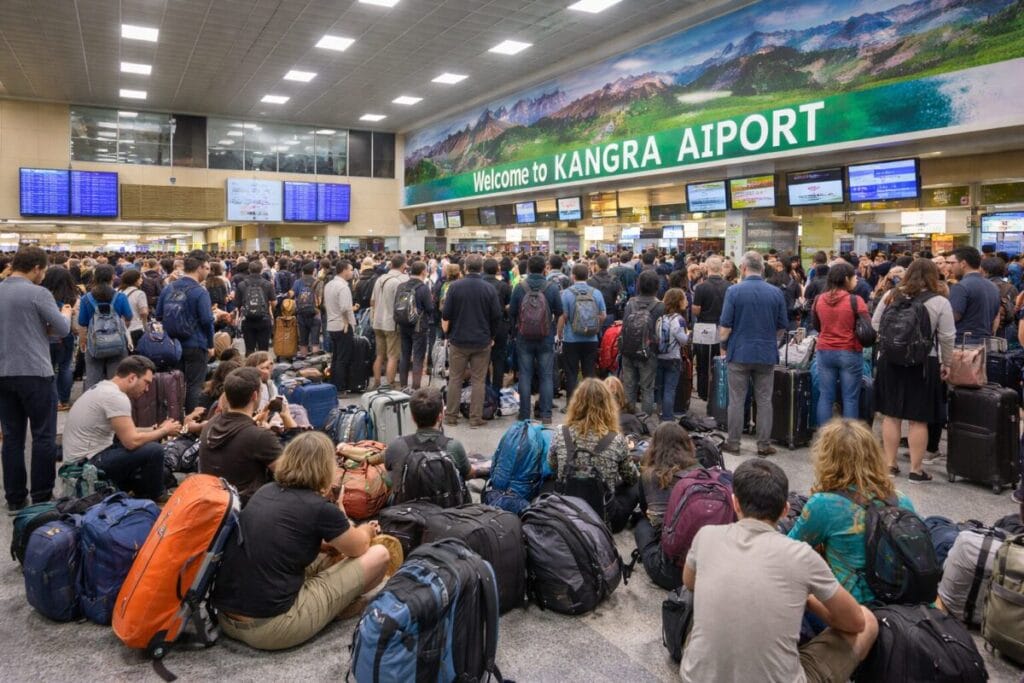
Kangra Airport witnessed major disruption after sudden international flight cancellations. Escalating tensions in the Middle East triggered widespread airspace restrictions. As a result, many travelers found themselves stranded in Himachal Pradesh.
Passengers waited inside crowded terminals without clear departure timelines. Many had planned onward international journeys through major Indian hubs. However, airlines suspended routes due to safety concerns over West Asian airspace.
The sudden cancellations left tourists anxious and uncertain about their next steps.
Middle East Conflict Forces Airlines to Reroute and Suspend Flights
Rising tensions between Israel and Iran created serious aviation risks. Military actions and retaliatory strikes increased instability across key flight corridors. Several countries issued airspace advisories and restrictions.
Airlines quickly adjusted operations to avoid conflict zones. They canceled flights or rerouted aircraft along longer paths. These decisions aimed to protect passenger safety.
However, the changes disrupted global travel networks. Flights connecting India with Europe and the Middle East faced immediate operational challenges. Kangra Airport felt the indirect impact.
Why Kangra Airport Became a Disruption Point
Kangra-Gaggal Airport serves as a crucial regional gateway in Himachal Pradesh. The Airports Authority of India operates the facility in coordination with defense authorities. Although it mainly handles domestic flights, many travelers connect internationally through Delhi and other hubs.
When airlines canceled international sectors, connecting itineraries collapsed. Passengers departing from Kangra suddenly lost their onward flights. This chain reaction created confusion and delays.
Tourists visiting Dharamshala and nearby destinations experienced the worst effects.
Tourists Share Frustration and Travel Uncertainty
Several foreign visitors described sudden itinerary changes. An Israeli traveler reported that her return flight faced cancellation without immediate alternatives. She began searching for new routes through other Indian cities.
Non-Resident Indians also faced similar uncertainty. Many planned travel to the Gulf region and Europe. Airlines placed bookings on hold while monitoring airspace updates.
Families with children struggled to secure last-minute hotel extensions. Others worried about visa timelines and connecting flights abroad.
The disruption revealed how quickly global events can reshape local travel plans.
Dharamshala Tourism Feels Immediate Pressure
Dharamshala attracts both domestic and international tourists year-round. The hill station offers scenic landscapes, Tibetan culture, and spiritual retreats. In recent years, tourism numbers have steadily increased.
Local hotels reported sudden booking extensions. Guests requested additional nights while waiting for flight confirmations. Tour operators adjusted sightseeing schedules to accommodate delays.
Transport providers also managed shifting airport transfer timings. Although businesses welcomed extended stays, uncertainty created operational strain.
Tourism stakeholders emphasized the need for reliable connectivity. Smooth air travel remains essential for Himachal Pradesh tourism growth.
Aviation Authorities Prioritize Passenger Safety
India’s civil aviation authorities issued advisories to airlines regarding restricted airspace. Officials urged strict compliance with international safety guidance. They coordinated closely with airline operators and airport management teams.
Airlines reviewed flight paths daily and assessed risk levels carefully. Many carriers suspended services to affected Middle East destinations. Others selected alternative routes to avoid restricted zones.
Safety remains the top priority for regulators and airlines alike. Although disruptions frustrate passengers, authorities aim to prevent larger crises.
Global Travel Corridors Face Continued Instability
The conflict has disrupted major routes linking Asia, Europe, and Africa. Airlines from multiple countries suspended operations through high-risk zones. This situation created backlogs at airports worldwide.
Indian airports experienced spillover effects due to rerouting and cancellations. Carriers adjusted aircraft rotations and crew schedules. These changes affected domestic feeder airports such as Kangra.
Travel analysts warn that prolonged instability could increase ticket prices. Longer routes require more fuel and operational resources. Therefore, airlines may adjust fares if disruptions continue.
Government and Airline Response Measures
Airlines activated customer support desks to assist stranded passengers. Staff helped with rebooking, refunds, and itinerary adjustments. Many carriers offered flexible change policies.
Airport authorities coordinated with local administration to manage passenger flow. Officials monitored crowd control and information updates inside terminals.
Tourism departments also encouraged travelers to remain patient. They advised direct communication with airline representatives for real-time updates.
Authorities continue to monitor geopolitical developments closely.
What Travelers Should Do Now
Travelers should maintain regular contact with airlines. They must verify flight status before reaching the airport. Flexible travel dates can reduce stress during volatile situations.
Passengers should also keep travel insurance documents ready. Insurance policies may cover unexpected cancellations or accommodation extensions.
Experts recommend checking government advisories before planning Middle East travel. Reliable information can help travelers make informed decisions.
Preparation and flexibility remain essential during global disruptions.
Long-Term Impact on Himachal Pradesh Tourism
This episode highlights the vulnerability of regional airports to global crises. Even distant geopolitical conflicts can disrupt local tourism ecosystems.
Himachal Pradesh tourism authorities may strengthen contingency planning. Improved coordination between airlines and regional airports can reduce confusion during emergencies.
Despite the setback, demand for mountain destinations remains strong. Domestic tourism continues to support the region’s economy.
Once airspace restrictions ease, international travel will likely stabilize. Until then, Kangra Airport and its passengers must navigate uncertainty with caution and resilience.
The current disruption serves as a reminder. Global aviation networks connect every region closely. When instability strikes abroad, its effects can reach even remote Himalayan gateways.
For more travel news like this, keep reading Global Travel Wire