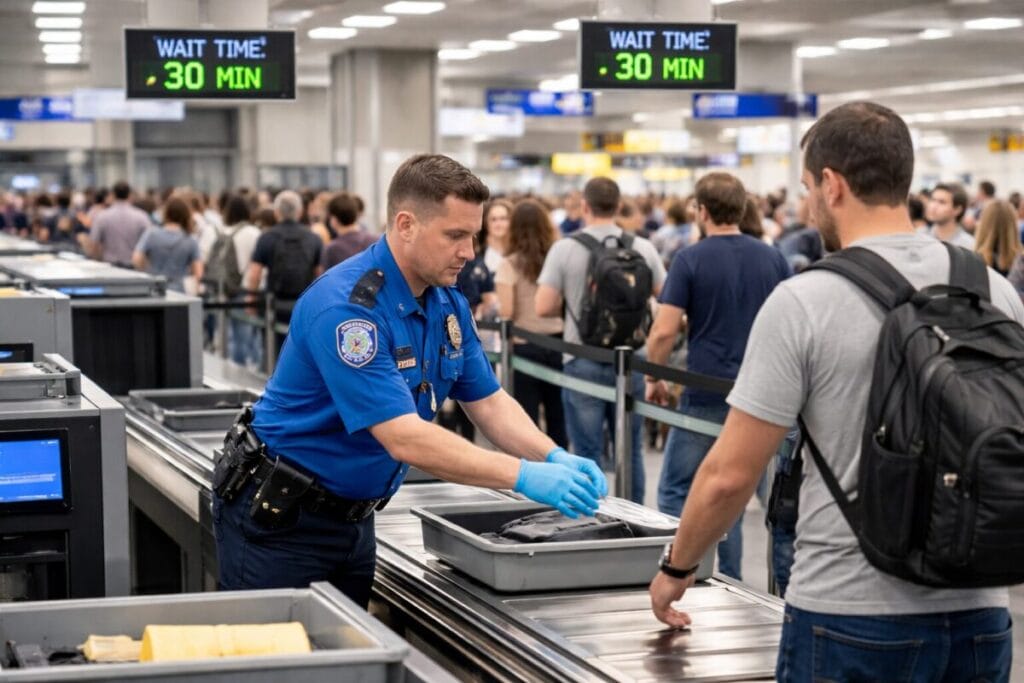
Air travelers across the United States are facing growing airport security delays as staffing shortages within the Transportation Security Administration intensify during an ongoing funding shutdown affecting the Department of Homeland Security. The situation is creating long screening lines at major airports and disrupting travel plans for millions of passengers during the busy spring travel season.
With TSA officers continuing to work without pay during the federal funding lapse, many airports are reporting increased absences among security personnel. As a result, fewer screening lanes are operating at checkpoints, forcing passengers to spend significantly more time waiting before reaching departure gates.
Travel authorities are urging passengers to prepare for extended security lines and to plan their airport arrivals well in advance as the situation continues.
Federal Funding Shutdown Places Pressure on Airport Security
The current challenges began when lawmakers failed to pass a federal funding bill for the Department of Homeland Security earlier this year, triggering a partial government shutdown affecting several agencies responsible for transportation and border security.
Because the Transportation Security Administration operates under the Department of Homeland Security, thousands of TSA employees are classified as essential personnel. This designation requires them to continue performing their duties even during funding interruptions.
However, working without pay for extended periods has created financial stress for many officers. Aviation analysts say that these conditions can lead to higher rates of unscheduled absences, which directly impact the number of officers available to manage airport checkpoints.
The agency is responsible for screening millions of passengers each day at airports across the country, making staffing levels a critical component of aviation safety and operational efficiency.
Major Airports Reporting Lengthy Security Lines
Several major airports have already reported unusually long wait times at security checkpoints as the staffing shortage takes effect. Travelers in busy aviation hubs have experienced delays stretching well beyond normal screening times.
Airports in cities such as Atlanta, Houston, and New Orleans have seen particularly heavy congestion during peak travel periods. In some instances, passengers have reported waiting several hours in security lines before reaching the screening area.
These delays are especially challenging during spring break travel, when passenger volumes typically increase as families and students travel across the country and abroad.
Airport authorities say that even small staffing reductions can quickly lead to long queues because of the high number of travelers passing through major terminals each day.
Impact on Travelers and Flight Schedules
Extended security delays can have a ripple effect throughout the entire travel process. When passengers are delayed at checkpoints, they may miss boarding calls, creating complications for airline schedules and connecting flights.
For travelers with tight connections, long lines at security can lead to missed flights and additional costs related to rebooking or overnight stays. Airlines and airports are working to manage passenger flow, but screening delays remain one of the most difficult disruptions to control.
Industry experts note that airport operations rely heavily on coordination between airlines, security agencies, and airport management. When staffing shortages occur in one area, the effects can spread across the entire travel network.
Airports experiencing the longest wait times are encouraging passengers to monitor updates before leaving for the airport and to allow extra time for security procedures.
Travel Advice for Passengers
Officials are offering several recommendations to help passengers navigate the current delays and reduce stress during their travel experience.
Travelers are encouraged to arrive at the airport earlier than usual, especially during busy travel periods or at large international hubs. Many airports now advise passengers to arrive at least three hours before domestic departures and even earlier for international flights.
Passengers should also prepare their documents and carry-on bags before reaching the checkpoint to speed up the screening process. Following security guidelines and avoiding prohibited items can help prevent additional inspection that may slow the line.
Some airports provide real-time security wait-time updates through their websites or terminal information screens, allowing travelers to better plan their arrival times.
Aviation Industry Monitoring the Situation
While airport security lines have grown longer, flight operations across the country continue to run normally. Air traffic control services remain operational, ensuring that aircraft can depart and land safely despite the security challenges affecting passenger screening.
Federal aviation authorities are working closely with airports and airlines to monitor the situation and address potential disruptions. Additional staffing strategies and operational adjustments are being explored to minimize the impact on travelers during the shutdown.
Travel industry organizations are also emphasizing the importance of maintaining stable funding for transportation agencies to ensure consistent airport operations.
Economic and Operational Effects on the Travel Sector
Beyond passenger inconvenience, prolonged airport security delays can also have financial consequences for the aviation industry. Airlines may face increased operational costs when travelers miss flights or when boarding procedures are delayed due to late-arriving passengers.
Crowded terminals can also place additional pressure on airport infrastructure, including baggage handling systems, check-in counters, and boarding gates.
Tourism experts warn that extended disruptions during peak travel seasons could affect traveler confidence and influence travel decisions for upcoming holidays.
Navigating Travel During the Shutdown
Despite the challenges, authorities emphasize that airport security remains fully operational and that safety standards have not changed. TSA officers continue to carry out their duties to ensure that passengers and aircraft remain secure.
However, travelers should expect longer processing times at security checkpoints until the funding situation is resolved and staffing levels return to normal.
By arriving early, preparing for screening, and staying informed about airport conditions, passengers can better manage their travel plans during this period of heightened delays.
The current situation highlights the essential role of TSA officers in maintaining the flow of air travel across the United States. As discussions on federal funding continue, travelers and industry leaders alike hope for a resolution that will restore normal airport operations and reduce the strain on both passengers and security personnel.
For more travel news like this, keep reading Global Travel Wire