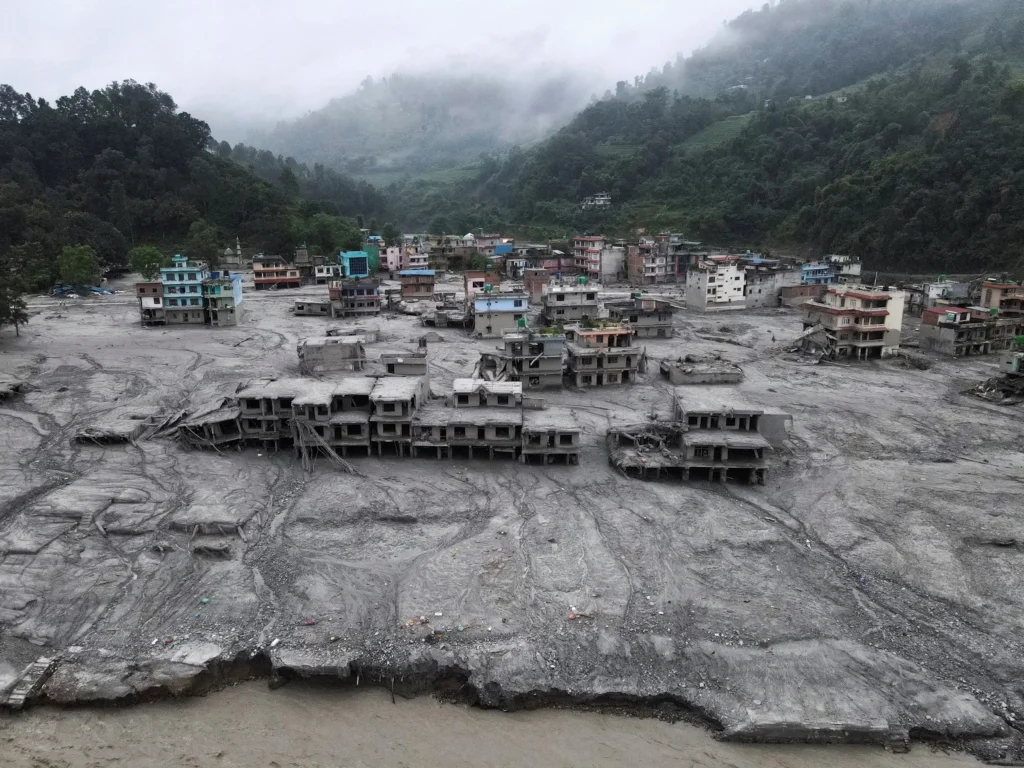
The United States has updated its travel advisory for Nepal as severe flooding, landslides and continued monsoon rainfall threaten communities, highways and tourism routes.
Nepal remains under an overall Level 2 advisory, which asks travellers to exercise increased caution. However, the United States now advises against all travel to the Rasuwagadhi–Timure–Syafrubesi area of Rasuwa District.
The Level 4 warning covers the Nepal-China border crossing and communities affected by the major flood of August 26, 2026. Dangerous conditions continue along parts of the Bhote Koshi, Trishuli and Narayani river corridors.
The U.S. Embassy in Nepal has also issued natural disaster alerts concerning continued flood and landslide risks. Visitors have been advised to avoid riverbanks, low-lying locations, unstable slopes and roads affected by flooding.
The warning creates fresh uncertainty for Nepal’s tourism sector as operators prepare for the important autumn trekking season. Mountain access roads, border routes and adventure activities may face disruption while authorities assess damage and monitor changing weather.
Heavy rain increases landslide danger
Nepal’s Department of Hydrology and Meteorology forecast heavy to very heavy rainfall in parts of Bagmati Province through September 1. Additional heavy rain remained possible on September 2.
Prolonged rainfall can destabilise steep Himalayan slopes, trigger debris flows and raise rivers with limited warning. Saturated ground also increases the possibility of fresh landslides in areas already weakened by flooding.
These hazards can quickly block mountain highways and rural roads. They may also damage bridges, delay rescue operations and isolate communities that depend on narrow transport corridors.
Travellers should confirm road conditions before leaving Kathmandu or travelling towards northern districts. Flexible itineraries will remain essential because authorities may close routes at short notice.
Rasuwa tourism corridor faces severe disruption
Rasuwa District is an important gateway for mountain communities, trekking areas and the Nepal-China border. However, the August flood caused extensive damage and left the Rasuwagadhi–Timure–Syafrubesi corridor unsafe.
The updated U.S. advisory tells American citizens not to visit this area. This is stronger than the nationwide recommendation to exercise increased caution.
The restriction could affect cross-border movement, local accommodation providers, guides, transport operators and small tourism businesses. Communities in the corridor rely on road access for visitors, supplies and emergency services.
Tourists planning journeys near the affected region should not assume that a route is safe because rainfall has stopped. Landslides, weakened bridges and damaged road surfaces may remain dangerous after water levels begin falling.
River systems remain under observation
Nepalese authorities continue monitoring upstream water movement and conditions along vulnerable river corridors. Although one upstream lake has largely drained, other water accumulations and natural barriers remain a concern.
Debris can temporarily block water in narrow valleys. If such a barrier fails, the stored water may move downstream rapidly and leave communities with little time to react.
The Bhote Koshi remains particularly sensitive because it passes through steep and confined terrain. A sudden surge may threaten riverside settlements, roads, hydropower infrastructure and tourism facilities.
The Trishuli basin also requires close attention. Its river corridor runs near important highways linking Kathmandu with other parts of Nepal, including routes used by domestic and international visitors.
Trekking and adventure plans require caution
Nepal is globally recognised for trekking, mountaineering, rafting and cultural tourism. Yet monsoon travel carries additional risks, particularly in remote areas where communications and emergency assistance may be limited.
Approach roads serving trekking regions can become impassable even when walking trails remain open. Delayed buses, cancelled transfers and temporary bridge closures may affect complete itineraries.
River adventures require even greater caution during flood alerts. Rafting, kayaking and riverside excursions should proceed only when licensed operators confirm that official conditions allow safe operations.
Travellers should follow instructions from Nepalese authorities, guides and emergency agencies. They should also keep accommodation providers informed about planned movements and avoid travelling alone through unstable terrain.
International visitors may benefit from insurance covering weather disruption, evacuation and itinerary changes. They should carry essential medication, identification, charged communication devices and emergency contact details.
Tourism businesses adjust to changing conditions
Hotels, trekking agencies and transport providers are expected to revise routes and departure schedules as forecasts change. Operators may move guests away from vulnerable valleys or postpone journeys until roads receive safety clearance.
Visitors should verify transport directly before departure rather than relying on an earlier timetable. They should also allow extra time when travelling between Kathmandu and Himalayan destinations.
Nepal remains open to international tourism outside restricted and disaster-affected locations. Nevertheless, conditions vary considerably between regions, and a safe journey depends on current local information.
The latest Nepal flood travel advisory reinforces the need for cautious planning throughout the remaining monsoon period. With rivers elevated and mountain slopes unstable, travellers should avoid restricted areas and place official safety instructions above fixed itineraries.
For more travel news like this, keep reading Global Travel Wire