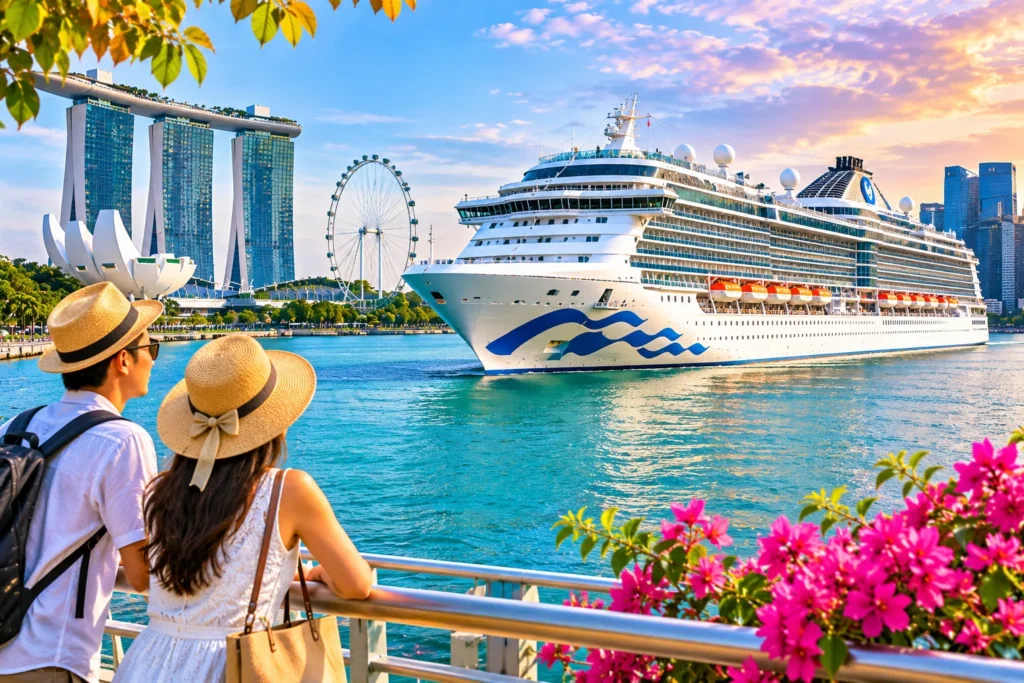
Asia’s cruise sector holds substantial untapped potential as regional port authorities, ministries, and international cruise operators focus on expanding vessel deployments and converting first-time holidaymakers into loyal cruisers. According to official industry statistics published by Cruise Lines International Association (CLIA) in its Global Economic Impact Study, approximately three million passengers from Asia took ocean-going cruises in 2025 out of a global total of 37.3 million travellers, with China contributing roughly 1.1 million passengers. As global ocean cruise volume is projected to reach 39.1 million passengers in 2026, industry leaders convening in Malaysia are mapping out concrete strategies to accelerate Asia cruise industry growth.
Held in Kuala Lumpur and Penang from November 16 to 20, 2026, in conjunction with the Visit Malaysia 2026 tourism campaign and supported by the Ministry of Transport Malaysia and the Ministry of Tourism, Arts and Culture Malaysia, Seatrade Cruise Asia 2026 marked its debut in Malaysia. During conference sessions examining future source markets across the region, maritime and travel leaders emphasized that unlocking Asia’s demographic scale requires both increased ship capacity and targeted consumer outreach.
Vessel Capacity and Home-Grown Operators Key to Regional Expansion
Industry executives noted that passenger growth across Asian ports remains closely tied to available ship deployment. Anthony Kaufman, Head of Commercial Strategies at Mitsui Ocean Cruises, emphasized that cruising is fundamentally a capacity-led business where international operators allocate vessels to regions demonstrating strong commercial yields. To build sustainable long-term momentum, Kaufman highlighted the importance of increasing overall ship deployments in Asia—both through newly constructed vessels and the strategic acquisition of second-hand ships transitioning out of established Western fleets—alongside nurturing home-grown Asian cruise brands tailored to regional tastes.
Beyond vessel supply, raising consumer awareness remains essential. Engaging retail travel agencies more actively to educate prospective guests and demystify cruise holidays was identified as a primary lever for bringing first-time passengers aboard.
Diverging Growth Horizons Across Japan, Singapore, and India
Regional market assessments indicate that source countries across Asia are progressing along distinct growth trajectories:
Japan and Singapore: Hirohito Ito, Director of the Cruise Research Laboratory at Central Consultant Inc., identified Japan and Singapore as primary near-term growth drivers. In Japan, interest is rising among families and younger demographics, though vacation time constraints and price sensitivity remain hurdles. Introducing shorter, accessible itineraries was highlighted as an effective pathway to attract first-time Japanese travellers.
India: While India’s expanding middle class and robust economic growth present significant long-term promise, Ito noted that demographic scale alone will not automatically translate into cruise bookings. Realizing India’s potential requires dedicated vessel deployments, localized onboard dining and entertainment, and itineraries aligned with Indian family travel preferences.
Overcoming Misconceptions and Expanding Long-Haul Cruise Demand
In Southeast Asia, consumer education remains vital to broadening the appeal of modern cruising. Koh Yock Heng, Co-Founder and Group Managing Director of Apple Vacations and Deputy President of the Malaysia Cruise Industry Association, observed that despite decades of familiarity with regional sailings, outdated perceptions persist among some travellers who still associate cruising primarily with onboard casinos or passive itineraries.
Koh pointed to strong opportunities to promote diverse cruise categories—including voyages to Alaska and Scandinavia, European river cruises, and expedition sailings—through closer collaboration among national tourism boards, cruise lines, and travel agents. Demand for extended global journeys is also gaining traction in the region, evidenced by 37 Malaysian travellers scheduled to embark on a 97-day around-the-world voyage departing from Yokohama in December 2026.
Fly-Cruise Integration and Experiential Shore Programming
For travel agencies and destination management companies, seamless air-sea connectivity has become a cornerstone of cruise sales. Wai Mun Wong, Business Development Director for Ticketing and Luxury Travel Management at Chan Brothers Travel, noted that approximately 40% of the agency’s cruise bookings consist of integrated fly-cruise packages. Combining international flights with pre- and post-cruise hotel stays, transfers, and guided land tours transforms a sailing into a complete end-to-end holiday while supporting local hospitality economies at embarkation ports.
Among upscale and experienced travellers, shore excursion quality increasingly shapes booking decisions. Wong highlighted that premium guests prioritize access to smaller, less-crowded ports, authentic encounters with local artisans, regional culinary experiences, and flexible, personalized services such as expedited disembarkation.
With Malaysia investing in modernizing major gateways—including Port Klang Cruise Terminal, Swettenham Pier Cruise Terminal in Penang, and Langkawi Cruise Terminal—to strengthen its role as an ASEAN cruise hub, coordinated efforts across governments, ports, airlines, and travel advisors are positioning Asia’s cruise industry for sustained expansion in the years ahead.
For more travel news like this, keep reading Global Travel Wire