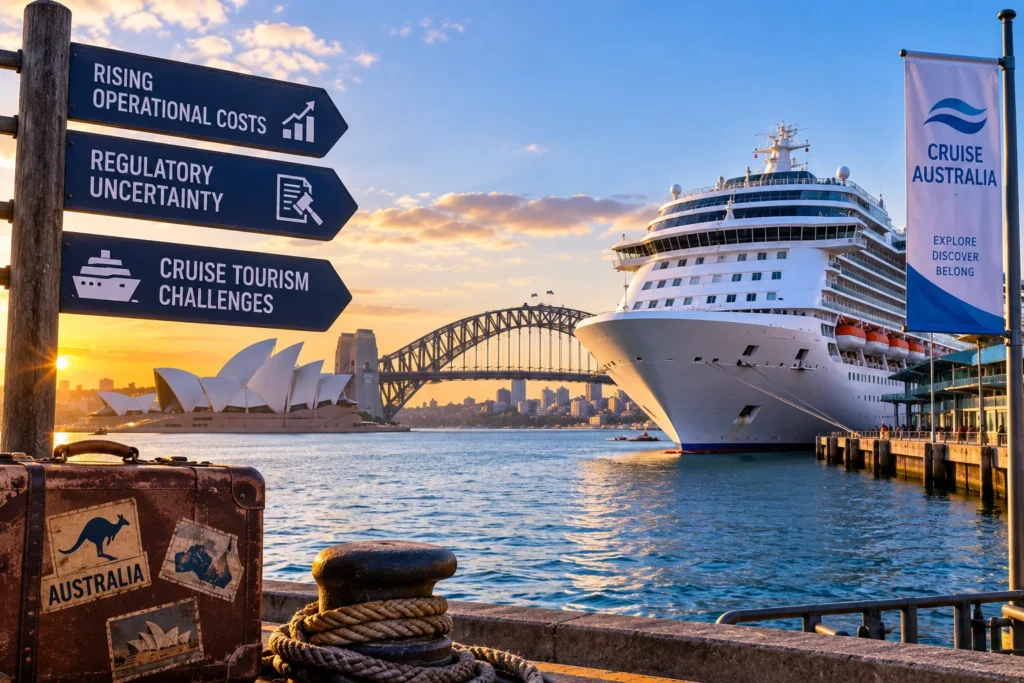
International cruise industry leaders have issued an urgent advisory regarding the economic future of Australia cruise tourism. Speaking at the Australian Cruise Association annual conference in Brisbane, executives from the Cruise Lines International Association emphasized that complex regulatory processes, high port charges, and policy unpredictability are eroding the nation’s destination competitiveness on the global stage.
Despite strong domestic consumer demand for ocean voyages, the Australian market experienced a notable contraction in ship deployments during the recent operating season. Official economic assessments reveal that while cruise tourism contributed significantly to national financial output, total economic impact dropped by one billion Australian dollars year-over-year due to a decline in visiting vessel capacity.
Rising Costs and Policy Hurdles Impacting Competitiveness
Global cruise capacity has expanded rapidly in regions offering stable, business-friendly environments. However, international cruise lines are increasingly reallocating fleet assets away from the South Pacific due to soaring operating expenses and ambiguous compliance mandates across domestic ports.
Official industry analysis indicates several factors currently undermining the national cruise sector:
Escalating Port Charges: Rising operational fees at key maritime terminals across states reduce commercial viability for international fleet deployments.
Complex Regulatory Frameworks: Layered environmental, border clearance, and maritime compliance requirements create administrative hurdles for cruise line operators.
Policy Uncertainty: Inconsistent long-term marine infrastructure planning discourages long-range itinerary scheduling and capital investment.
Regional Disadvantage: Competition from alternative global cruise markets with streamlined port processes attracts widebody passenger vessels away from Australian itineraries.
Industry representatives stress that while international traveler demand within the local market remains exceptionally resilient, ship operators face difficult resource allocation choices when regional costs outweigh operational returns.
Economic Ripple Effects Across Local Communities
The contraction in vessel visits impacts broader supply chains across regional and urban economies. Cruise ships function as major economic engines for shore-side industries, generating substantial demand for local agricultural goods, maritime services, and hospitality networks.
The economic impact of reduced ship calls extends directly into key domestic sectors:
Primary Producers and Suppliers: Local farmers, beverage distributors, and food suppliers face reduced wholesale supply contracts previously required to stock passenger ships.
Regional Tourism Operators: Excursion providers, bus charter networks, and cultural attractions experience lower visitor foot traffic during peak sailing seasons.
Hospitality and Accommodations: Urban hotels and dining venues lose high-margin pre-and-post-cruise stay revenues generated by transit passengers.
Travel Advisors and Retailers: Independent travel agencies and local retail precincts in port communities see decreased commission revenue and tourist spending.
To address these widespread impacts, domestic suppliers and regional businesses established the Australian Paddock to Port Alliance. The initiative unites agricultural providers, transport companies, port agencies, and tourism businesses to demonstrate the essential connection between ocean cruising and local economic viability.
Strategic Industry Recommendations for Government Action
Addressing the ongoing decline in ship deployments requires coordinated policy reform between federal, state, and port authorities. Industry bodies continue to advocate for clear, predictable, and globally competitive frameworks that encourage international cruise lines to restore vessel capacity to Australian waters.
Key priorities recommended by maritime tourism stakeholders include:
Streamlined Maritime Regulations: Establishing standardized, transparent administrative procedures across national border agencies and maritime authorities.
Competitive Port Fee Structures: Reviewing harbor charges and passenger movement levies to restore cost parity with competing international cruise hubs.
Infrastructure Investment: Modernizing berth capacity and passenger terminal facilities to accommodate next-generation eco-friendly cruise vessels.
Long-Term Policy Stability: Providing multi-year regulatory certainty to enable cruise operators to finalize travel itineraries up to three years in advance.
Industry stakeholders emphasize that adopting stable, practical, and supportive policy settings will allow the country to safeguard its reputation as a world-class cruise destination. By resolving operational bottlenecks and reducing cost barriers, government bodies and tourism authorities can revitalize cruise tourism, supporting thousands of regional jobs and driving sustainable economic growth across the nation.
For more travel news like this, keep reading Global Travel Wire