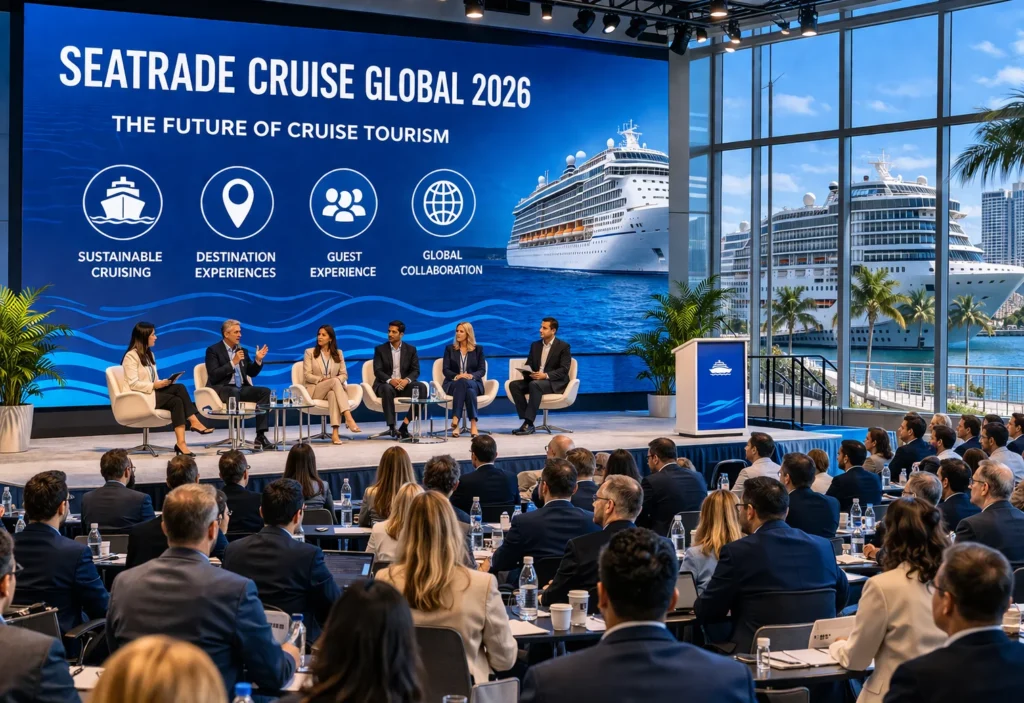
The future of cruise tourism took center stage in Miami as Seatrade Cruise Global 2026 opened with strong participation from industry leaders, destinations, tourism authorities, and travel businesses from around the world. Recognized as the largest business-to-business cruise event globally, the gathering has become a key platform for shaping the next phase of international cruising.
This year’s event attracted more than 13,000 registrants and 650 exhibitors, reflecting continued confidence in the cruise sector and the growing importance of maritime tourism in the global travel economy. From destination development to sustainability, digital innovation, and evolving guest expectations, the summit highlighted how cruising is entering a new era.
For destinations, ports, and tourism stakeholders, the message was clear: cruise tourism is no longer only about ships and itineraries. It is increasingly about partnerships, local experiences, and long-term value creation.
Destinations Move to the Center of Cruise Growth
One of the strongest themes emerging from the opening sessions was the rising role of destinations in shaping cruise success. Industry leaders emphasized that ports and local communities are no longer passive stops on an itinerary. They are active partners in creating memorable guest experiences and delivering economic benefits.
Modern travelers increasingly seek authentic cultural encounters, local cuisine, heritage tours, and nature-based activities when they step ashore. This means destinations must go beyond basic port operations and offer curated experiences that reflect their identity.
For tourism boards and local governments, this shift creates new opportunities. Cruise visitors often spend on transportation, shopping, excursions, dining, and attractions, helping generate income for local businesses and communities.
Cities and regions that invest in visitor experiences, efficient infrastructure, and strong destination branding are likely to become more competitive in future cruise route planning.
Guest Experience Becomes the New Competitive Edge
Cruise companies are responding to changing traveler preferences by placing greater focus on personalized and experience-led travel. Today’s passengers expect more than accommodation and entertainment onboard. They want journeys tailored to their interests, lifestyle, and travel goals.
At Seatrade Cruise Global 2026, discussions highlighted how cruise lines are evolving products to meet these expectations. Guests are increasingly drawn to wellness programs, culinary experiences, family-friendly activities, premium suites, immersive shore excursions, and culturally rich itineraries.
This trend mirrors wider developments across tourism, where personalization has become one of the most important factors influencing booking decisions.
For destinations, aligning shore experiences with passenger interests can increase satisfaction and encourage positive word-of-mouth. Travelers who feel connected to a destination are more likely to return for longer land-based holidays in the future.
Sustainability Shapes the Future of Cruising
Sustainability was another major topic throughout the summit. As tourism grows globally, cruise operators face rising expectations to balance expansion with environmental responsibility and community wellbeing.
The industry is investing in cleaner technologies, fuel efficiency, waste reduction systems, and smarter itinerary planning. At the same time, destinations are seeking tourism growth models that protect heritage, reduce congestion, and deliver benefits to residents.
This dual focus reflects a broader transition across travel markets. Sustainable tourism is now a business priority rather than a niche concept.
Cruise destinations that can combine visitor growth with environmental stewardship may gain stronger long-term appeal among both travelers and cruise companies.
The conversations in Miami showed that sustainability is becoming central to decision-making across ports, operators, and tourism authorities.
Industry Growth Signals Strong Demand
The strong turnout at Seatrade Cruise Global 2026 itself is an important signal of market momentum. Large-scale participation from cruise brands, suppliers, destinations, and service providers suggests confidence in future demand.
Cruising continues to attract multiple segments including families, retirees, younger travelers, luxury guests, and first-time international vacationers. Multi-destination convenience, onboard entertainment, and value-driven packages remain key reasons for its popularity.
As more travelers seek seamless vacations that combine transport, accommodation, dining, and entertainment in one booking, cruise holidays remain highly attractive.
For destinations, this growth can translate into higher visitor numbers, broader international exposure, and increased tourism revenue.
Fleet Investments Reflect Long-Term Confidence
Another notable theme at the event was continued investment in fleets and onboard products. Cruise brands highlighted ship revitalization programs, fleet expansion, and upgraded guest facilities designed to meet future expectations.
These investments are significant because they indicate long-term confidence in cruising as a travel segment. Refurbished ships often introduce improved dining concepts, wellness spaces, digital tools, sustainability upgrades, and premium accommodation categories.
New ships and renewed fleets can also open opportunities for emerging destinations by enabling different route strategies and regional deployment.
For travelers, ongoing investment means more choice, higher standards, and experiences that continue to evolve with modern preferences.
Technology Is Transforming the Passenger Journey
Technology is rapidly reshaping the cruise experience from booking to disembarkation. At the summit, digital innovation was highlighted as a key force influencing future growth.
Cruise companies are increasingly using mobile apps, digital check-in, smart cabin systems, personalized recommendations, and data insights to improve convenience and service quality.
For passengers, these tools can reduce waiting times, simplify planning, and create more customized onboard experiences.
Destinations also benefit when technology improves passenger flow, excursion management, and communication during port calls.
As travelers become more digitally connected, seamless technology integration is likely to become an expectation rather than an added feature.
Why This Matters for Global Tourism
Cruise tourism has a wider impact than many travelers realize. Each sailing supports a broad ecosystem that includes ports, airports, hotels, restaurants, tour guides, transport operators, retailers, and cultural attractions.
Many passengers extend their journeys before or after cruises, adding hotel nights and additional spending to local economies. Others return later for deeper destination visits after first discovering a place through a cruise stop.
This makes cruise tourism an important gateway for broader travel growth.
Countries and cities that engage proactively with the sector can unlock valuable opportunities for employment, investment, and international visibility.
A New Era for Cruise Travel
The discussions at Seatrade Cruise Global 2026 made one point clear: the future of cruising will be shaped by collaboration, innovation, sustainability, and meaningful destination experiences.
Ships will remain important, but the real differentiators are becoming the quality of experiences onshore and onboard, the environmental responsibility of operations, and the ability to meet changing traveler expectations.
As the global travel industry continues to evolve, cruise tourism is positioning itself as one of the most dynamic and adaptable sectors in international tourism.