The structural architecture of European leisure travel has undergone a notable realignment, with the Maltese archipelago emerging as a primary beneficiary of changing long-haul visitor flows. Official administrative updates published by the National Statistics Office (NSO) in Malta reveal record-breaking inbound travel metrics for the first half of 2026. This growth is heavily driven by a targeted, multi-year pivot by the national tourism authority toward high-yield, premium consumer segments.
As geopolitical shifts alter standard transit routes and corporate incentive pathways through traditional Middle Eastern hubs, international travelers are adjusting their itineraries. Official statements from the Ministry for Tourism indicate that the island nation is successfully capturing organic demand from affluent demographics across North America, Latin America, and the Asia-Pacific region, establishing a new benchmark for upscale Mediterranean hospitality.
Documenting the Inbound Growth and Expenditure Statistics
According to the June 2, 2026, statistical report issued by the NSO, inbound tourist arrivals for the initial four-month stretch of the year reached 1,215,966 visitors. This represents a substantial 16.4 percent volume expansion compared to the corresponding period in 2025. Total nights spent by international guests scaled upward by 10.0 percent, logging approximately 6.6 million collective guest nights, with the vast majority allocated within premium rented accommodation establishments and luxury collective boutique properties.
The financial performance of the sector mirrors this volume expansion. Total foreign tourist expenditure between January and April 2026 scaled to an estimated €919.7 million, representing a 14.3 percent increase over the previous year’s financial baselines. For the month of April 2026 alone, total visitor arrivals touched 409,403, generating an immediate €335.0 million economic injection.
The average spending metric per night reached a steady €157.2, demonstrating robust capital deployment by incoming tourists on high-end hospitality, fine dining, and curated heritage excursions.
Strategic Realignment: Prioritizing High-Yield Luxury Leisure
The current trajectory lines up directly with the core parameters outlined in the Malta National Tourism Strategy. This state framework deliberately emphasizes sustainability, structural diversification, and value generation over mass volume accumulation. The policy aims to balance economic growth with local resource preservation, ensuring that only a small portion of arrivals target standard “sun and sea” packages, while the vast majority select the destination for its deep history, deep-water maritime assets, and luxury leisure amenities.
Official statements from VisitMalta representatives at recent international commerce forums confirm that the authority is taking a highly precise approach to resource allocation. Due to regional logistical adjustments slowing down mass corporate incentive circuits through the Middle East, the tourism board has directed its marketing resources toward independent, high-spending individual travelers.
To consolidate its position at the apex of the global hospitality market, Valletta is scheduled to host the 26th World Travel & Tourism Council (WTTC) Global Summit from October 7 to 9, 2026, drawing key international travel executives to the fortified capital.
Long-Haul Outliers: The Emergence of the Australian and Brazilian Markets
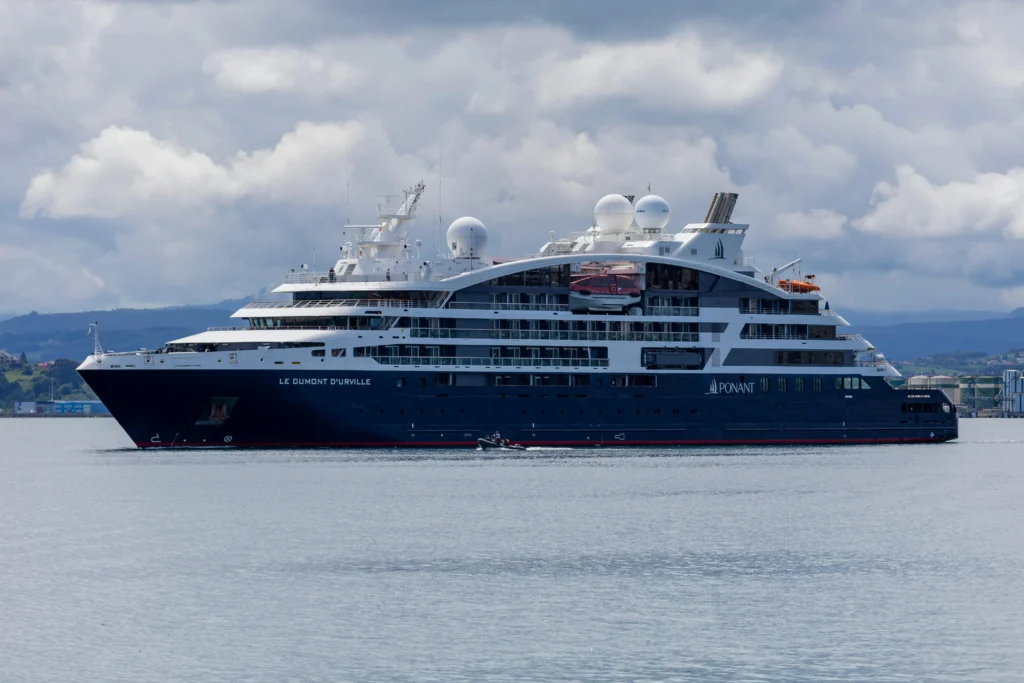
A standout development highlighted in recent official market reviews is the strong expansion of long-haul source markets that historically maintained a minimal presence on the island. Australia successfully entered Malta’s top 10 inbound source markets, driven by premium fly-cruise arrivals and high-end niche affinity groups.
Affluent Australian travelers, navigating a 14,000-mile transit corridor, are increasingly incorporating the archipelago into extended European tours. They are drawn by the density of the country’s three UNESCO World Heritage sites, private yacht charter options, and exclusive cultural itineraries.
Concurrently, Latin America—specifically the high-net-worth enclaves of Brazil—has demonstrated significant organic growth. Official assessment metrics indicate a notable increase in wealthy Brazilian leisure travelers selecting the country over traditional continental capital cities.
Faced with this unexpected surge in long-haul interest, VisitMalta has expanded localized concierge support networks and premium tour compliance structures to better serve these high-yield demographics.
North American Traffic and Rerouted Transit Passenger Dynamics
The North American corridor, spanning both the United States and Canada, remains a central driver of the island’s premium tourism expansion. Inbound tracking show that American luxury travelers are increasingly choosing alternative European coastal options that provide maximum security, high infrastructure stability, and uncrowded historical surroundings.
The upscale segment relies heavily on specific elite service layers, including curated culinary tours, private access windows to historic structures like St. John’s Co-Cathedral, and high-latitude diving excursions across deep-water wrecks.
| Tourism Yield Metrics | January–April 2025 Baseline | January–April 2026 Official Data | Percentage Trend Shift |
| Total Inbound Arrivals | 1,044,644 travelers | 1,215,966 travelers | +16.4% volume expansion |
| Total Sector Expenditure | €804.6 million | €919.7 million | +14.3% capital growth |
| Collective Guest Nights | 6.0 million nights | 6.6 million nights | +10.0% occupancy increase |
| Gozo & Comino Share | 527,358 visitors | 577,358 visitors | +9.5% regional distribution |
Infrastructure Management and Regional Volume Distribution
To prevent localized congestion and preserve the premium visitor experience, the Ministry for Tourism has successfully optimized its spatial distribution strategy. Out of the 1.2 million initial arrivals, 577,358 visitors—representing 47.5 percent of the total tourist base—transited to the smaller sister islands of Gozo and Comino. This regional balancing act has been supported by the modernization of inter-island eco-vessel links and the promotion of heritage accommodation options within rural Gozitan villages.
Concurrently, the island’s entry points are adjusting to the deployment of Europe’s automated Entry/Exit System (EES) and the upcoming European Travel Information and Authorization System (ETIAS). Because the current visitor profile leans heavily toward short-term premium leisure travel with a low risk of overstay, border agencies report that the upgraded biometric registration infrastructure is operating efficiently.
By utilizing advanced transport technology, prioritizing qualitative economic yield over sheer volume, and positioning the country as a tranquil, exclusive haven amid shifting global paths, Malta continues to reinforce its role as a leading model for contemporary luxury travel management.
For more travel news like this, keep reading Global Travel Wire