The global cruise industry is experiencing unprecedented growth, with passenger volumes reaching historic milestones and travel demand surging worldwide. As modern travelers increasingly seek deep cultural immersion alongside premium maritime luxury, the race to design the future of ocean travel has accelerated. Moving beyond the recent era defined strictly by mega-ships, the architectural visionaries of the cruise sector are pivoting toward a new balance of scale, flexibility, and global reach.
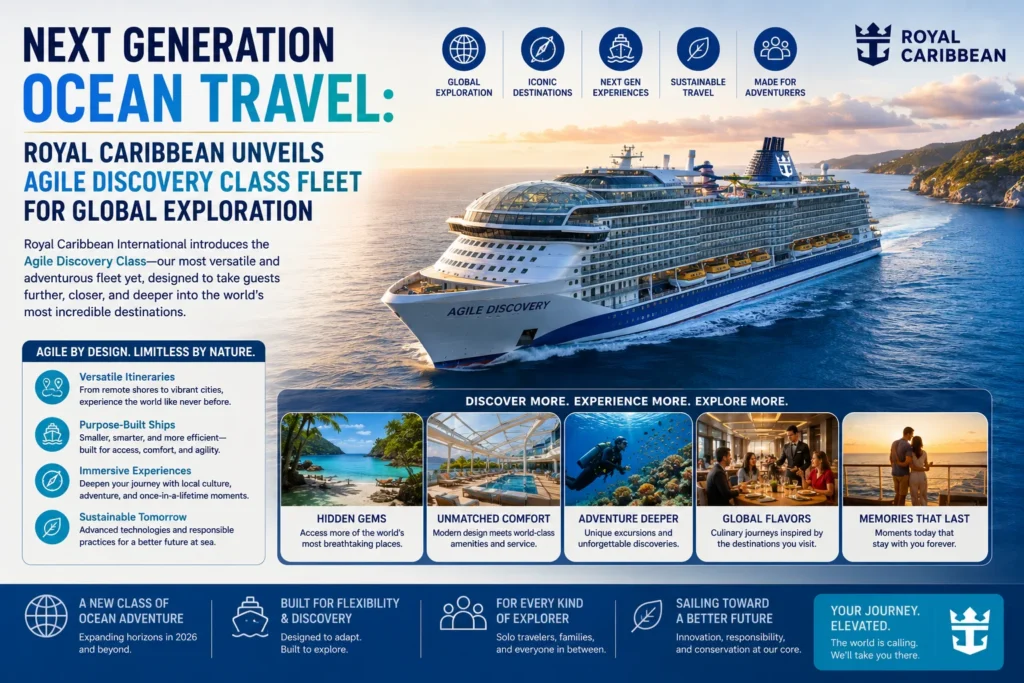
In an official corporate briefing detailing its long-term deployment and fleet growth strategy, Royal Caribbean Group announced the initial engineering blueprints and operational parameters for its highly anticipated Discovery Class vessels. This fresh generation of ocean liners is intentionally designed to shift the maritime vacation formula, shifting focus toward seamless regional navigation and providing direct access to the world’s most pristine, structurally restricted coastal destinations.
Designed for Immersive Global Exploration and Exotic Markets
According to executive statements from Royal Caribbean Group leadership, the upcoming fleet addition represents a calculated departure from the traditional mega-ship framework. While recent flagship rollouts focused on expansive onboard neighborhoods and maximum guest capacities, this newly announced design prioritizes strategic routing agility.
Official corporate updates indicate that these new cruise ships will be custom-engineered to operate in highly specialized global corridors, specifically targeting regional hubs across Asia, Alaska, and Europe. Rather than deploying identical large-scale layouts worldwide, the design philosophy focuses on creating vessels capable of navigating delicate marine environments and restricted waterways that remain entirely inaccessible to larger commercial hulls. This specialized footprint allows travelers to experience authentic shore excursions and remote ports of call without compromising the comprehensive amenities expected of a modern fleet.
Technical Specifications and Strategic Shipyard Partnership
Royal Caribbean Group has finalized an official agreement for the initial construction of the vessels, partnering with the Chantiers de l’Atlantique shipyard in Saint-Nazaire, France. This collaboration continues a multi-decade tradition of European naval engineering, leveraging specialized regional maritime technology to build the next phase of the company’s fleet.
According to verified shipyard orders, the timeline for the launch is officially locked in:
First Vessel Delivery: Scheduled for completion in 2029.
Second Vessel Delivery: Programmed to join the global fleet in 2032.
Future Extension Options: The agreement includes options for four additional sister ships to follow.
Passenger Capacity: Engineered to accommodate approximately 4,300 passengers at double occupancy.
Initial Booking Launch: Public booking opportunities and official marketing layouts are scheduled to debut in late 2027.
By positioning the double occupancy capacity at approximately 4,300 guests, these new cruise ships will sit comfortably below the massive physical dimensions of the Icon and Oasis classes, yet will maintain a robust, feature-rich infrastructure that surpasses older mid-sized vessels.
The Panama Canal Advantage and Fleet Agility
Perhaps the most significant logistical revelation involving the vessel’s hull dimensions is its built-in capacity to transit the Panama Canal. In the commercial cruise sector, passing through this critical interoceanic waterway requires strict adherence to specific width and draft parameters, collectively known as Panamax standards.
Currently, the largest mega-ships in the global cruise matrix are physically too wide to utilize the canal locks. When a large ship needs to transition from a summer season in the Pacific Northwest or Alaska down to the winter vacation grounds of the Caribbean, it must complete an extended, resource-heavy voyage around the southern tip of South America. This repositioning journey can take up to 60 days, removing the vessel from active passenger service for weeks at a time.
By engineering the hull to integrate seamlessly with the Panama Canal’s dimensions, Royal Caribbean reduces this transition window to approximately two weeks. This unprecedented operational agility allows the fleet to follow optimal seasonal weather patterns, stabilize regional deployment costs, and dynamically adjust Royal Caribbean itineraries to meet shifting travel demands across the Atlantic and Pacific oceans.
Incorporating the Best Features of Maritime History
The development team is utilizing a design approach that extracts the most successful engineering milestones and guest favorites from the brand’s extensive history. Shipboard elements are being selected from a variety of historical classes, combining structural lessons learned from older designs with modern innovations found on the newest ships.
Guests can expect a curated blend of spacious public spaces, specialized dining concepts, and advanced environmental technologies. As part of an overarching commitment to achieving net-zero emissions across operations by 2035, these upcoming hulls are expected to incorporate advanced energy-efficiency systems, optimized waste management protocols, and progressive fuel options to minimize their environmental footprint in fragile eco-tourism zones like Alaska and the Mediterranean.
By prioritizing a mid-size structural footprint, the cruise line can bypass port congestion and drop anchor in boutique destinations that cannot support standard mega-ships. This operational shift provides passengers with extended port stays, deeper regional access, and a more intimate connection to exotic cruise destinations around the globe. While the exact interior deck arrangements and specific onboard attractions will remain confidential until the formal marketing rollout in late 2027, the framework for this new era of maritime travel is already establishing a flexible path forward for global vacationers.
For more travel news like this, keep reading Global Travel Wire