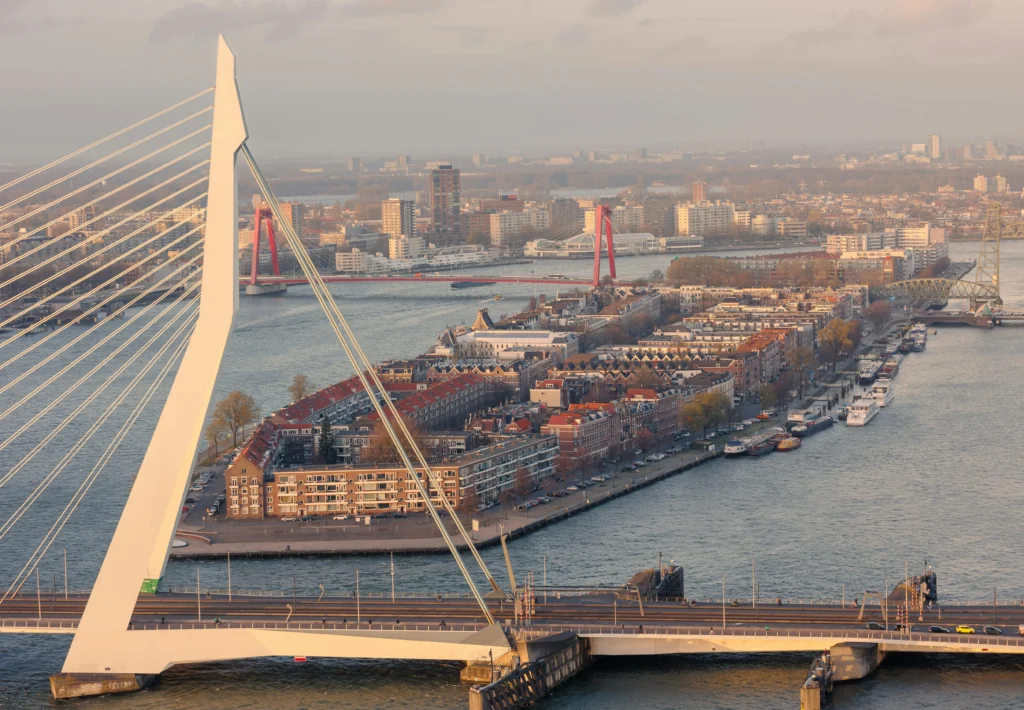
The international cruise travel sector is witnessing a real-time validation of its global health, security, and communication frameworks. The MV Hondius, a luxury polar expedition cruise ship that became the focal point of an unprecedented medical emergency in the Atlantic, has officially arrived at its final destination in the Port of Rotterdam, Netherlands. Escorted into the harbor by a dedicated tugboat and a maritime police vessel, the ship has docked at its designated jetty to undergo intensive, top-tier disinfection and decontamination procedures.
With all international passengers already safely disembarked at an intermediate stop, the ship reached the major European transit hub carrying a skeleton crew of 25 members and two specialized medical personnel. The arrival marks a critical phase for maritime transport ministries and global public health bodies, proving that post-pandemic health protocols can successfully contain isolated shipboard emergencies without impacting wider international holiday networks.
Inside the Strategic Isolation and Harbor Quarantine Setup
According to official updates from the Port of Rotterdam’s harbor master, a highly coordinated containment strategy was initiated the moment the vessel breached Dutch waters. To maintain absolute safety and ensure the virus does not impact the surrounding metropolitan area, municipal health authorities have established a localized quarantine zone directly on the pier. A dedicated line of 25 secure, white portable living units has been erected a short distance from the vessel, between the harbor’s iconic coastal windmills.
The remaining 27 individuals on board—comprising 17 Filipinos, four Dutch nationals, four Ukrainians, one Russian, and one Polish national—will disembark using a strictly controlled, staggered approach. Under the supervision of regional health directors and experts from the Erasmus Medical Center, the four Dutch crew members and the accompanying medical staff will be permitted to complete their mandatory isolation periods at their private residences.
Concurrently, the 23 non-Dutch crew members will enter the specialized harbor container units for a recommended 42-day quarantine cycle. To ensure comfortable accommodations during this extended observation phase, the port authority has equipped the temporary units with high-speed satellite internet and dedicated contactless catering services. Port administrators emphasized that as Europe’s largest maritime gateway, welcoming vessels in structural or medical distress is a humanitarian duty that the facility is fully equipped to manage safely.
Tracking the Route of an Unprecedented Transatlantic Medical Emergency
The troubled voyage of the Dutch-flagged luxury cruiser began on April 1, when it departed the southern coast of Argentina for a multi-week polar expedition traveling toward West Africa. The first indications of trouble emerged in late April as a cluster of severe respiratory illnesses manifested among the travelers. By May 2, official notifications were formally submitted to the World Health Organization (WHO) as the ship approached its intended final stop off the coast of Cape Verde.
Citing strict local biosafety laws, Cape Verdean authorities prohibited the ship from allowing passengers ashore, leading to a temporary anchor isolation in the Atlantic. Responding to the escalating situation, the WHO and the European Union intervened, requesting the Spanish government to coordinate a swift medical evacuation in the Canary Islands.
In Tenerife, emergency personnel outfitted in full-body protective gear successfully escorted the remaining passengers off the vessel. These travelers were immediately placed on chartered flights bound for more than 20 separate home countries to enter regional isolation protocols, allowing the MV Hondius to begin its six-day journey back to Rotterdam with a minimal operational crew.
Scientific Insights into the Andes Virus Variant
Official laboratory analyses have provided immense clarity regarding the specific nature of the maritime outbreak. The European Centre for Disease Prevention and Control (ECDC) and France’s Pasteur Institute have fully sequenced genetic samples obtained from affected passengers. The results definitively confirm that the outbreak was caused by the Andes virus strain, a well-documented hantavirus variant that has naturally circulated within rural regions of Argentina and Chile for several decades.
Public health reports indicate that the initial exposure likely occurred while passengers were participating in land-based excursions in South America prior to embarkation. Crucially, genetic mapping shows no meaningful mutation or variation in the virus strain, confirming that it does not possess any heightened characteristics that would make it more transmissible or uniquely hazardous to the public.
While hantaviruses are traditionally spread via the inhalation of microscopic particles from wild rodent droppings, health authorities note that the Andes variant can occasionally pass between humans through prolonged, close contact in confined indoor settings. The global case tally currently stands at 11 individuals—consisting of nine confirmed and two probable cases—and has tragically resulted in three deaths, including a Dutch couple and a German national. A final Canadian passenger recently provisionally tested positive while in isolation in British Columbia.
Resilience and the Unbroken Horizon of Global Cruise Tourism
Because hantaviruses feature an extended incubation period that can last up to six weeks, international health tracking and monitoring of low-risk contacts will likely continue for several months. Despite the high-profile nature of this isolated event, the WHO has explicitly stressed that the situation bears no structural resemblance to a respiratory pandemic and poses no threat to global travel freedom.
Furthermore, the Dutch company that owns and operates the MV Hondius announced that the ship’s upcoming seasonal schedules remain entirely unchanged. Once the comprehensive chemical disinfection is finalized and public health inspectors officially certify the vessel, the luxury cruiser is scheduled to depart for its next Arctic travel itinerary from Keflavik, Iceland.
By demonstrating a flawless, data-led response to an unexpected health event, global tourism boards and maritime authorities are proving that modern travel networks are more resilient, highly communicative, and structurally secure than ever before. For the millions of travelers booking upcoming ocean voyages, the meticulous handling of the MV Hondius serves as a reassuring testament to the industry’s unwavering commitment to passenger safety.
For more travel news like this, keep reading Global Travel Wire