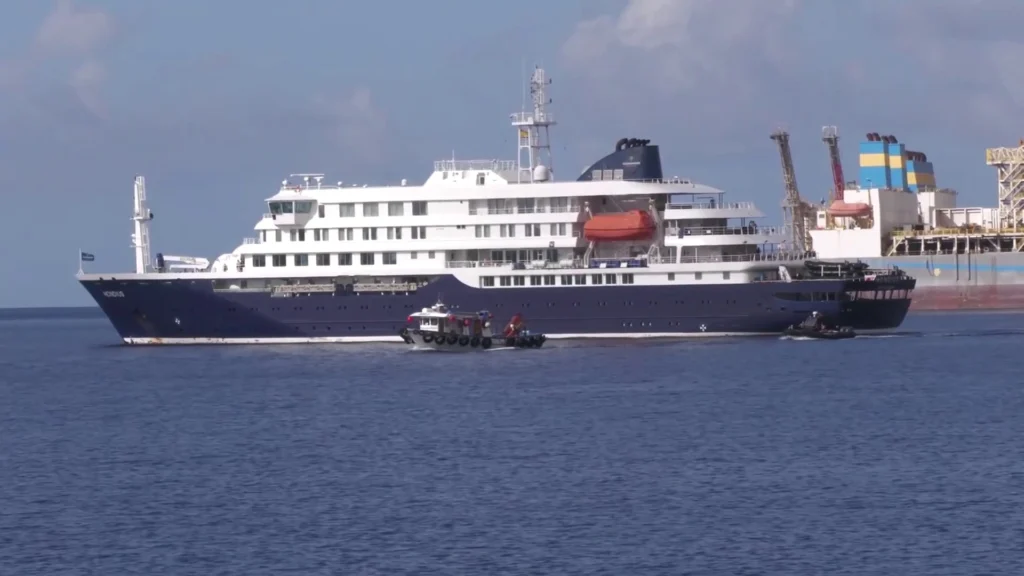
Spain has strengthened cruise health monitoring and quarantine measures after the MV Hondius hantavirus outbreak triggered a multi-country medical response involving evacuated passengers, specialist hospital isolation and international disease surveillance. Spanish health authorities are now managing one of Europe’s most closely watched cruise-related health incidents after confirmed Andes virus cases linked to the expedition vessel placed passenger safety and travel health protocols under intense scrutiny.
The outbreak has become a significant issue for the international cruise industry because it involves the Andes strain of hantavirus, a rare infection capable of limited person-to-person transmission under specific close-contact conditions. Official updates from Spain’s Ministry of Health, the World Health Organization and the European Centre for Disease Prevention and Control indicate that the outbreak remains closely tied to passengers and contacts associated with the cruise ship rather than wider community transmission within Spain.
Authorities continue emphasizing that the overall risk to the general traveling public remains very low despite the seriousness of the medical response.
Spain Launches Strict Monitoring and Quarantine Measures
Spain’s health response has focused heavily on rapid detection, quarantine enforcement and active medical surveillance following the evacuation of passengers linked to the MV Hondius outbreak. The Ministry of Health introduced formal protocols covering individuals who traveled aboard the vessel between April 1 and May 10, 2026, as well as close contacts connected to confirmed Andes virus cases.
The Hospital Central de la Defensa Gómez Ulla in Madrid became the center of Spain’s containment operation, where evacuated passengers were placed in isolated rooms under strict medical observation. Visitors were prohibited, while health teams implemented PCR testing, twice-daily temperature checks and continuous symptom monitoring.
Passengers arriving from the vessel underwent immediate laboratory testing followed by additional screening several days later to identify any delayed symptom development linked to the virus’s extended incubation period.
Spanish authorities designed the response to minimize uncertainty and isolate all known risk groups before any wider exposure could occur.
Official Reports Confirm Limited but Serious Outbreak
According to Spain’s official health update available on May 22, 2026, twelve global cases linked to the cruise outbreak had been identified, including ten laboratory-confirmed infections and two probable cases. Spanish authorities confirmed one active case in Spain involving a patient receiving treatment in a high-level isolation unit at Gómez Ulla Hospital.
The report also stated that thirteen additional individuals under medical observation in Spain remained asymptomatic. Two airline contacts monitored in Alicante and Barcelona also showed no symptoms during the observation period.
The European Centre for Disease Prevention and Control later confirmed the broader outbreak totals, including three deaths associated with the international cluster. Health officials warned that additional cases could still emerge because some passengers and crew had already traveled internationally before symptoms appeared.
Why the MV Hondius Outbreak Is Different
The outbreak has attracted international attention because it involves the Andes virus, a hantavirus strain considered unusually significant due to its potential for limited human-to-human transmission. Most hantaviruses spread primarily through exposure to infected rodent particles rather than direct contact between people.
The cruise environment created particular concern because passengers and crew shared confined spaces, cabins, dining areas and evacuation procedures over extended periods of time.
The World Health Organization reported that the cluster was officially identified on May 2 after severe respiratory illness was detected aboard the Dutch-flagged expedition cruise ship. The vessel’s itinerary included passenger disembarkation in Saint Helena, Cabo Verde and Tenerife, forcing multiple countries to launch coordinated contact-tracing operations.
This international movement transformed the outbreak into a complex multinational public health event rather than an isolated onboard medical issue.
Cruise Industry Faces Renewed Health Safety Questions
The MV Hondius incident has become a major test of cruise industry health preparedness at a time when global cruise tourism continues recovering and expanding after years of pandemic-era disruption. Cruise passengers increasingly expect strong onboard medical systems, rapid emergency response capabilities and clear communication during health incidents.
Spain’s role became especially important because Tenerife formed part of the disembarkation route while Madrid later became central to quarantine and isolation operations. The country’s response focused heavily on controlled monitoring rather than broad public alarm, helping separate the cruise-linked incident from wider tourism concerns.
Industry analysts say the outbreak demonstrates how modern cruise travel depends on rapid coordination between cruise operators, ports, airports, hospitals and international health agencies.
A single medical incident aboard one vessel can quickly trigger international logistical challenges when passengers disperse across multiple countries before symptoms appear.
General Travel Risk in Spain Remains Very Low
Health agencies continue stressing that the outbreak does not represent a broader public health emergency across Spain. The European Centre for Disease Prevention and Control maintains that the risk to the general European population remains very low based on current evidence.
For tourists and business travelers, Spain remains fully open for international travel, tourism and cruise activity. Airports, ports and tourism infrastructure continue operating normally outside the highly controlled monitoring measures linked specifically to the MV Hondius contacts.
Nevertheless, the incident highlights how quickly cruise-related health events can affect international travel operations, passenger confidence and tourism coordination systems.
Spain’s Response Highlights Growing Importance of Travel Health Infrastructure
Spain’s management of the MV Hondius outbreak reflects a layered public health strategy focused on identification, quarantine, surveillance, laboratory testing and specialist treatment. Authorities established clear categories for contacts, probable cases and confirmed infections while coordinating hospital isolation procedures and monitoring protocols nationwide.
The response is also reinforcing broader lessons for the global tourism industry as cruise operators, ports and governments continue strengthening health preparedness in an era of increasingly complex international travel patterns.
For cruise tourism, the outbreak serves as a reminder that passenger health management, medical readiness and coordinated international response systems are now essential components of travel safety and operational resilience.
Spain’s handling of the situation has demonstrated how targeted containment measures can protect public confidence while managing serious but controlled travel health incidents linked to global tourism.
For more travel news like this, keep reading Global Travel Wire