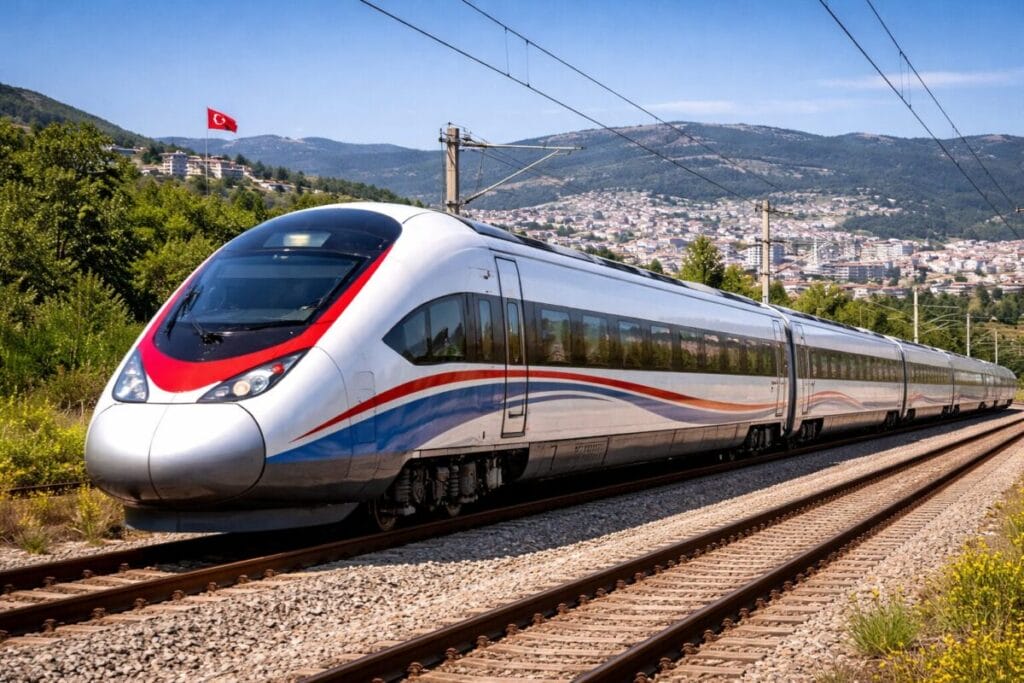
Turkey has entered a new phase in its transportation modernization strategy as testing begins for the country’s first domestically developed high-speed train capable of reaching speeds of 225 kilometers per hour. The milestone represents a major step in Turkey’s ambition to expand its rail network, strengthen technological independence, and improve travel connectivity across the country.
The train entered the testing phase in March 2026, marking the first time a high-speed rail vehicle fully designed and produced within Turkey has been evaluated for operational use. The project reflects years of investment in rail technology and infrastructure aimed at creating faster, more sustainable transportation options for passengers and tourists.
Officials have indicated that the goal is to complete testing and place the train into passenger service before the end of 2026, opening a new chapter in Turkey’s high-speed rail development.
A Milestone for Turkey’s National Rail Industry
The high-speed train has been developed through collaboration between Turkey’s national rail manufacturer and the country’s state railway authority. The project highlights the country’s growing ability to design and manufacture advanced transportation systems domestically.
Constructed with an aluminium body, the train features an eight-car configuration capable of carrying more than 500 passengers at high speed. The lightweight design helps improve efficiency and performance while maintaining safety standards required for modern rail operations.
A significant aspect of the project is the use of domestically produced technology. Key components such as the traction system and the train control management platform have been developed within Turkey, showcasing the country’s expanding engineering capabilities.
By producing these systems locally, Turkey aims to reduce reliance on imported technology and create new opportunities for innovation in the rail sector.
Advanced Technology Enhances Passenger Safety and Comfort
The new train incorporates several advanced systems designed to ensure safe and comfortable journeys for passengers.
An automatic train protection system continuously monitors speed and operational conditions to enhance safety. The train is also equipped with comprehensive fire detection systems and surveillance cameras that provide additional security for passengers and crew.
Passenger comfort has been a central focus of the train’s design. Fully automated air-conditioning systems maintain a consistent climate inside the train regardless of external weather conditions.
Modern amenities such as wireless internet access, digital passenger information displays, and onboard service facilities are intended to create a convenient travel environment. Passengers will also have access to refreshments through onboard catering services and vending machines.
These features aim to make high-speed rail travel both efficient and enjoyable for travelers moving between major Turkish cities.
Testing Program Focuses on Performance and Safety
Before entering commercial operation, the new train must undergo a comprehensive testing program designed to evaluate performance under a wide range of conditions.
Engineers will analyze factors such as speed capability, braking efficiency, ride stability, and compatibility with existing rail infrastructure. These tests ensure that the train meets both national and international safety standards required for high-speed rail operations.
Track compatibility is another important part of the evaluation process. Turkey’s rail network has undergone significant upgrades over the past two decades, and the new train must operate seamlessly across these lines.
The testing phase is expected to continue for several months as engineers collect performance data and refine technical systems.
If all tests are successful, the train will become part of Turkey’s expanding fleet of high-speed rail vehicles.
Expanding Turkey’s High-Speed Rail Network
Turkey has invested heavily in high-speed rail infrastructure as part of its long-term transportation strategy. The country’s rail network already connects major cities such as Ankara, Istanbul, and Konya through high-speed services.
Future expansion plans aim to significantly increase the total length of high-speed rail lines across the country over the coming decades.
The introduction of domestically produced high-speed trains will support this expansion by providing additional capacity and reducing the cost of acquiring new rolling stock from international manufacturers.
Rail transportation has become increasingly popular among Turkish travelers due to its speed, reliability, and environmental advantages compared with road or air travel.
High-speed trains also provide a convenient way for tourists to move between cities while enjoying comfortable travel conditions.
Economic Benefits and Job Creation
The domestic development of high-speed trains is expected to generate substantial economic benefits for Turkey.
A new train manufacturing facility under construction in the city of Sakarya will serve as the primary production center for future rail vehicles. Once operational, the factory will produce multiple train sets each year and contribute significantly to the national transportation industry.
The project is also expected to create hundreds of jobs across engineering, manufacturing, and maintenance sectors.
Local production helps strengthen the country’s industrial base while supporting economic growth in regions involved in rail manufacturing.
In addition, Turkey hopes to eventually export rail technology to international markets, positioning itself as a competitive supplier within the global railway industry.
Enhancing Tourism Through Faster Transportation
High-speed rail networks play an increasingly important role in tourism by making travel between cities faster and more convenient.
In Turkey, the expansion of high-speed rail services allows visitors to explore multiple destinations within a short period of time. Tourists arriving in Istanbul, for example, can easily travel to historical and cultural cities across the country using modern rail connections.
Improved rail travel also supports regional tourism by linking smaller cities with major transportation hubs.
As the network expands, travelers will have more options for exploring Turkey’s diverse landscapes, historic landmarks, and cultural attractions without relying solely on domestic flights or long road journeys.
Looking Ahead: A New Era for Turkish Rail Travel
The testing of Turkey’s first domestically produced high-speed train represents a major milestone in the country’s transportation development.
By combining advanced engineering, passenger comfort, and national technological innovation, the project demonstrates Turkey’s growing capabilities in modern rail transportation.
Once operational, the train will contribute to faster travel times, improved connectivity, and greater efficiency within the national rail network.
For both domestic passengers and international visitors, the expansion of high-speed rail promises to make traveling across Turkey easier, more sustainable, and more enjoyable.
As testing continues throughout 2026, the success of the project could pave the way for further innovations in Turkey’s rapidly evolving railway industry and strengthen the country’s position in the global transportation landscape.
For more travel news like this, keep reading Global Travel Wire