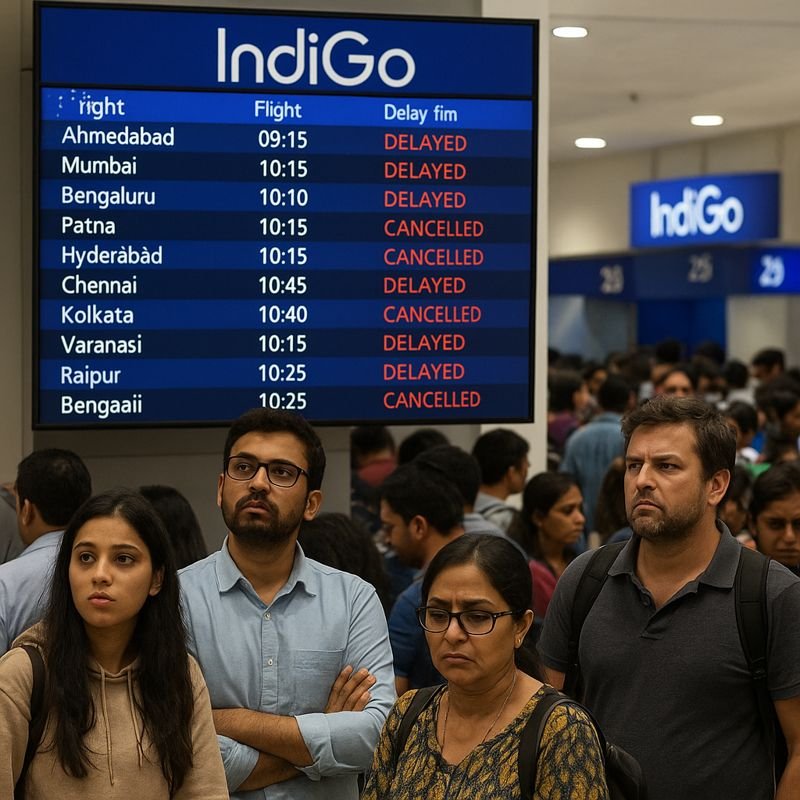
India’s aviation sector has weathered many storms, but the IndiGo Airlines meltdown of December 2025 stands apart for its sheer scale and timing. What began as scattered delays quickly spiralled into one of the most disruptive operational crises the country has seen, affecting thousands of passengers at the height of the winter travel rush.
For the travel trade community, the episode raises serious questions about capacity planning, regulatory preparedness and the vulnerability of a market dominated by a single carrier. Here’s a clear, updated picture of what the industry knows so far.
A Crisis Months in the Making
The chaos erupted in early December when IndiGo, India’s largest airline by market share and fleet size, began cancelling hundreds of flights across major hubs including Delhi, Mumbai, Bengaluru and Hyderabad. Over several intense days, cancellations reportedly surged into the thousands, crippling schedules and overwhelming airport terminals at the height of the holiday and wedding season.
While the sudden spike surprised customers, aviation insiders suggest the pressure had been building behind the scenes: seasonal congestion, winter weather patterns, minor technical issues and over-ambitious scheduling all played supporting roles. But it was the crew availability crunch that ultimately triggered the collapse.
New Safety Rules Meet Old Scheduling Gaps
The root of the disruption lay in India’s newly updated Flight Duty Time Limitations (FDTL) — a regulatory shift designed to improve pilot rest and enhance long-term safety. The revised rules extended mandatory weekly rest and imposed stricter limits on night operations.
IndiGo, despite being briefed in advance, struggled to align its crew rosters, training cycles and operational resources with the new guidelines. As pilots reached duty limits faster than expected, flights began falling off the schedule faster than they could be replaced.
The airline cited a “combination of factors,” but regulators were blunt: crew planning and rostering had not kept pace with the regulatory change.
A Government Scramble to Contain the Fallout
As cancellations multiplied, the Directorate General of Civil Aviation (DGCA) and the Civil Aviation Ministry moved swiftly:
- An eight-member oversight team was deployed to monitor IndiGo’s operations around the clock.
- A show-cause notice demanded detailed explanations and a recovery roadmap.
- The airline was ordered to temporarily cut up to 10% of its winter schedule, creating breathing room for more stable operations.
- Certain FDTL rules were temporarily relaxed, allowing IndiGo to recalibrate its crew deployment.
The crisis even reached the Supreme Court, where the Chief Justice termed the situation a “serious matter” given its nationwide implications.
Passengers Bear the Brunt
For travellers, the impact was immediate and costly. Families missed weddings, business travellers scrambled for alternatives, and airports were flooded with stranded passengers seeking refunds or rerouting options.
In a bid to restore goodwill, IndiGo introduced ₹10,000 travel vouchers for flyers affected between December 3–5 and accelerated refunds for last-minute cancellations. While welcomed, many trade partners observed that the financial gesture barely offset the disruption during one of the busiest periods for domestic travel.
Signs of Stabilisation — and Lessons for the Industry
By mid-December, IndiGo reported that operations had stabilised, with daily flights returning close to normal levels. Several airports also confirmed a noticeable improvement in on-ground flow.
However, the episode has sparked a broader debate across India’s travel and aviation sectors. As IndiGo commands a dominant share of the domestic market, its operational health directly shapes the country’s travel ecosystem. The fiasco showed how quickly a single carrier’s internal misalignment can cascade into a nationwide travel emergency.
Industry analysts point to three key takeaways:
- Aviation resilience requires diversified carriers and competitive capacity.
- Crew planning must evolve alongside regulatory changes.
- Peak-season preparedness is no longer optional—it is essential.
What Comes Next
For now, IndiGo appears to be regaining its footing. But restoring traveller confidence and trade partner trust may take far longer than restoring flight schedules. As India’s travel demand continues to surge, the industry will be watching closely to see whether this crisis becomes a turning point for stronger operational discipline—or a cautionary chapter in aviation planning.
Image generated by AI